

This article may contain links to products and services we use and recommend. We may receive compensation when you click on links to those products. For more information, see our Disclosure Policy.

One of our favourite things to do when we visit a country (any country, really) is to taste traditional local food and drinks. We would even argue that you can’t fully appreciate a country without trying at least one traditional dish and sipping on one typical local drink. If you’re with us on this, we don’t need to convince you to read about our food experiences in the Baltics.
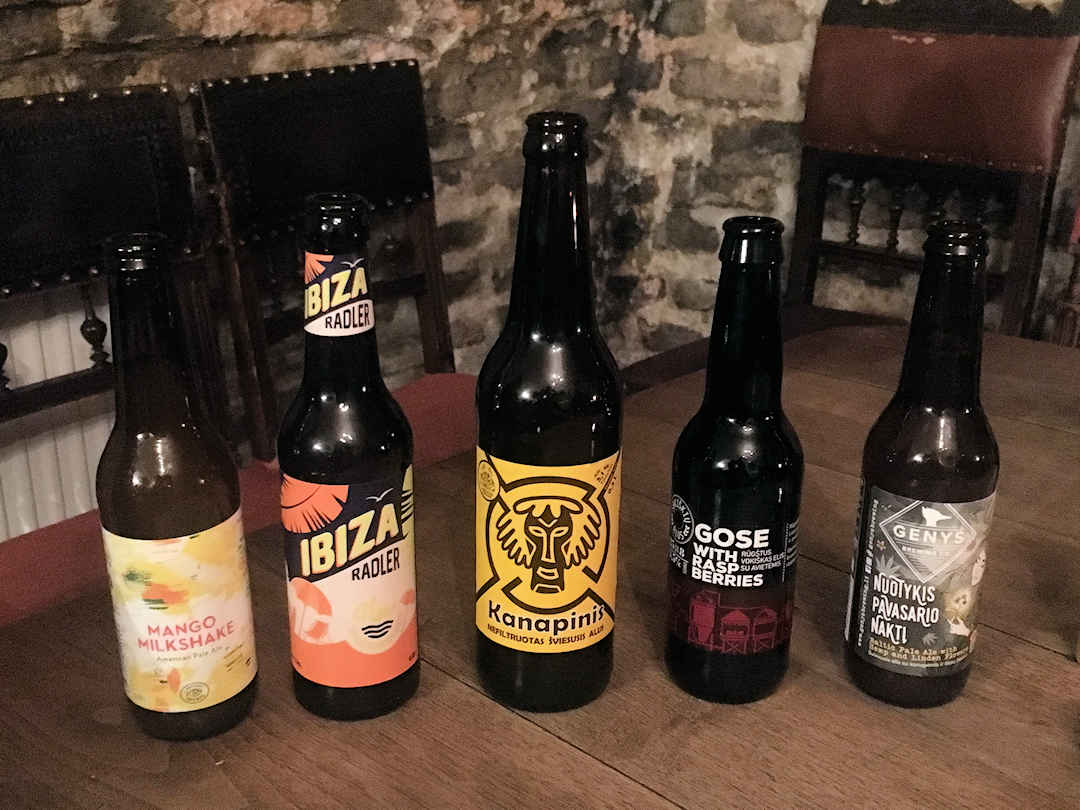
Ever tried ale with hemp or cannabis? In Vilnius you can.
If your first reaction is: “But isn’t that expensive?”, we’ve got a bit more convincing to do. Bear with us.
We have a budget we tend to stick to in order to afford our location-independent lifestyle for as long as we like. So, trust us when we say we can’t afford to eat out ALL the time, and that fine dining is a special (and thus rare) treat for us.
We alternate between meals at home and eating out. When we do the latter, we always look for the local food/drink experience. Interestingly, the local, tucked-away restaurants are often the best – those that put more effort into their food than decoration (or advertisement). Locals return to the places they know and love – no advertising or fancy décor needed. Right?
So, let’s talk about all the delicious goodness that awaits you in the Baltics.

Baltic food is hearty and rich in calories
Keen to visit the Baltics?
We've created the ultimate three-week Baltics itinerary to help you explore and learn about the people, culture, food and history. Only got a week or time for one country? No worries. Here are our One week in Lithuania, One week in Latvia and One week in Estonia articles.
What is Baltic cuisine like?
The more we travel, the more we realise how much the cuisine of the country we visit is influenced by its history. The Baltics are a classic example. Over the centuries, they were invaded and occupied by Scandinavian, German, Polish, and Russian forces, and you can find influences from all those invaders’ cooking in Baltic dishes.
Baltic food is hearty and rich in calories, to keep yourself warm during the long winter months and have the energy to work the fields all other times (as the people in the Baltics did traditionally). If you love potatoes, sausages, pickles, earthy soups, cheese or rye bread… you’ll be in your element. And if you’re unsure because these staples are not every day in your culture, at least try some.
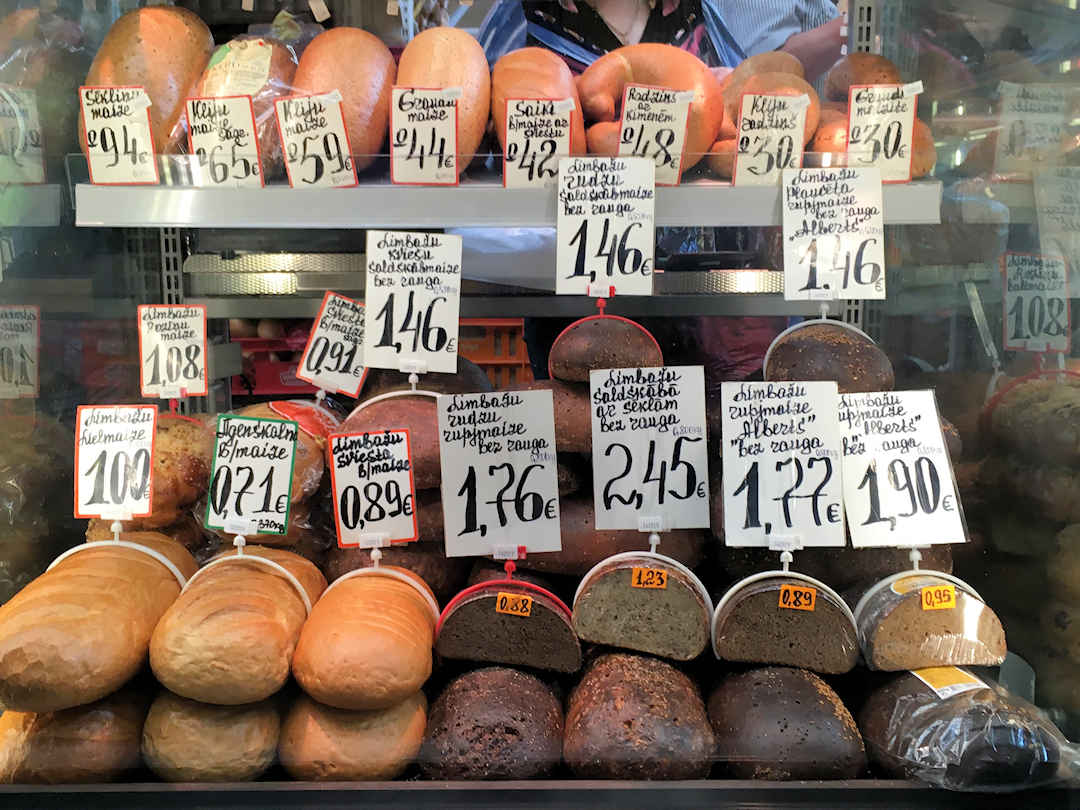
The Baltic countries don't only serve a mean fresh rye bread. They fry it, ferment it and even turn it into a delicious dessert.
Rye anyone?
I’m German, so I’m very familiar with rye bread… and love it. Eating fresh rye bread is delicious and keeps me going for hours. The Baltic countries don’t only serve a mean fresh rye bread (or black bread as it’s often called here). They took it to the next level: frying, fermenting, and making it into a yummy dessert.
A tasty snack is crackers of fried rye bread. In Lithuania, it’s called kepta juoda duona, but you can also find it in Latvia and Estonia. We first tried it on the recommendation of our hosts in Vilnius. It’s amazing.
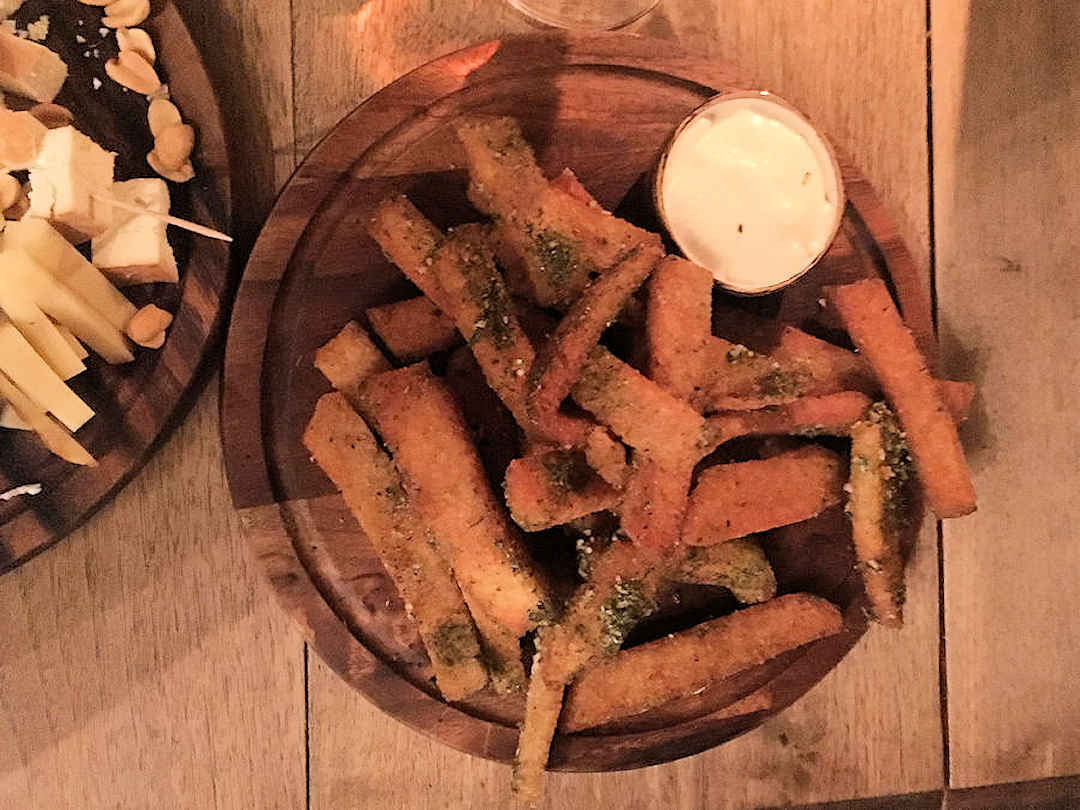
Fancy french fries? Try fried rye bread crackers instead.
As for the fermented variety… it’s actually a drink. I first tasted it in a restaurant in Vilnius and subsequently tried it all over the Baltics. The drink is called Kvass. It is not totally alcohol-free, but the alcohol content is so low that restaurants display it on their soft drinks menu. Having a faint resemblance to malt beer, I found it extremely refreshing.

Kvass is made from fermented rye and so low in alcohol that it is considered a soft drink
Still up for more? Try Rupjmaizes Kārtojums (Rye Bread Trifle), a delicious and refreshing Latvian dessert made from layers of rye bread crumbs, cream and fruit preserves.
Something cheesy
Again, on recommendation from our hosts in Vilnius, we tried the local cheeses. In Lithuania, the cottage cheese available all over the Baltics is called Riebus Varškės Sūris – literally translated as fat cottage cheese. This unique type of cheese is used in both sweet and savoury dishes. Our favourite was the smoked variety: Rūkytas Sūris.
Interestingly, but less our thing was Latvia’s Jāņu Siers, a semi-hard cheese with cumin seeds.

Visit the local markets in the Baltics and you can try all sorts of different cheeses
Another favourite little treat during our time in the Baltics became what our Vilnius hosts called Nykštuko Sūreliai – dwarf cheeses. These are little cheesecakes, about the size of a small chocolate or muesli bar. Individually wrapped, you can find them on the cooling shelves of Baltic supermarkets. In Latvia, they are called Biezpiena Sieriņš; in Estonia, Kohuke. The traditional flavour seems vanilla, but my favourites were lemon, chocolate and hazelnut.
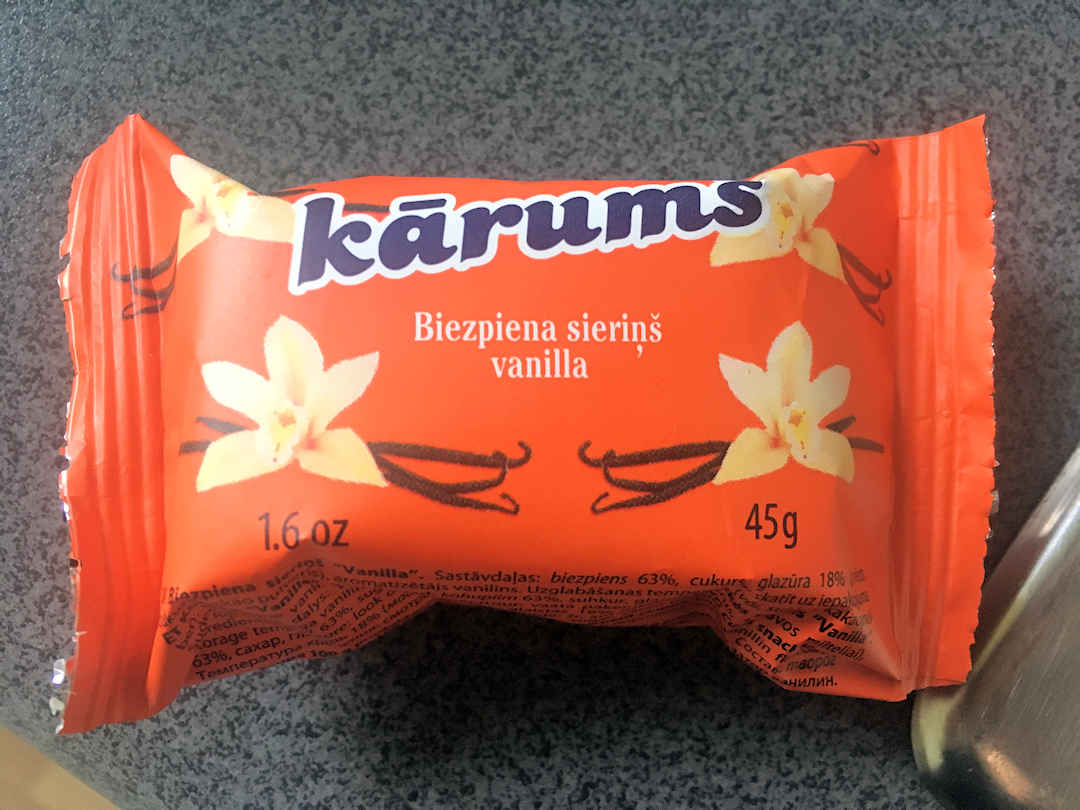
You can find these little cheese cakes (in many flavours) in the dairy section of any Baltic supermarket
Fancy apple?
We didn’t get to try Obuolių Sūris – Apple Cheese (a Lithuanian dessert). As the name suggests, this cheese is not your typical cheese made from dairy (or soy) but from apple.
Something we did try in Lithuania (and loved) was a drink made from apple and cumin, called Obuolių Sulčių ir Kmynų Gėrimas.
Where to try Baltic dishes?
To try Lithuanian cuisine at reasonable prices, head to one of the Etno Dvaras or Bernelių Užeiga restaurants (both have outlets in Vilnius and Kaunas) or Sultiniai [Google Maps location] in Vilnius.
For a traditional Latvian lunch in Riga, head to Salve [Google Maps location] or to one of the LIDO Bistro outlets. In Bauska, we recommend Pie Rātslaukuma [Google Maps location] and Mežs Kungs [Google Maps location]. In Gauja National Park, head to Hotel Sigulda [Google Maps location] or Pasēdnīca [Google Maps location].
LIDO Bistros are also a good spot to taste Estonian cuisine - Tallinn has two outlets. To taste traditional Seto cuisine and other Estonian dishes, head to Seto Tsäimaja [Google Maps location] in Värska. On Saaremaa, we recommend Restoran Särg [Google Maps location] and Restoran Hafen [Google Maps location].
Potatoes, potatoes and… potatoes
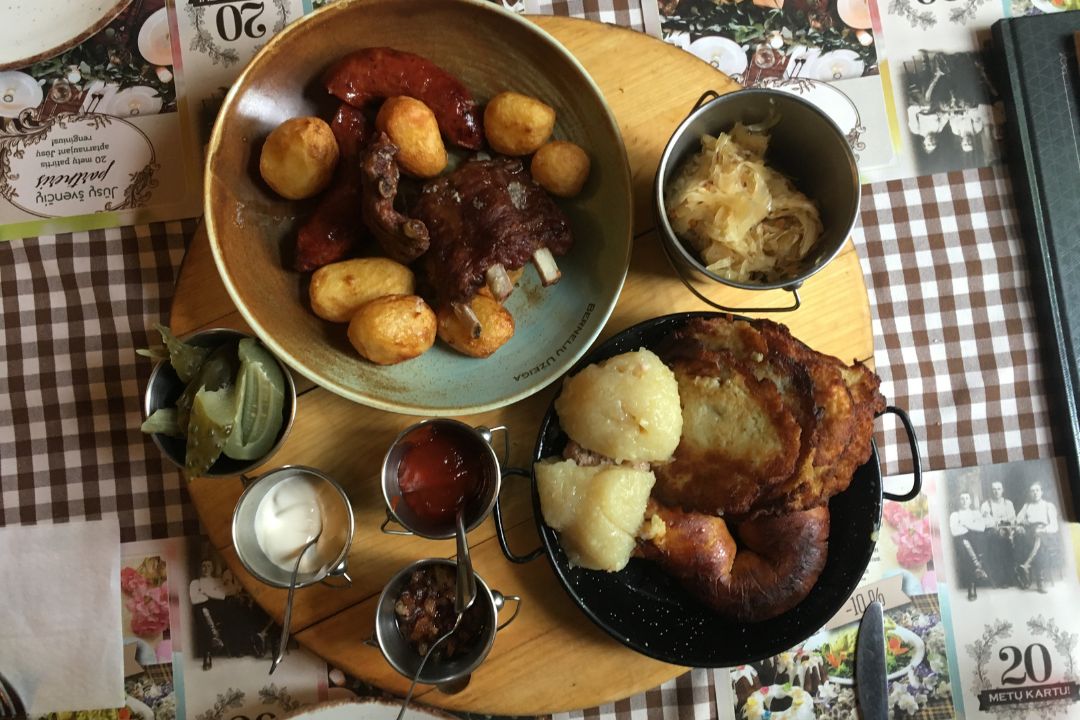
If you love everything potato, the Baltics are your heaven on earth. Think about ways to prepare potatoes. Let your imagination run wild. Chances are, the Baltic countries have a dish for it:
- Potato dumplings filled with minced meat, are called Cepelinai or Didžkukuliai.
- Potato pancakes filled with… you guessed it… minced meat, are called Žemaičių Blynai.
- Shallow-fried potato pancakes are called Bulviniai Blynai.
- Sausages filled with mashed potato are called Vėdarai.
These are just a few of the dishes we had in Lithuania. We don’t know the names for all of the above in Latvia, but the shallow-fried variety is called Kartupeļu Pankūkas. The zeppelin-shaped filled dumplings are called Cepelinai in Latvia, too.

The Baltics are heaven for anyone who loves potatoes
Around the world in 80+ travel movies
Looking for travel inspiration? Why not turn to the big screen? Movies can transport us to different places, spark our wanderlust and make us dream of new adventures. And with 80+ films to choose from, covering classics and hidden gems worldwide, you will be planning your next adventure in no time.
For pickle lovers
You can’t order a dish in the Baltics without at least a pickled cucumber as garnish. Baltic people are master picklers (if that’s a word). Maybe not so surprising considering that traditionally, you couldn’t just buy fruit and veggies out of season but had to ensure your harvest sustains you over the Winter months.
The pickles stalls at Riga’s Central Market were the most colourful stalls we’ve ever seen… anywhere. You can find any vegetable here in a pickled variety. We even found pickled cabbage that was naturally fermented without any vinegar.

Baltic people sure know how to make pickles
Something fishy
With the Baltic Sea at its doorstep (and gazillion rivers and lakes), it’s no surprise that there is a variety of fresh, smoked and marinated fish for sale at the markets. With Paul not being into the marinated variety and lacking a well-equipped kitchen to prepare a fresh fish dish, we decided to try some smoked fish: deliciously rich halibut (or paltuss in Latvian).
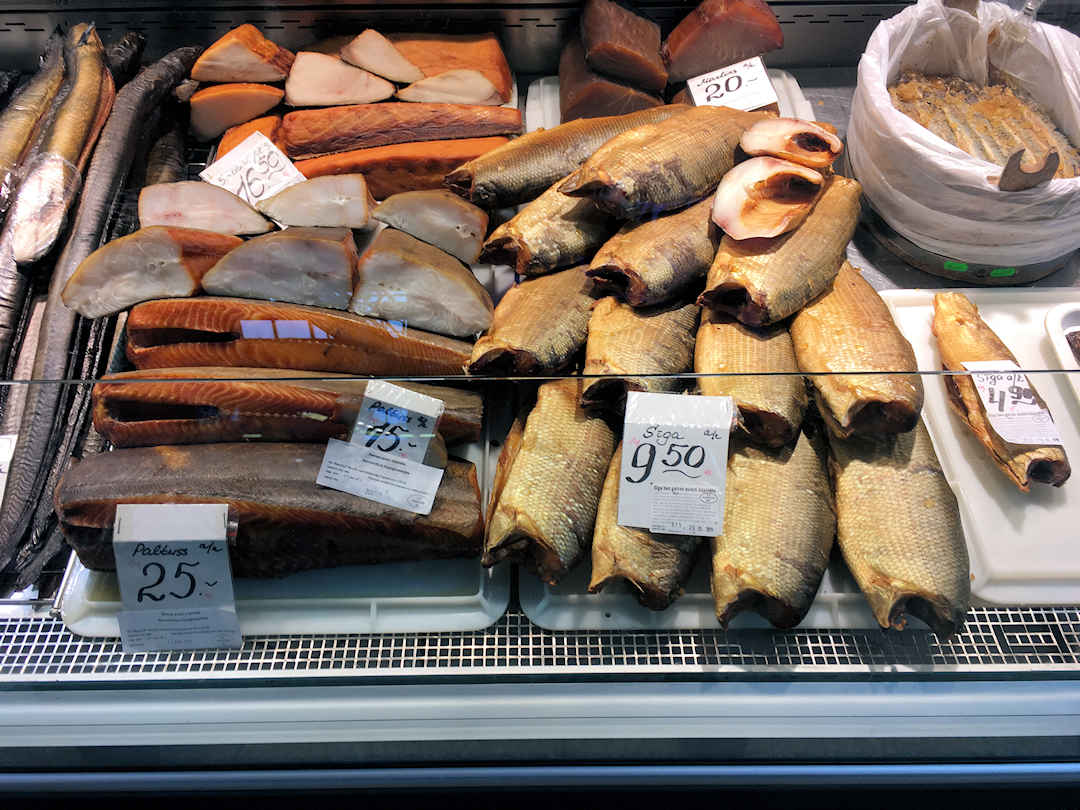
With the Baltic Sea, rivers and lakes, you can't have any fresher fish... even in smoked form
Soups and stews
If you like soups and stews, try cold beetroot soup. Known in Poland as Chlodnik, Lithuania and Latvia each have their take on this earthy yet refreshing dish. It’s called Šaltibarščiai in Lithuania, with sour cream and boiled potatoes on the side. Latvians call their version Aukstā Zupa.
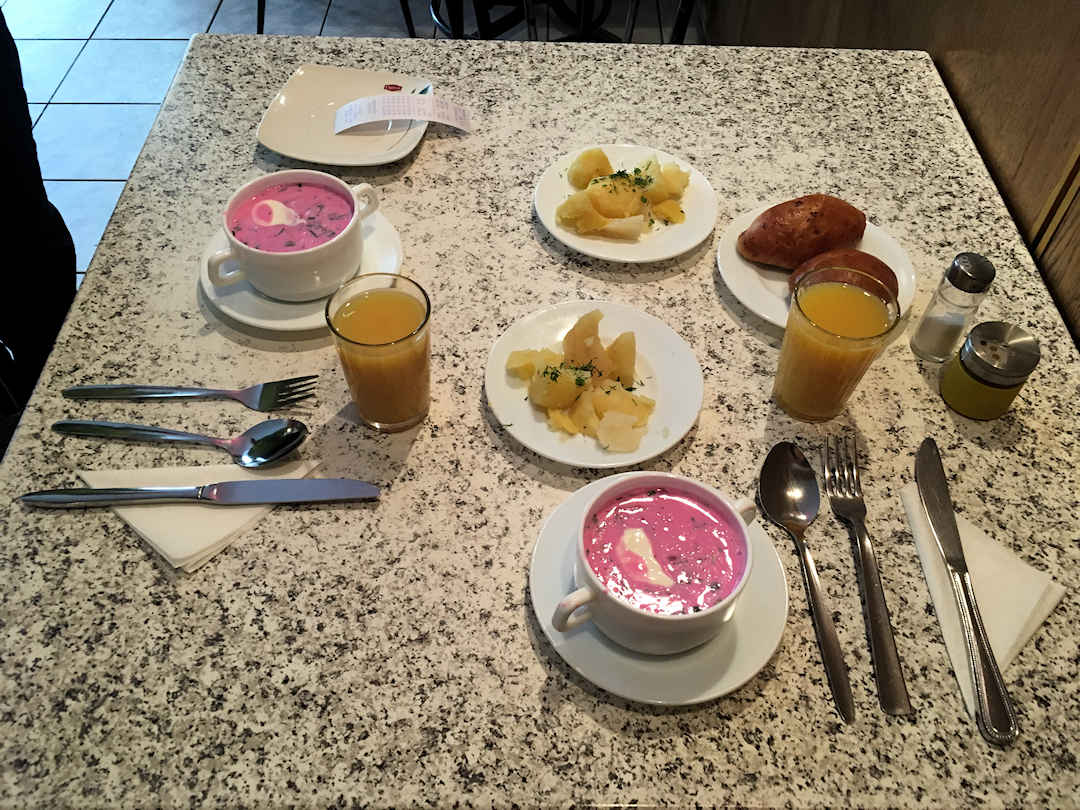
Cold beetroot soup in Lithuania is served with a dollop of sour cream and a side of boiled potatoes
As for stews, my favourite was a hearty stew made from grey peas with speck – called Pelēkie Zirņi ar Speķi in Latvia.
Fast food Baltic style
Try the Baltic version of empanadas if you want a snack to tie you over. In Lithuania, they were called Pyragėlis – little pastry buns filled with sausage (su Dešrele), minced meat (su Mėsa), ham (su Kumpiu) or mushrooms (su Grybais). Latvia’s name for these snacks was Pīrāgi or Speķrauši / Speķa Pīrāgi for those filled with speck and onion.
There is always room for dessert
We already mentioned Latvia’s Rupjmaizes Kārtojums (rye bread trifle) and the little curd cakes.
While we didn’t get to try it (they weren’t cheap), we saw Šakotis (spit cake or Baumkuchen) at markets and bakeries all over Lithuania. It looks like a tree made of dough and is supposedly not too sweet.
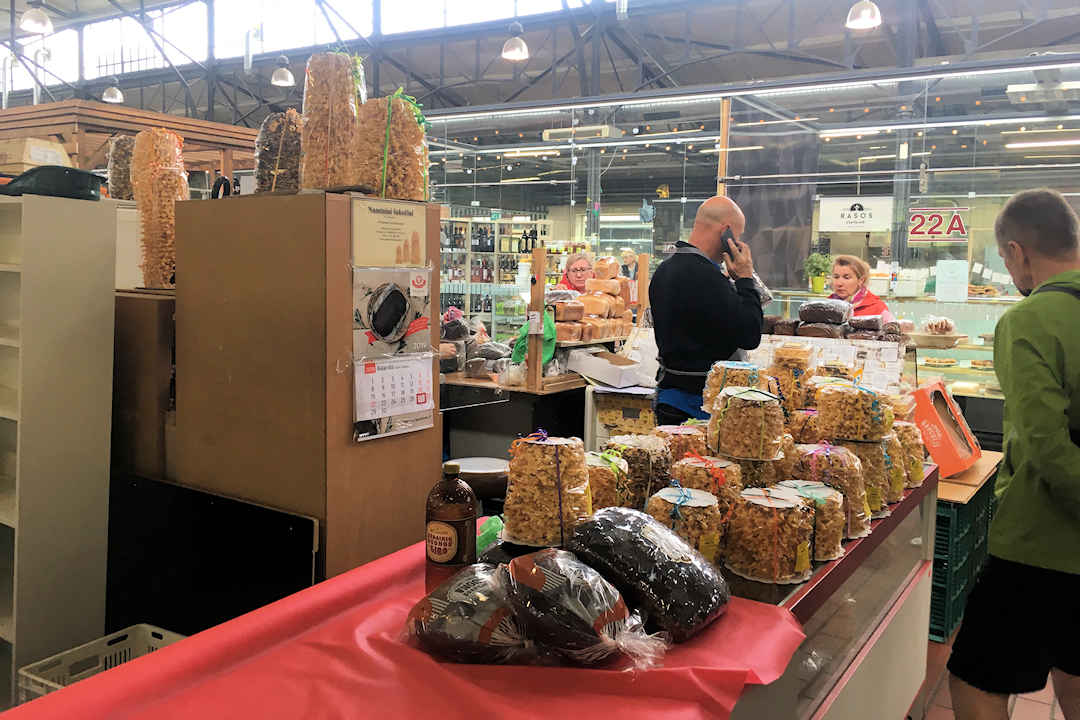
If you've tried Lithuanian spit cake let us know what it's like
If you have visited the Baltics, what local dishes did you try (and what was your verdict)?
I wrote this Baltics culinary guide based on my own experience. If you have been to the Baltics recently and would like to add something, please feel free to contact me.
Before you go, if you liked our article and found it helpful, we would appreciate it if you could share it with your friends and family via the Share buttons below. Even better: Leave a short review on Trustpilot or Google, which would help us further build our online reputation as a (trustworthy and helpful) travel and lifestyle blog.