

This article may contain links to products and services we use and recommend. We may receive compensation when you click on links to those products. For more information, see our Disclosure Policy.

Visiting Borobudur is a highlight for many travellers to Java, Indonesia, yet planning an independent trip can be confusing. Our guide explains how to get from Yogyakarta to Borobudur using public transport, how the online booking and quota system works, and what to expect once you’re there. You’ll also find practical advice on timing, weather and ways to avoid crowds. If you prefer a DIY visit and want to understand Borobudur beyond the usual day tour packages, this guide has everything you need to plan your trip.
Are you planning a trip to Borobudur?
Book your transportation to/from and around Borobudur, keeping your carbon footprint in mind:
Find your perfect accommodation in Borobudur. We recommend these small-scale and centrally located options:
When managing money across countries, we keep fees low and decisions deliberate. We use XE to check exchange rates, Wise to move and spend money internationally, and PocketSmith to track where it all goes.
Buying travel insurance can feel overwhelming. Start by reading our buyer's guide to finding insurance that suits your needs. Then compare options on the Insubuy marketplace (with all the information you need to find the one that's right for you).
Explore the wonders of Borobudur and beyond with the best tours and activities, powered by GetYourGuide and Viator. We recommend these options with local providers:
Map of Accommodation, Points of Interest, Eateries and Transport
Below is a map of the recommended accommodation, points of interest, eateries and transport terminals/stops mentioned in this article.
What and where is Borobudur?
If you’re hearing about Borobudur for the first time, here is a brief intro.
Located in Central Java [Google Maps location] near Yogyakarta, Borobudur is the world’s largest Buddhist temple and a UNESCO World Heritage site since 1991. It was built in the middle of the 9th century during the reign of the Mataram Kingdom, a Hindu-Buddhist Kingdom that is also responsible for the construction of two other impressive monuments:
- Prambanan – the largest Hindu temple in Indonesia; and
- Candi Sewu – the second-largest Buddhist temple in Indonesia (also located in the Prambanan temple complex).
Measuring 118 x 118 metres (129 x 129 yards) at its base and standing 35 metres (38 yards) tall, Borobudur looks like a giant stepped stone pyramid, built without using mortar around (what is presumed) a man-made hill. Covered with intricate reliefs and stone carvings, its craftsmanship is outstanding – a true feast for the eyes.
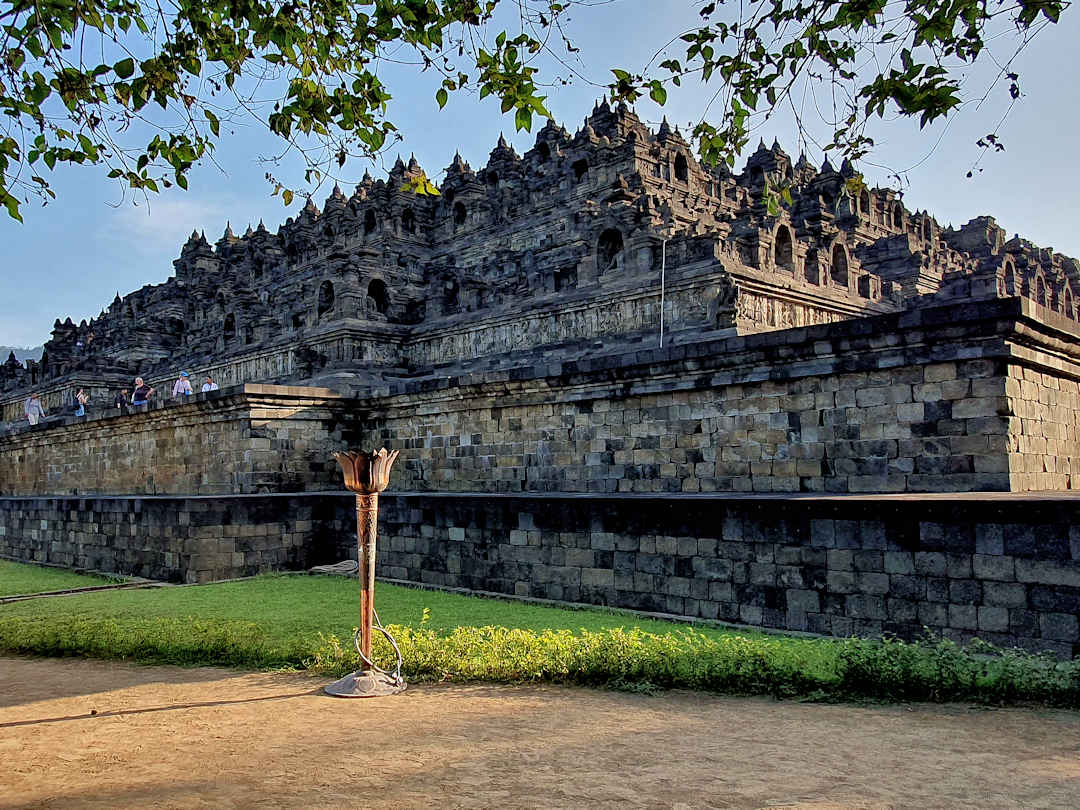
Looking like a giant mandala from above, Borobudur Temple was built without mortar around a man-made hill
Its religious symbolism is astounding, too. Looking like a giant mandala from above, Borobudur is composed of three tiers that represent different realms of consciousness:
- Its square foundation represents Kamadhatu (the realm of desire), where humans are driven by their (yet) uncontrolled wants.
- Above it is Rupadhatu (the realm of being), where individuals strive to let go of their desires.
- The final tier, Arupadhatu, signifies the formless realm where individuals transcend the physical world.
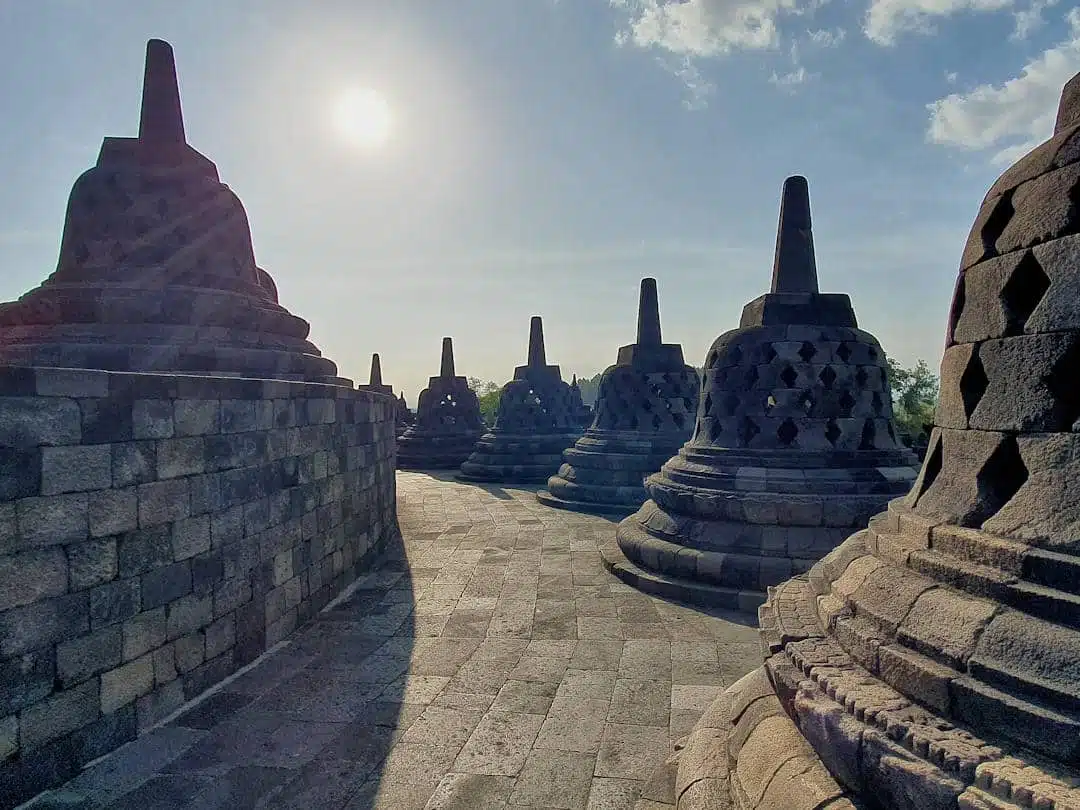
This final tier of the temple consists of three circular platforms adorned with 72 stupas, each housing a Buddha statue. The temple is topped by a large stupa representing unconsciousness or Nirvana.
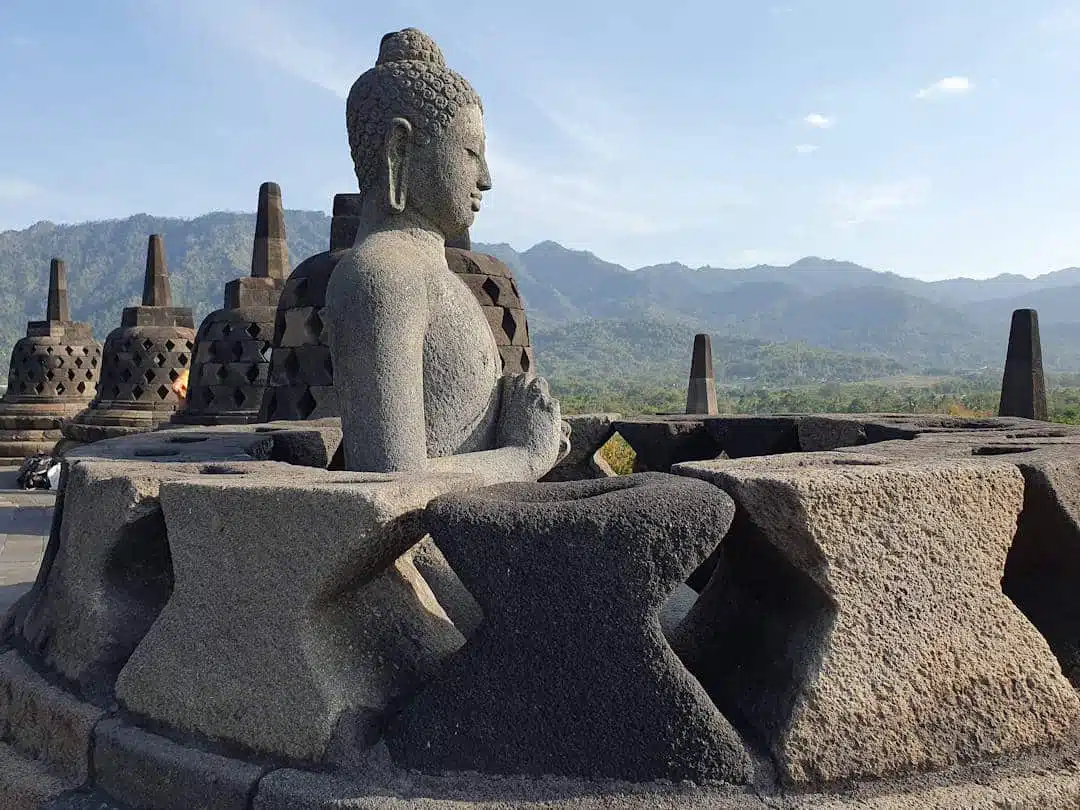
The 72 stupas on top of Borobudur Temple each house a Buddha statue
Borobudur was abandoned between the 12th and 14th centuries when Islam spread across Central Java and the Mataram Kingdom moved to East Java. Covered by ash, earth and jungle, the temple was rediscovered in 1814 and restored twice since (1907-1911 and 1973-1983, respectively).
These days, Borobudur sees more than a million visitors each year – around 15% of them are travelling here from outside Indonesia. Many people visit the temple complex on organised day trips from Yogyakarta, but you can easily do it yourself, using public transport.
How to get to Borobudur using public transport
Located 34 kilometres or 21 miles northwest of Yogyakarta’s city centre, Borobudur is easily reached by public transport.
The easiest (and cheapest) way to get there is by minibus shuttle from the stop in Malioboro outside the Bank Indonesia Building/opposite the Vredeburg [Google Maps location]. DAMRI previously operated the route but is now served by Sinar Jaya KSPN.
Departure times (as at October 2025) are as follows:
- To Borobudur: 5:00, 6:00, 7:00, 8:00, 8:30, 9:30, 10:30, 11:30, 12:00, 13:00, 14:00 and 15:00.
- From Borobudur: 6:30, 7:30, 8:30, 9:30, 10:00, 11:00, 12:00, 13:00, 14:00, 15:00, 16:00 and 17:00.
If you want to confirm the departure times before your travels, you can contact Sinar Jaya on WhatsApp at +62 815 8425 6617. The fare is IDR 20,000 per person, one-way. Payment is to be made in cash at the departure point.
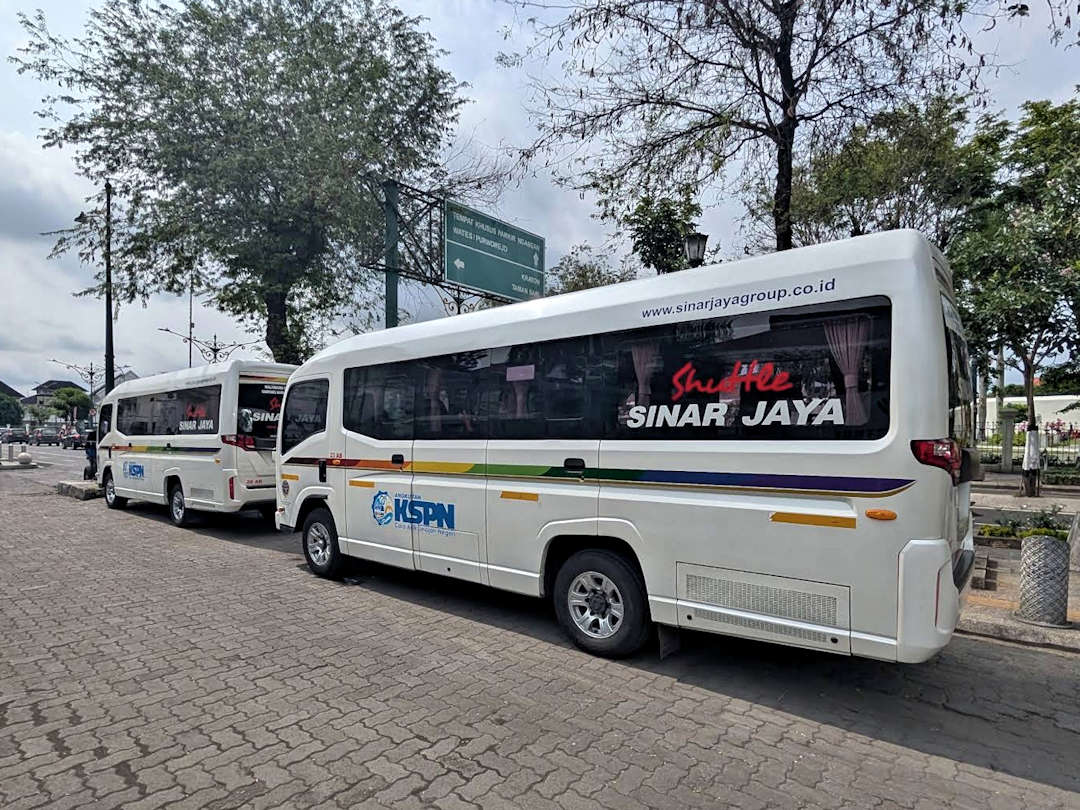
Taking the Sinar Jaya shuttle from Yogyakarta is the most convenient and cheapest way to get to Borobudur without joining a tour
The shuttle will drop you off (and pick you up) at the Borobudur Bus Terminal [Google Maps location]. From there, it’s best to take a Grab/Gojek for the final 2 kilometres to the entrance of the temple complex [Google Maps location].
The journey from Yogyakarta to Borobudur takes around 1 to 1.5 hours, pending traffic. Leave sufficient buffer (at least an hour) between your estimated arrival time and the start of your booked time slot.
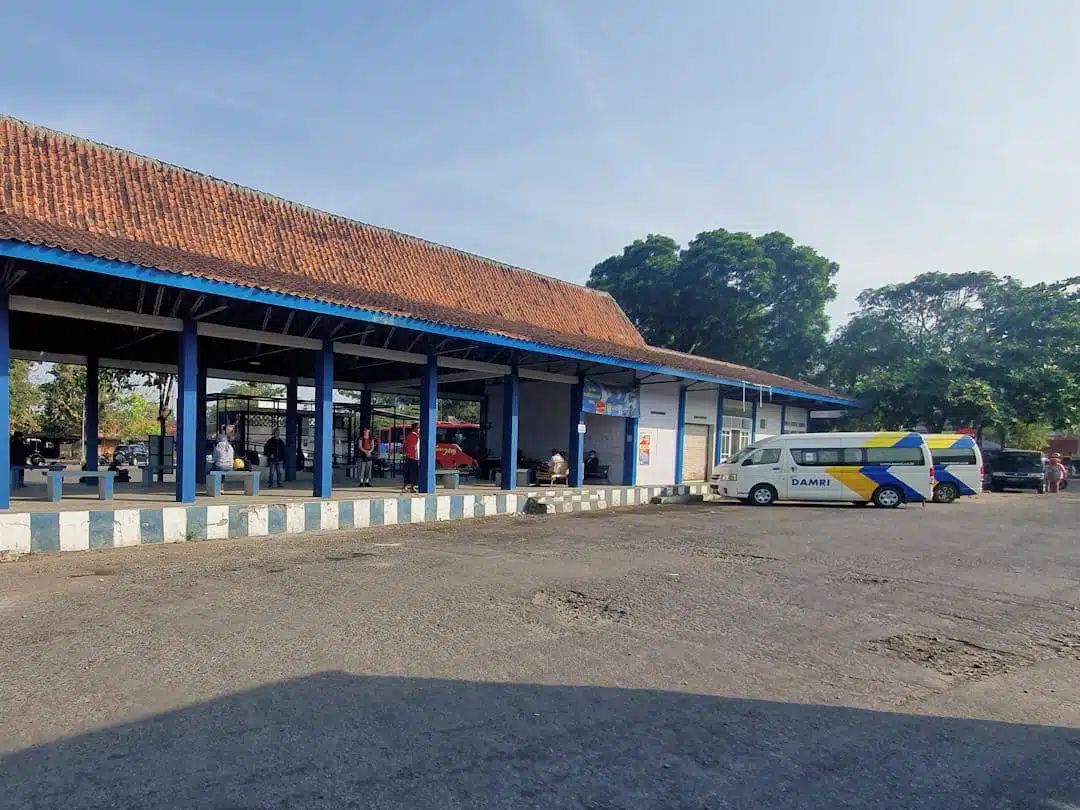
Shuttles from/to Yogyakarta arrive at/depart from the Borobudur Bus Terminal
How to access Borobudur
Ticket types
Until 2023, visitors could freely roam Borobudur Temple (Candi Borobudur), leading to overcrowding and causing damage to the temple structure. To protect the temple for future generations and provide employment opportunities for locals, access to Candi Borobudur is now only possible with a tour guide. The temple grounds remain unrestricted.
Accordingly, there are two types of tickets:
- Temple Ground ticket – As the name suggests, this ticket provides access to the temple grounds (the park surrounding the actual temple)
- Temple Structure ticket – This gives you access to the grounds AND Borobudur Temple (the latter via a guided tour).
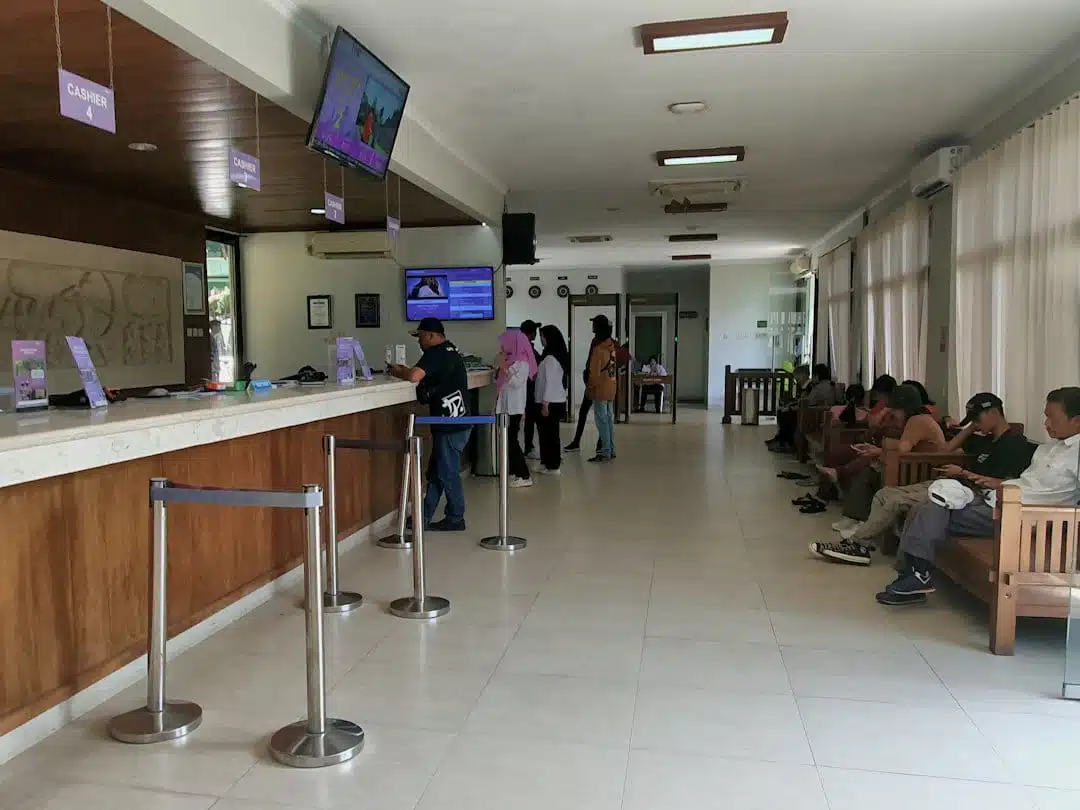
There are two types of tickets at Borobudur - one for the grounds only and one for the grounds plus Candi Borobudur (the temple itself)
Guided tours are held in English (and Indonesian) only. However, at the temple, we encountered groups whose guides spoke Spanish, Italian and French. If you want to join a tour in a language other than English (or Indonesian), contact Borobudur Customer Service via WhatsApp. Additional charges apply.
Private tours are also available (at an additional charge of IDR200,000 per group). Again, they can be arranged by messaging the Customer Service team.
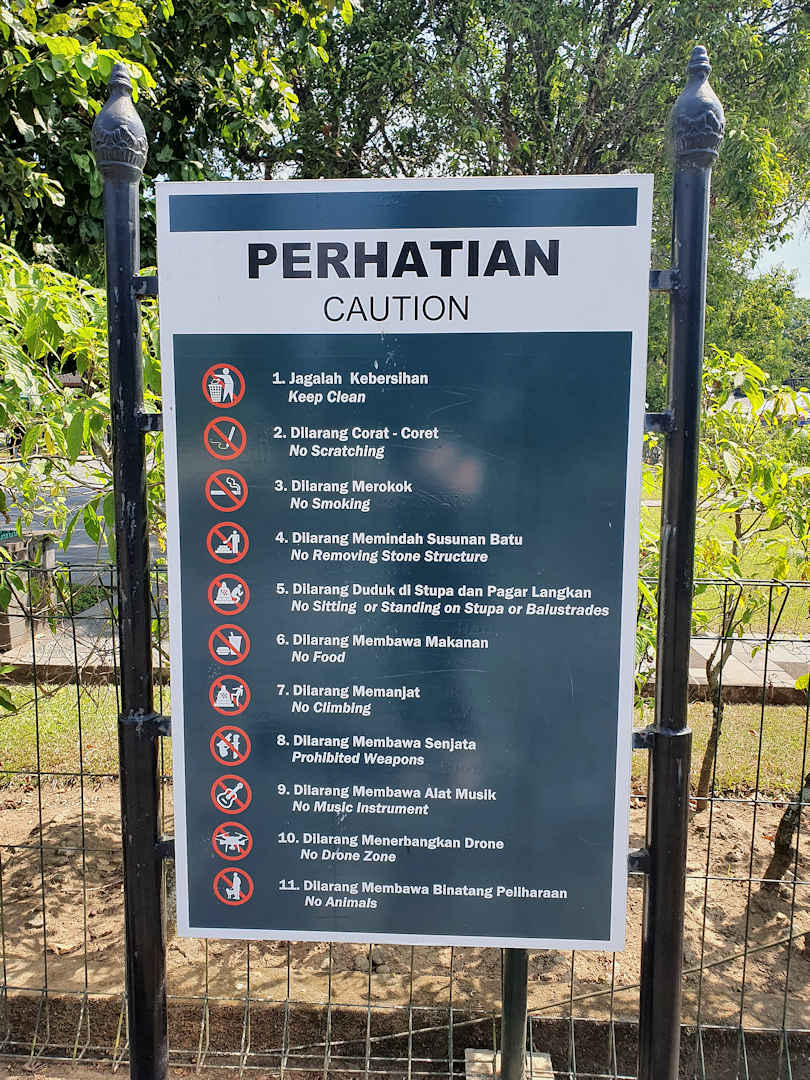
Make sure to stick to the rules when visiting this UNESCO site
Borobudur visitor quota system (how it works and best times to visit)
Temple Structure tickets are limited to a maximum quota of 1,200 people per day. This quota is further separated into eight sessions per day, with a maximum of 150 people allowed in each session.
The session times are as follows:
| Session | Departure Time | Temple Access |
|---|---|---|
| 1 | 08:30 | 09:00-10:00 |
| 2 | 09:30 | 10:00-11:00 |
| 3 | 10:30 | 11:00-12:00 |
| 4 | 11:30 | 12:00-13:00 |
| 5 | 12:30 | 13:00-14:00 |
| 6 | 13:30 | 14:00-15:00 |
| 7 | 14:30 | 15:00-16:00 |
| 8 | 15:30 | 16:00-17:00 |
What are the best time slots for Borobudur?
Given you’d want to avoid the heat of the day, sessions 1, 2 and 3 are the best times to visit, but these are also the most popular. Sessions 7 and 8 are a good option, too, as it starts to cool down by then, and the light is less harsh for photographers. If you choose the last session of the day, be aware that you won’t have time to roam the temple grounds after your visit of the temple structure as the complex closes at 17:30.
How to purchase tickets
Temple Ground tickets can be bought online (via the official website or Viator) or in person at the main entrance. Ticket counters are open daily from 6:30 to 16:30.
If you want to access the temple structure itself – and we highly recommend it – make sure you book your preferred time slot well in advance (especially if you want to join a morning session). You can buy your Temple Structure ticket online (again via the official website or Viator) up to several weeks before your visit.
The Borobudur entrance fees are not cheap (prices stated are for foreign visitors as of December 2025):
- Temple Ground tickets cost IDR412,500 per adult; and
- Temple Structure tickets are IDR455,000 per adult (an additional IDR42,500).
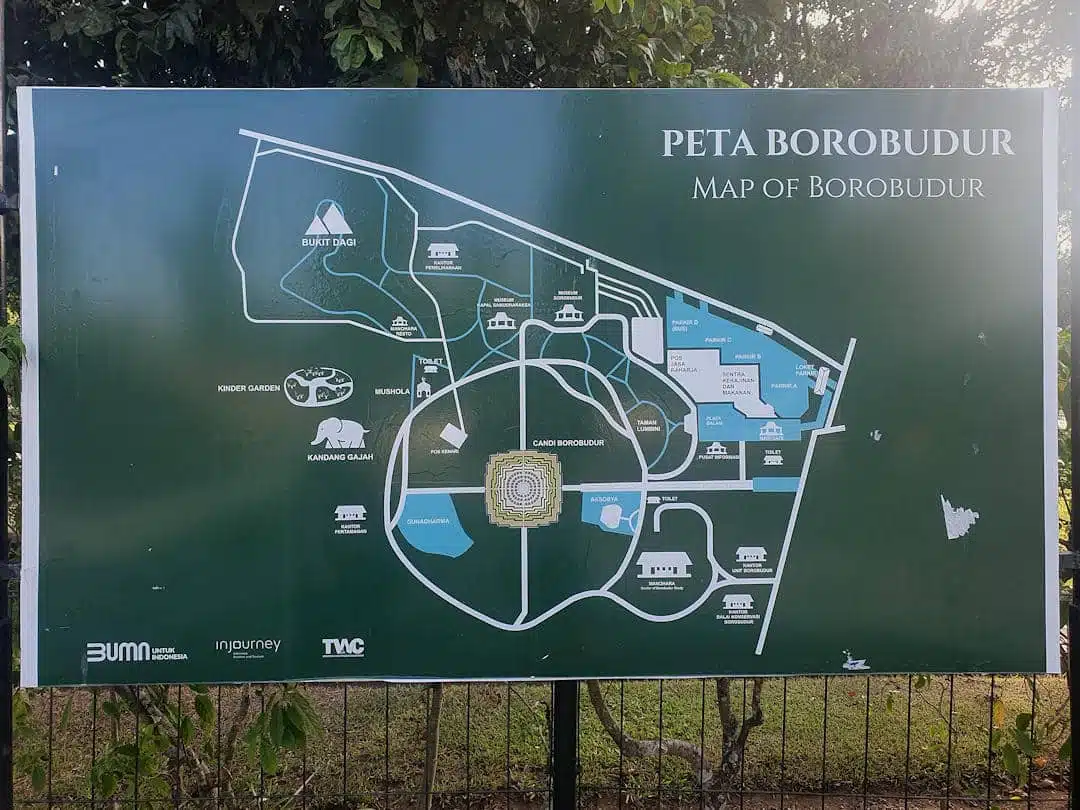
Guided tours of the temple structure start at the D Area, a short walk from the shuttle drop-off point
Stay connected the moment you land
We use Airalo eSIMs on (almost) every trip to avoid roaming charges and the hassle of buying a local SIM. You can install your eSIM before you travel and get online as soon as you arrive. Airalo works in 200+ countries (we've used it across the Americas, Europe and Asia), but not everywhere - so check coverage before you buy.
New to Airalo? Use code NEWTOAIRALO15 for 15% off
Already a customer? Use AIRALOESIM10 for 10% off
Can I visit Borobudur Temple at sunrise/sunset?
Yes, you can. Sunrise/sunset tours at the temple structure are available (again) but not cheap:
- Sunrise Tours: 4:00-8:00 – IDR1,000,000 (includes Indonesian-style breakfast)
- Sunset Tours: 16:00-20:00 – IDR2,000,000 (includes dinner).
Like normal tickets, sunrise/sunset tour tickets can be bought online (via the official website or Viator). There is a limit of 100 people per tour (and 15 per tour guide).
IMPORTANT: Sunrise/sunset tours DO NOT start at the Visitor Centre but at the Manohara Borobudur Cultural Center [Google Maps location]. That’s also where the breakfast and dinner are being served.
If that’s out of your budget, don’t fret. To view the sun rise over Borobudur, Mt Merapi and Mt Merbabu more affordably, you can head to various sunrise viewpoints near Borobudur, all to the (south) west of the temple complex, for example, Punthuk Setumbu [Official website, Google Maps location] and Bukit Rhema Gereja Ayam – better known as the Chicken Church [Google Maps location].
To experience the sunrise from either of these points, arrive 1.5 to 2 hours before dawn, as it can get busy. Besides, hearing the choir of muezzins call for prayer across the still-dark valley is pretty special, too. Take a Grab/Gojek to get there and back.
We watched the sunrise from a different spot (where it was just the two of us). If you stay at Griyo Jagalan, ask your fabulous host, Berman, to take you there.
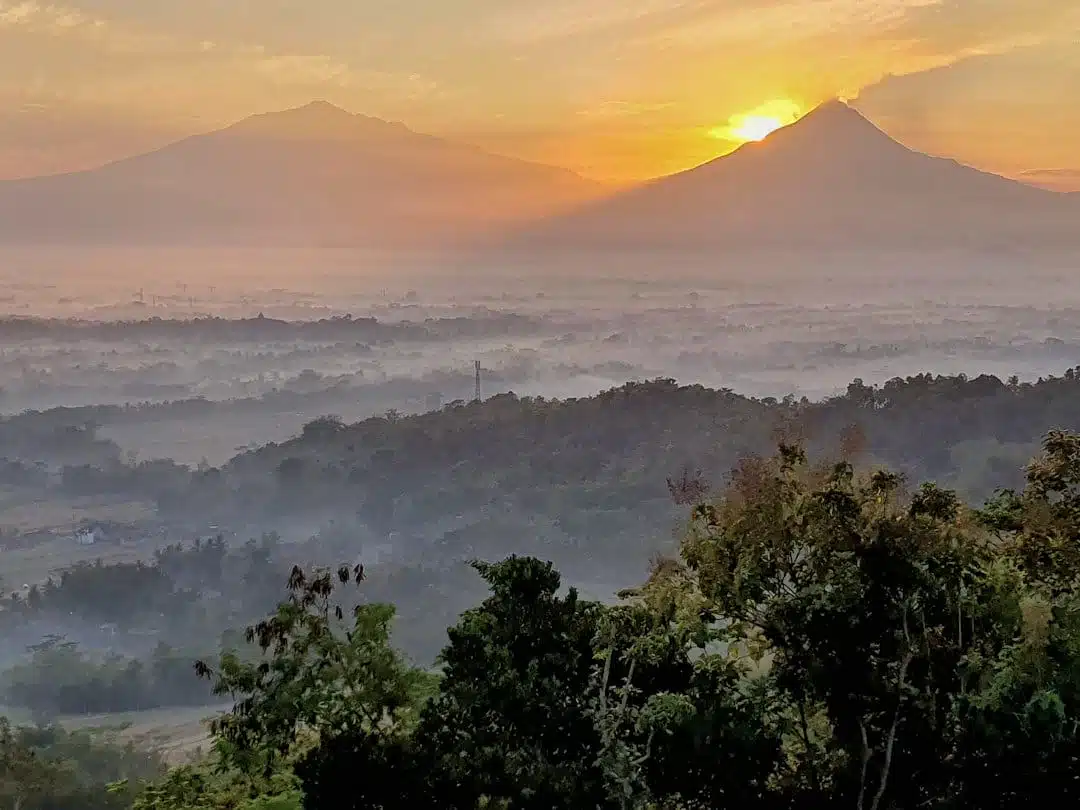
To watch the sunrise over Borobudur and Mt Merapi (affordably), head to one of the viewpoints (south) west of the temple
What to expect during the guided tour
Pre-tour logistics
Upon entering the Visitor Centre at the Museum/Kampung Seni Borobudur [Google Maps location], keep an eye out on your left for the FREE EV shuttle (Wira Wiri) that takes you to the starting point of your tour at Plaza Penerima [Google Maps location].
Once dropped off, head to the D Area. Here, you will need to show your e-ticket and receive your wristband and a voucher for your footwear. You will also receive a numbered token (which allocates you to a tour guide).
You are then lead into a shaded waiting area, where you will receive a pair of locally-made flip-flops (called upanat). You must wear these when accessing the temple structure (a canvas bag to carry your shoes during the tour is also provided). The flip-flops are not very comfortable. If you’re prone to blisters (especially in humid conditions), wear toe socks and/or bring band-aids.

Visitors to Borobudur are required to wear the flip flops provided when accessing the temple structure
During the tour
The 150 people per session are further divided into groups of up to 20 people, each with their own tour guide (hence the number token). When your number is called out, get up, hand in your number token and join your guide. You will walk up to the temple with your tour guide, who will provide some initial information. The walk to the temple is flat and takes about 20 minutes.
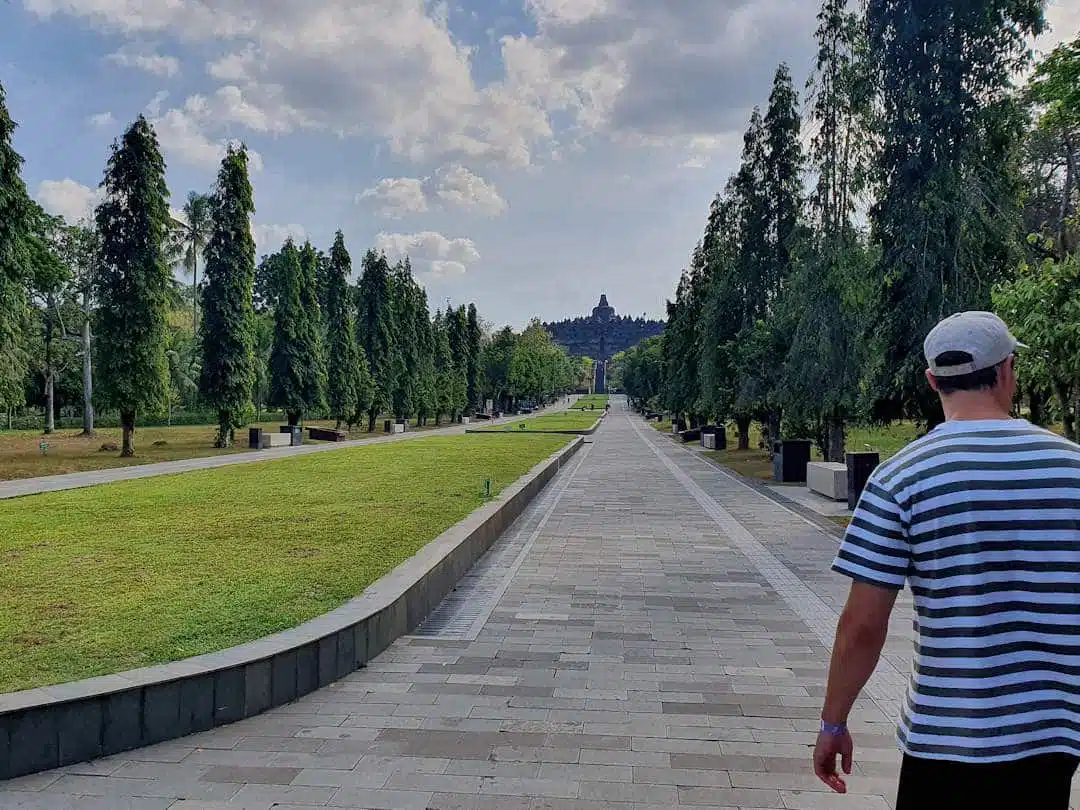
Your guided tour begins with a 15-20 minute walk to the temple structure during which you'll receive some initial information about the site
Once at the temple, your wristband will be scanned, and you will follow your tour guide up the stairs.
As one of the most significant expressions of Buddhist heritage in Indonesia, walking Borobudur’s terraces reveals the true scale of its artistry. Supported by your tour guide’s stories, you’ll learn more about the temple, Buddha, and the Buddhist way of life and path towards enlightenment.
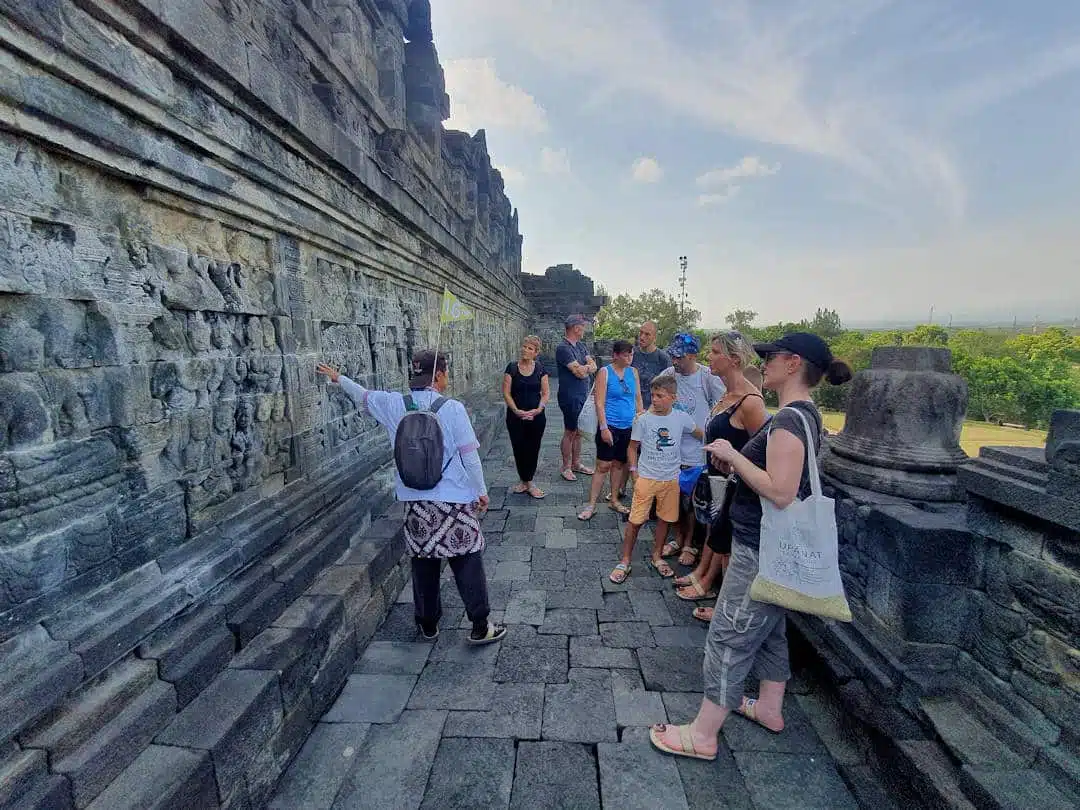
Guided tours at Borobudur are limited to 20 visitors per guide. For non-Indonesians, they are held in English (and other languages with pre-booking).
Understanding the basic meaning of the Borobudur architecture – a symbolic journey from the earthly world to the spiritual – helps you appreciate the site more deeply. You will also have 15 to 20 minutes at the top levels (those with the stupas) to roam around on your own. The top level with the single stupa is off-limits to visitors.
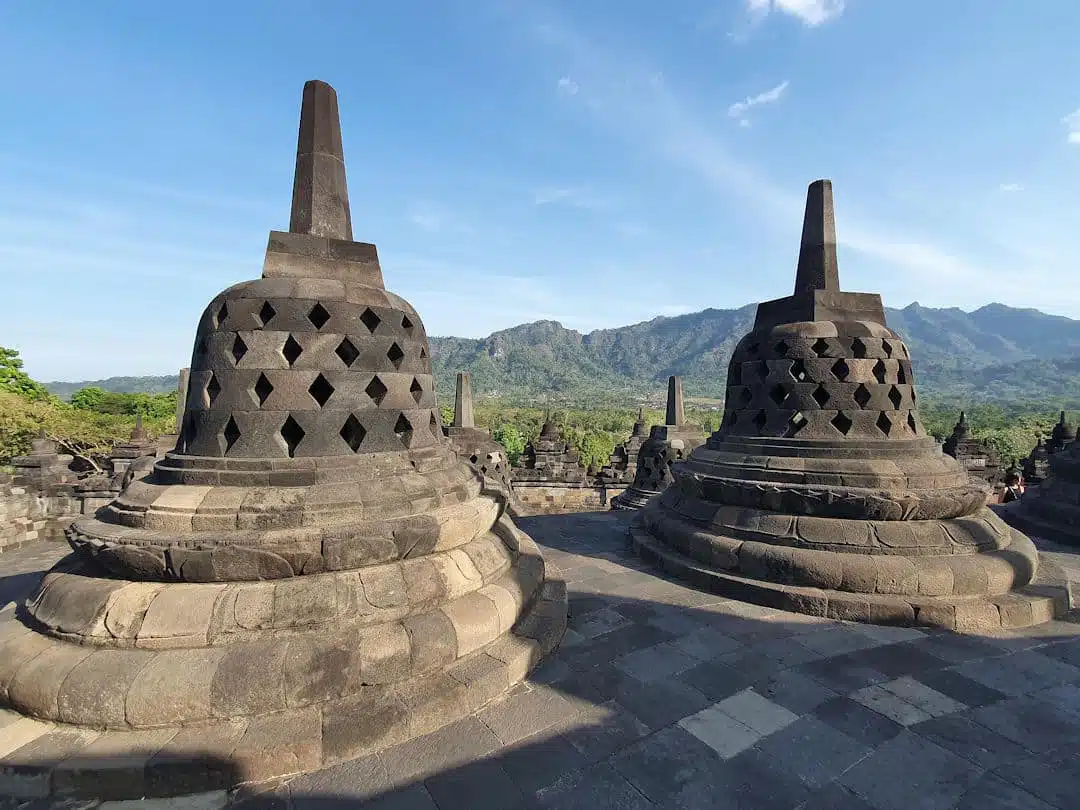
During the tour, you will also have the chance to look around the top of the Temple on your own
When your time is up, your tour guide will lead you back down to the temple exit, where your wristband will be scanned again.
After the tour
Once your wristband has been re-scanned, you can change back into your shoes (the flip-flops and canvas bag can be kept as souvenirs) and roam around the temple grounds on your own. There are a number of museums north of Candi Borobudur worth checking out – entry is included in your ticket price. If you’re only visiting the temple grounds, there is also an informative museum at the Visitor Centre with a scale model of the temple (the entry fee is IDR10,000).
If you don’t want to walk back to the main entrance (a flat and shaded 20 minute walk), you can take the FREE Wira Wiri shuttle back. There is a stop by the intersection near the Prana Borobudur Restaurant [Google Maps location].
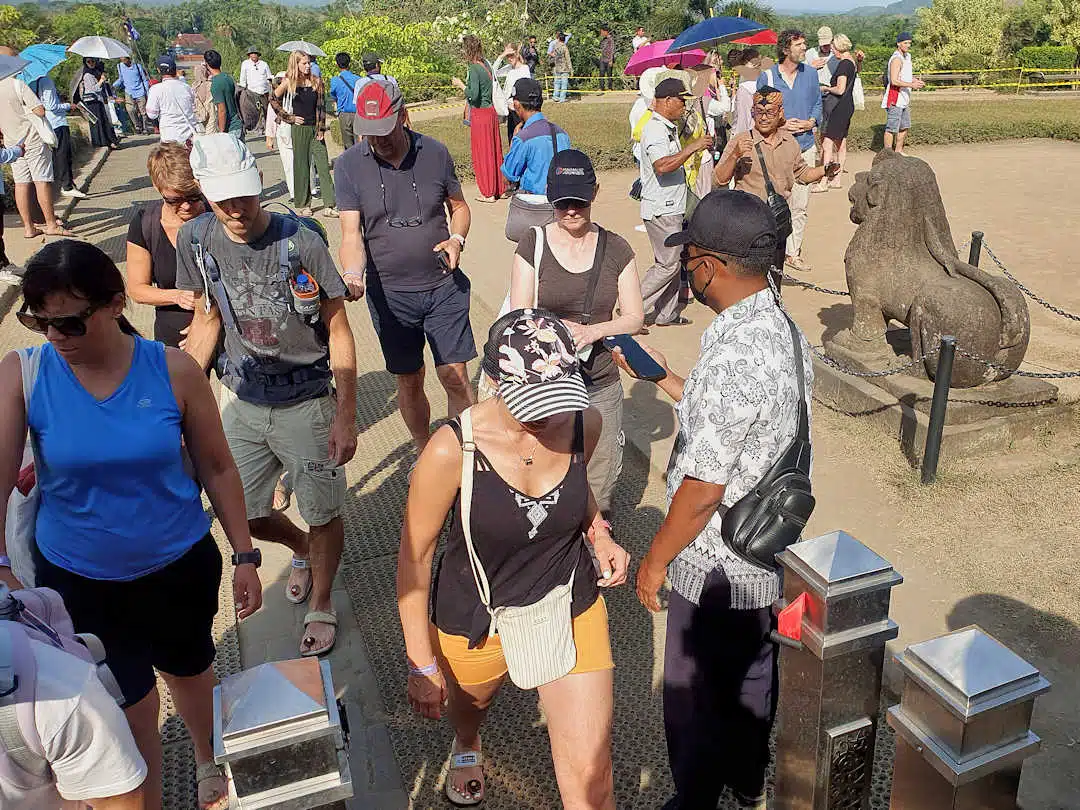
Visitors with a temple structure ticket will receive a wristband that is scanned upon entry and exit of Borobudur Temple
Borobudur FAQs and practical travel tips
When is the best time of year to visit Borobudur (and when should I avoid it)?
Borobudur is a year-round destination without any major seasonal variance in visitor numbers. The only difference is the weather/climate you can expect, with a dry season from April to September and a rainy season from October to March. For month-by-month weather information in Yogyakarta and Borobudur check Weatherspark.
If you want to avoid crowds, the day of the week you choose to visit is more important than the time of year. Weekends and public holidays are the busiest days at Borobudur, so if you can, avoid those. And speaking of public holidays: avoid Vesak, a major Buddhist festival held in May/June, when Buddhists from around the globe make their pilgrimage to Borobudur.
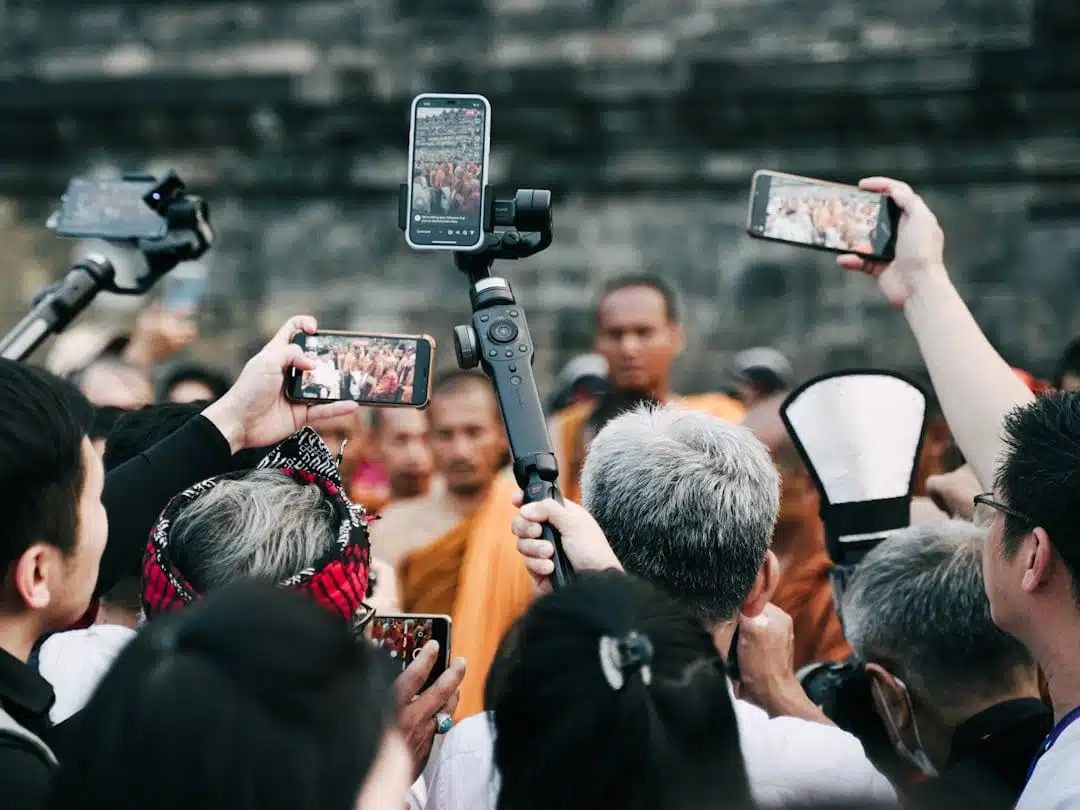
To avoid the crowds, don't visit Borobudur on weekends and public holidays - especially during Vesak, when the area is packed with pilgrims | Photo by Afif Ramdhasuma on Unsplash
Can I visit Borobudur with mobility issues?
I let you decide: From the drop-off point at Plaza Penerima to the temple structure and from there back to the Visitor Centre, expect to walk around 2 kilometres (if you climb the wide set of stairs leading to the bottom of the temple structure; a little more if you want to avoid the stairs). If that’s too much, you can reduce your walking distance by using one of the PAID golf buggies circling the temple grounds (at a cost of around IDR20,000) or just use the buggy the whole way and view the structure from afar.
While the climb on the temple structure itself is slow, the stone steps are steep and of varying height. Even able-bodied visitors need to watch their steps (especially when going down). Wheelchair users will only be able to view the temple structure from the outside – there is no ramp or lift.
What should I bring when visiting Borobudur?
There is an official dress code (women may not wear shorts, and their shoulders must be covered). It doesn’t seem to be enforced (including when we visited), but we recommend obeying the rules anyway, out of respect.
There is no shade anywhere on the temple structure, so wear sunscreen and a hat (and pack an umbrella or poncho if you visit during the rainy season). Bringing water is also essential to stay hydrated.
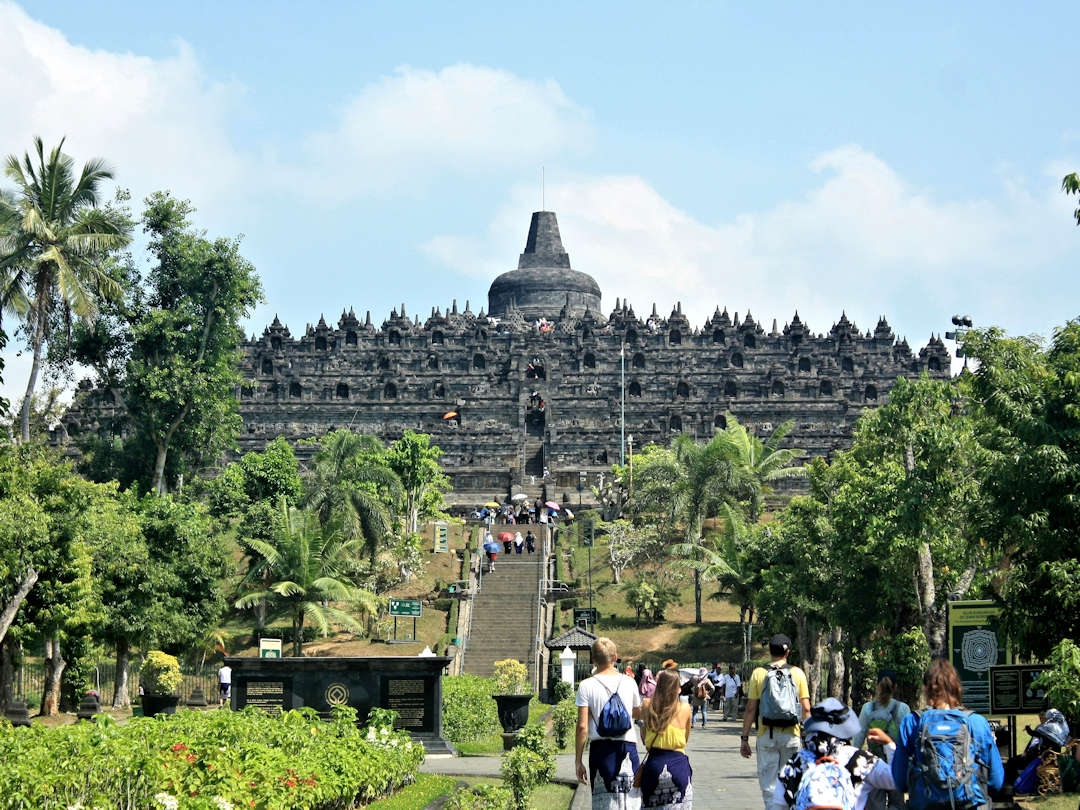
Be prepared to walk and climb, and wear a hat and sunscreen when visiting Borobudur | Photo by Maneesh Shahani on Unsplash
Can I take food and drinks into the temple grounds?
No, only water is allowed. If your running out of your own supply, there are water fountains in the temple grounds (though we only saw one of them – after exiting the temple structure, near the prayer room).
If your walk around the site leaves you starving, you’ve got two options:
- There are food stalls at the Visitor Centre. We can’t speak for the food quality, prices or service as the one we ate at is now closed.
- Within the temple grounds, there are three cafés/restaurants. Only two are en route, and of those two, the Prana Borobudur Restaurant [Google Maps location] is the better choice. It’s also conveniently located near the shuttle stop.
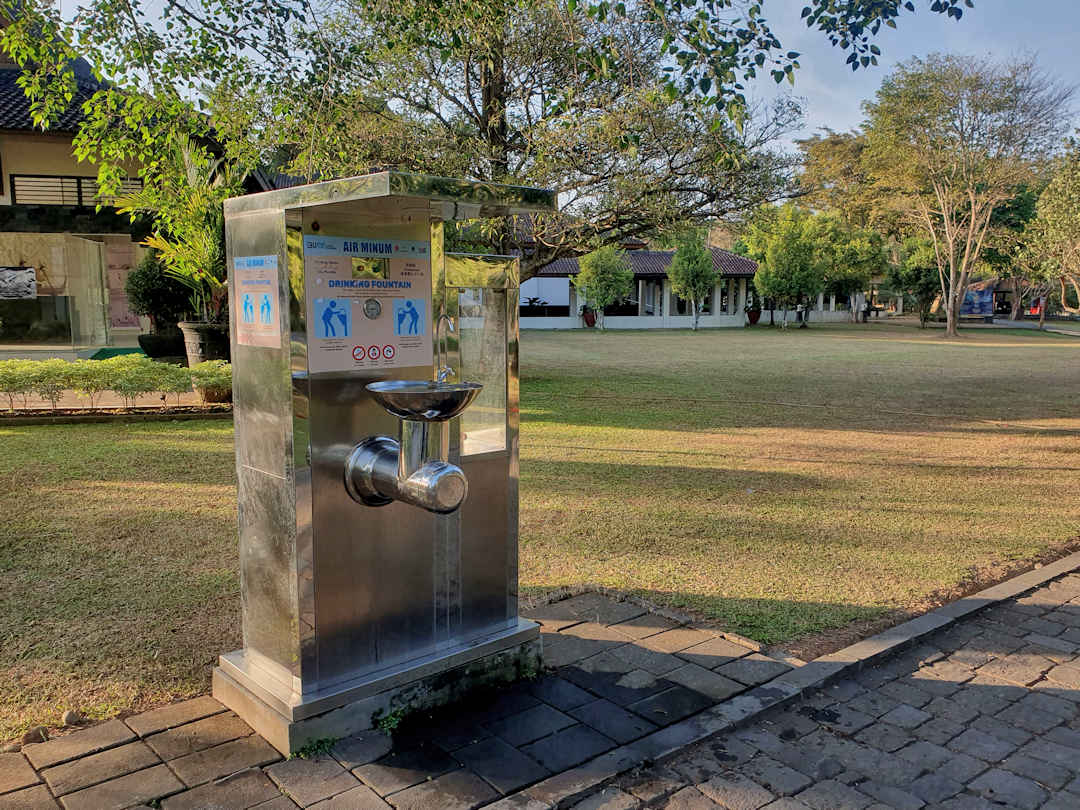
Food and drinks are not allowed at Borobudur Temple, but you can bring a water bottle and refill it at stations like this on the temple grounds
Are there bathrooms in the Borobudur temple complex?
Of course. There are paid toilets at the Visitor Centre (IDR2,000) and FREE bathrooms once you’ve passed through the D Area:
- inside the D Area building;
- in a building by the waiting area (where you change into your flip-flops/wait for your tour guide);
- half-way along the avenue leading up to the temple structure (on the left-hand side); and
- after you exit the temple structure and walk back towards the entrance (near the prayer room).
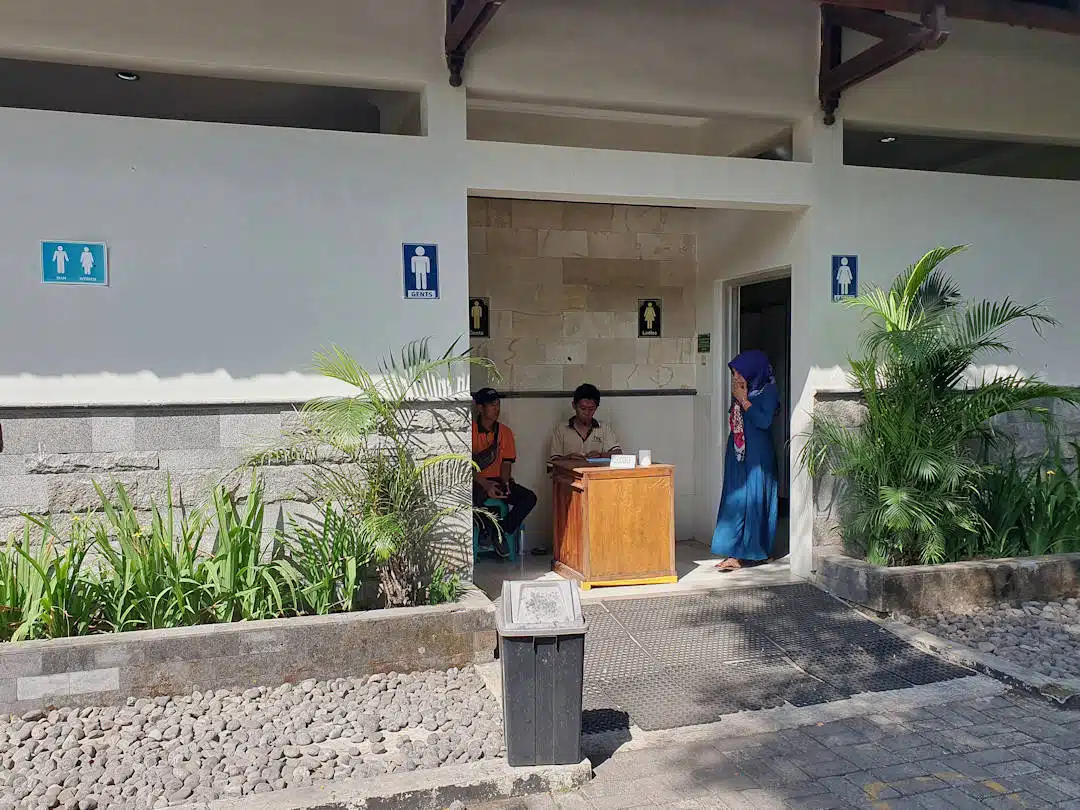
Don't use the paid toilets at the Visitor Centre if you can help it - there are FREE bathrooms once you've passed through the D Area
Is there luggage storage at Borobudur?
Yes, there is, but only at the Visitor Centre. Luggage storage used to be free but that was before the new Visitor Centre was opened. If you’ve used the facilities recently please let us know if there are charges (and how much they are).
Want to know what we pack as full-time location-independent travellers?
We research and document every item we carry as full-time travellers in all four seasons - whether on backcountry hikes across Socotra, during winter adventures in Hokkaido or National Park explorations in tropical Costa Rica. Our packing lists are based on 9 years of living on the road. Pick from it what applies to you (and ignore what doesn't). And if you've got some useful tips of your own, please let us know. We're always keen to learn new tricks.
Why not join a Borobudur day tour? Is there more to see and do?
Many people visit Borobudur on organised day tours from Yogyakarta (often combined with Prambanan in the afternoon). The magnificent temple complex though deserves much more of your time (and so does Prambanan). So, if you have the time, come and stay in Borobudur for a night (or more). And yes, there is heaps more to see and do in/around Borobudur. More on that in the next chapter.
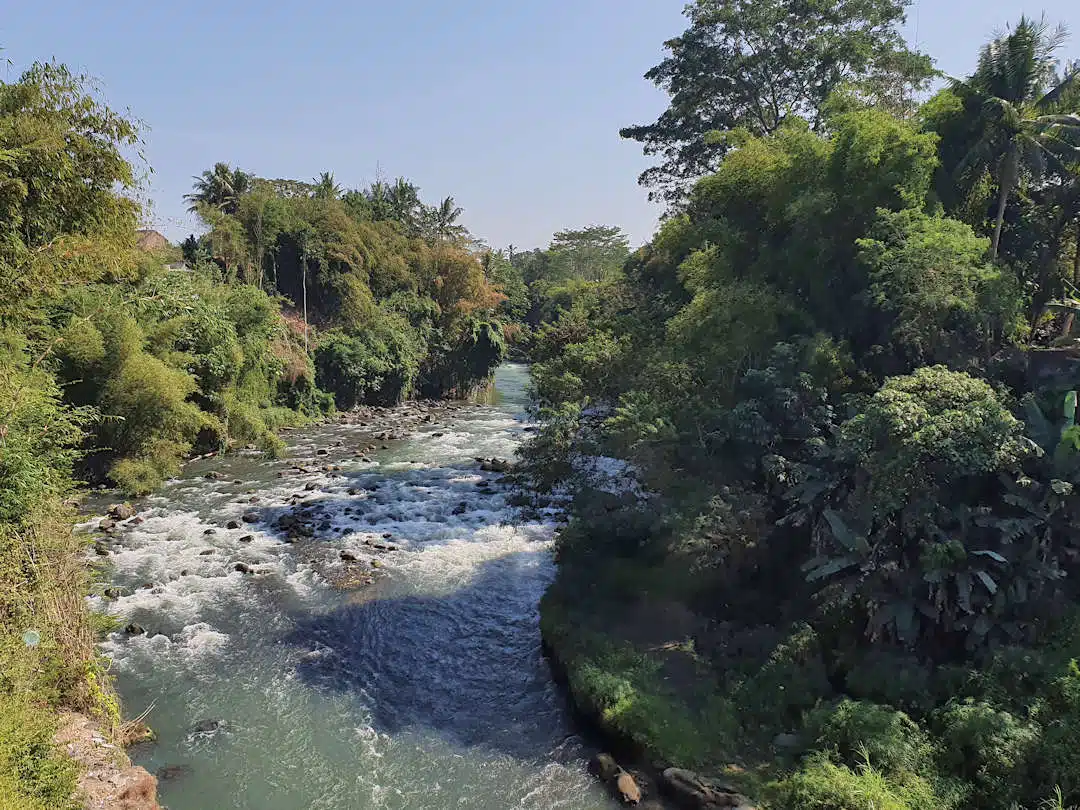
Besides the temple complex, visitors to Borobudur can enjoy a range of outdoor activities, including rafting on the Progo River
If I only have ONE day, which should I choose: Borobudur or Prambanan?
Oh, that’s a hard one. Given one is a beautiful and totally unique Buddhist Temple while the other is an example of stunning, intricate Hindu architecture, you can’t really compare the two. If you only have ONE day, then joining a combined day tour is your best option (but stay in Prambanan for the Ramayana Ballet).
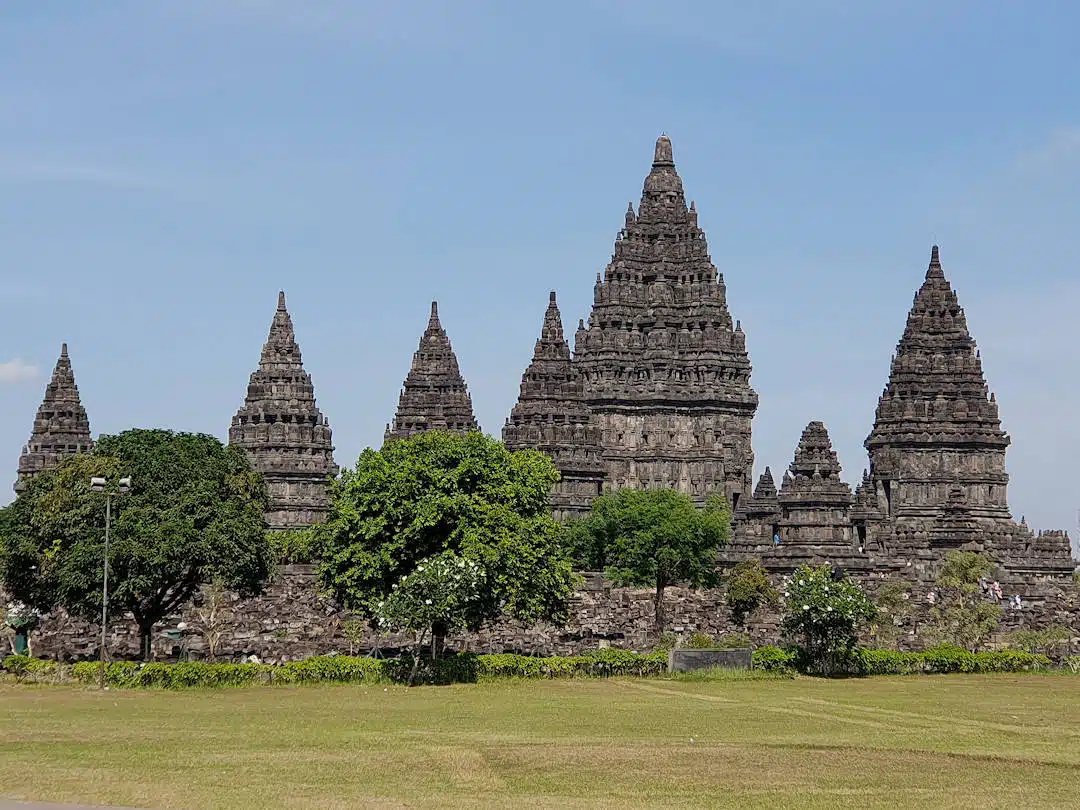
If you’re planning to attend the ballet and visit the Prambanan temple complex, we recommend to stay a night or two in the Prambanan area
Nearby sites and other things to see and do in/around Borobudur
Other temples
The temple complex of Borobudur comprises not just Candi Borobudur, but a total of three, including Candi Pawon and Candi Mendut. The latter two are located outside the borders of the (modern-day) main temple complex:
- Candi Pawon is 1 kilometer east from the old entrance at Plaza Penerima – an easy, flat walk [Google Maps location]; and
- Candi Mendut is a further 2 kilometers east of Candi Pawon – best reached by Grab/Gojek or bicycle [Google Maps location].
The combined ticket for Candis Pawon and Mendut is IDR20,500 for foreign adults; half that for Indonesians. If you can only visit one, go to Candi Mendut (a working Buddhist monastery). Check the opening hours before you go.
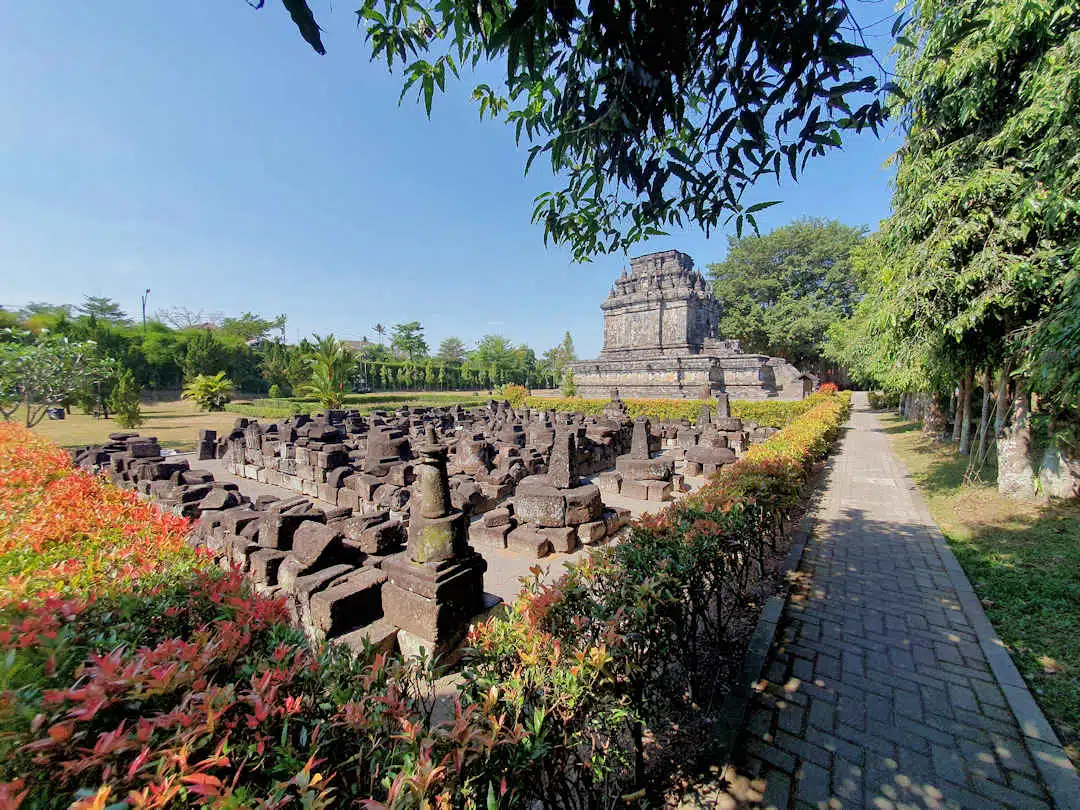
Borobudur comprises three temples, including Candi Mendut, a working Buddhist Monastery
Other activities
Beyond the temples, Borobudur village tourism provides opportunities to visit local producers, such as the Ashfa Honey Bee Farm (get a Grab/Gojek or join a VW Jeep tour). Borobudur also offers a range of outdoor activities – from rafting on the Progo River to cycling tours – plenty to keep you busy for a few days.
Where to stay in Borobudur
Below are our recommendations for affordable (and sustainable) accommodation options that are near the old entrance. While the entrance to the temple complex was shifted away from the town centre, and you now need to take a Grab/Gojek or a bicycle, it’s still best to stay in town as there are more restaurant options, and other sights in and around Borobudur are easier to reach from here.
| Name | Property Features | Type | Price Indicator | Book Now |
|---|---|---|---|---|
| Anugrah Borobudur Cottage | Restaurant and spa Delicious breakfast available | Hotel | $$ | Book Now |
| Bhumi Kasuryan Borobudur | Serene setting among rice fields Delicious breakfast included Bicycles are complementary | Guesthouse | $$ | Book Now |
| Efata Homestay | Super-friendly hosts Gorgeous garden Delicious breakfast available Bicycle rental service | Homestay | $ | Book Now |
| Genthong Homestay | à la carte and vegetarian breakfast Bicycle and car rental service | Homestay | $ | Book Now |
| Griyo Jagalan | Friendly hosts Offers bicycle rental and private tours Certain documented environmental practices implemented at property. | Guesthouse | $ | Book Now |
| Maher House Borobudur | Sparkling clean Great breakfast | Guesthouse | $$ | Book Now |
| The Omah Borobudur | Restaurant Room service 24-hour front desk | Hotel | $ | Book Now |
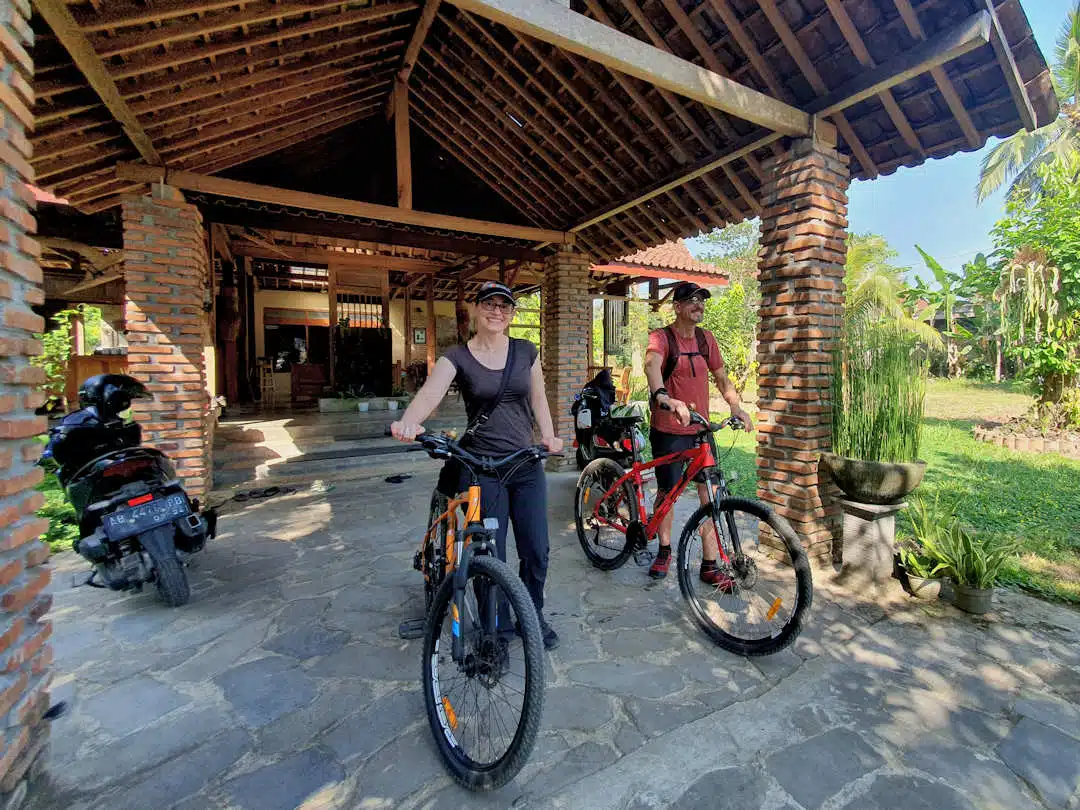
Bicycles are great to get to the Visitor Centre and other Borobudur sights - some accommodations include them free of charge
Where to eat in Borobudur
If you’re staying in one of our shortlisted accommodations, you’ll find several great places nearby to enjoy a meal. Here are our recommendations:
- Alea Guesthouse Café [Google Maps location]: Located on the road between Candi Borobudur and Candi Pawon, Alea Guesthouse Café offers a cosy atmosphere and a menu featuring Indonesian and Western dishes. It’s a great spot for a relaxed meal, whether you’re in the mood for a hearty breakfast, a light lunch or a comforting dinner.
- Seafood Borobudur [Google Maps location]: If you’re a fan of seafood, this restaurant is a must-visit. Seafood Borobudur is known for its fresh, local seafood and traditional Indonesian flavours. It’s a popular choice for those wanting to savour local delicacies in a friendly, informal setting.
- Omah Borobudur Resto [Google Maps location]: For a more upscale dining experience, Omah Borobudur Resto offers a delightful blend of traditional Javanese cuisine and contemporary dishes. The restaurant features a charming ambience with beautiful views of the surrounding area, making it an excellent place for a special meal.
- UPRUS Coffee and Co [Google Maps location]: If you need a caffeine boost or want a casual spot to unwind, UPRUS Coffee and Co is the place to go. This café provides a range of coffee drinks, teas, and light snacks in a relaxed environment. It’s an excellent spot for a break after exploring the temple.
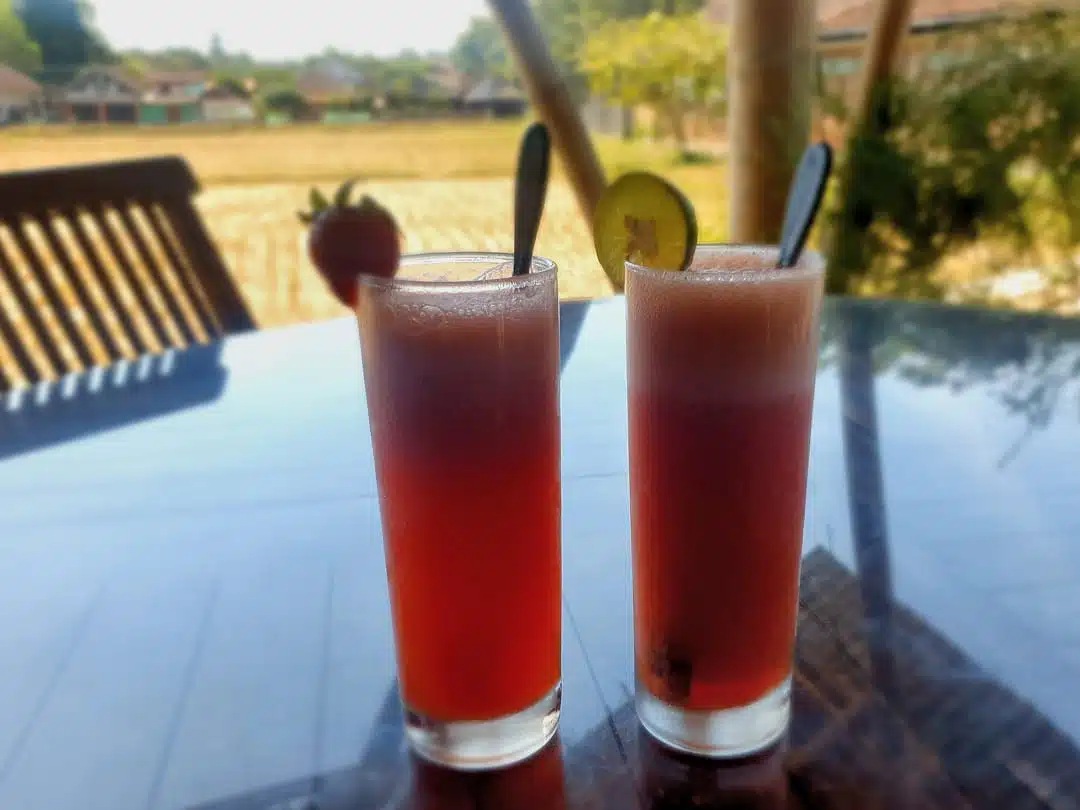
Cool down in the mid-day heat with a refreshing drink at one of the family-run cafes in Borobudur
Keen to visit Borobudur?
What other questions do you have that we haven’t answered (yet)? And if you’ve been recently, what has changed, and what other tips would you add? Please let us know.
Before you go, if you liked our article and found it helpful, we would appreciate it if you could share it with your friends and family via the Share buttons below. Even better: Leave a short review on Trustpilot or Google, which would help us further build our online reputation as a (trustworthy and helpful) travel and lifestyle blog.