

This article may contain links to products and services we use and recommend. We may receive compensation when you click on links to those products. For more information, see our Disclosure Policy.

Usually overlooked in favour of its more famous neighbours, Kyoto and Osaka, people who visit Nara typically see just the attractions around Nara Park, including its renowned deer. But there is much more to see and do in Japan’s ancient capital. From the oldest wooden temples in the world to hiking trails through sacred primaeval forests, our one- to three-day itinerary is designed for those who want to experience the lesser-known wonders of beautiful Nara.
Are you planning your trip to Nara?
Book your transportation to/from and around Nara, keeping your carbon footprint in mind:
Find your perfect accommodation in Nara with Booking.com. We recommend these traditional, small-scale and centrally located options near public transport:
Airport Transfers
Book reliable airport transfers in advance for peace of mind. With Suntransfers, enjoy door-to-door service at 500+ airports worldwide. Professional drivers, real-time flight tracking, flexible booking options, and 24/7 support ensure a smooth journey from the moment you land.
When managing money across countries, we keep fees low and decisions deliberate. We use XE to check exchange rates, Wise to move and spend money internationally, and PocketSmith to track where it all goes.
Buying travel insurance can feel overwhelming. Start by reading our buyer's guide to finding insurance that suits your needs. Then compare options on the Insubuy marketplace (with all the information you need to find the one that's right for you).
Explore the wonders of Nara and beyond with the best tours and activities powered by Viator. We recommend these options with local providers:
Why should you include Nara on your Japan itinerary?
If you are a history buff and a nature lover, you must include Nara in your itinerary. As the first imperial capital of Japan (from 710 to 794), Nara is a living museum with over 1,200 years of history and rich cultural heritage.
The city is home to numerous Buddhist temples, Shinto shrines, and the remains of the Imperial Palace, all of which offer fascinating insights into Japan’s ancient past. Another highlight is Nara’s sacred forest, preserved for over 1,100 years. This unique combination of historical sites and natural beauty led to the UNESCO World Heritage Site designation of the Historic Monuments of Ancient Nara in 1998.
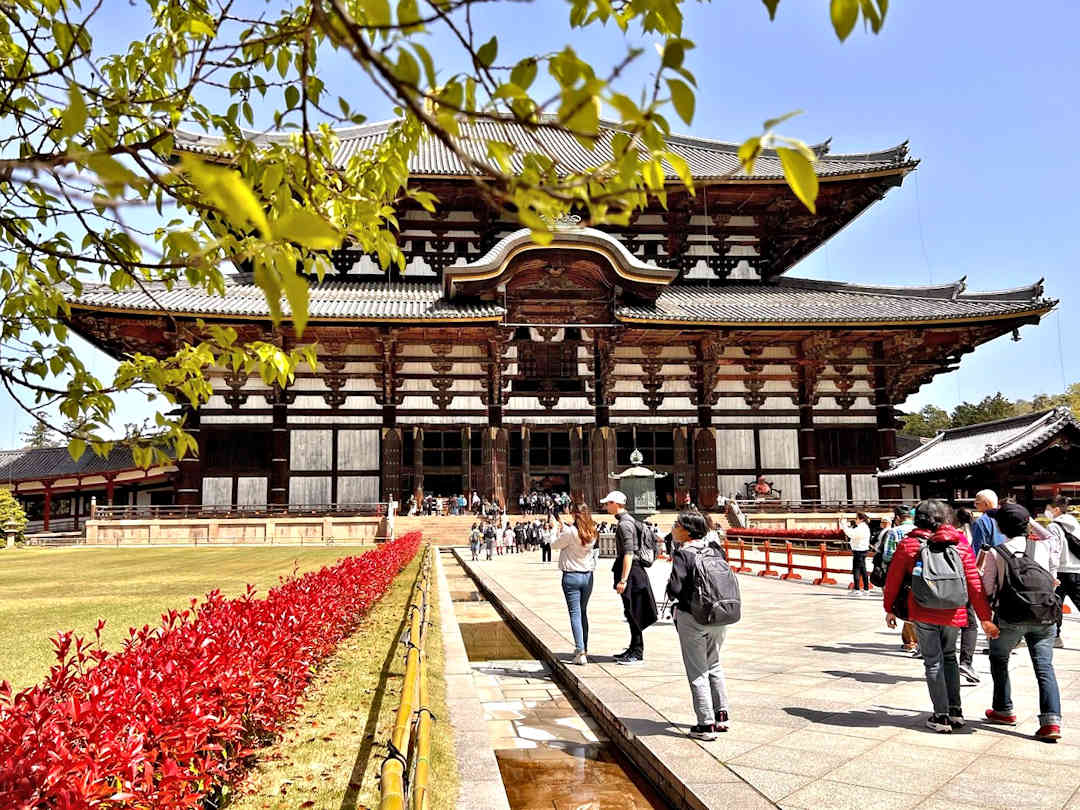
As the first imperial capital of Japan, Nara is a living museum with over 1,200 years of history | Image courtesy of Jennie Ryken
When is the best time to visit Nara?
While the Cherry Blossom season may be the most popular tourist draw if you want to avoid the crowds, consider visiting Nara
- in February to mid-March (the blooming plum trees in March are just as beautiful as Sakura),
- between mid-May and mid-June (after Golden Week and before it gets too hot and humid) or
- in the first half of November and the first half of December (to experience the autumn foliage but avoid the worst crowds from mid to end of November).
Map of Accommodation, Points of Interest, Eateries and Transport
Below is a map of the recommended accommodations, points of interest, eateries, and transport terminals or stops mentioned in this article.
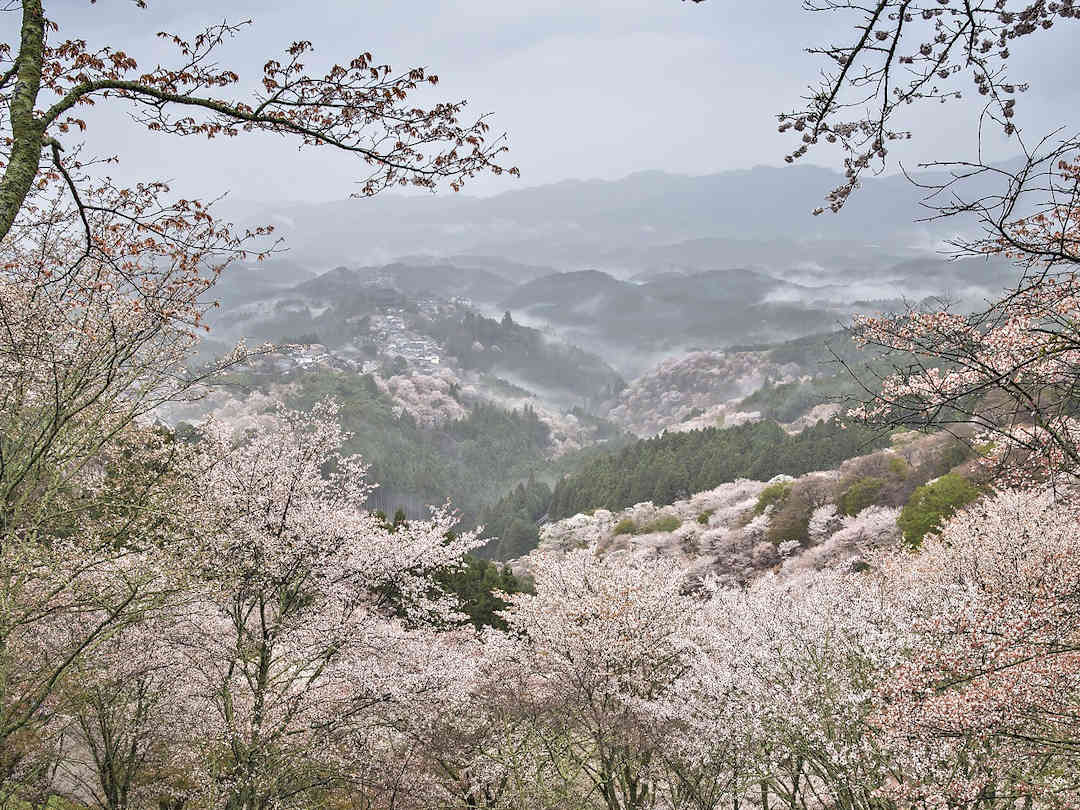
Spring is a great time to visit Nara as long as you avoid Sakura and Golden Week | Image courtesy of Kanenori on Pixabay
Nara also hosts unique festivals throughout the year that are worth planning your visit around:
- During Setsubun in early February, you can experience Kasuga Mantoro, lighting all the lanterns at Kasuga-Taisha Shrine [Official website, Google Maps location].
- Omizutori, held in the first half of March, is a Buddhist festival marking the start of Spring. During the festival, at 1900h every night, Buddhist monks run along Nigatsudo’s balcony [Google Maps location] carrying six-metre-long torches. The embers raining on the crowds below are believed to bring good health.
- Visiting in the first half of June allows you to observe baby deer at the Roku-en Park nursery [Google Maps location].
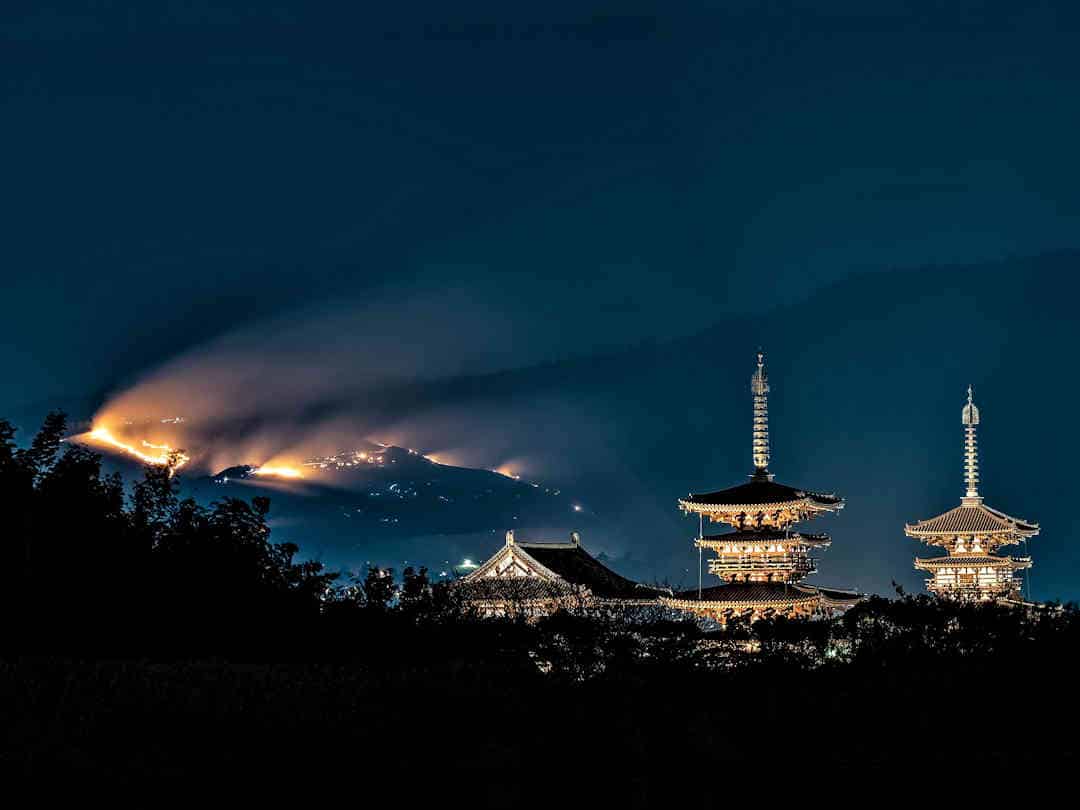
Nara hosts unique festivals throughout the year that are worth planning a visit around | Image courtesy of Kanenori on Pixabay
How much time should you spend in Nara?
If you have limited time, you can visit Nara on a day trip (from Kyoto or Osaka). However, to really appreciate what Nara has to offer, we recommend spending at least two nights in the city—the more, the better.
How to get to Nara
Getting to Nara from either Kyoto or Osaka is straightforward, and both Japan Railways and Kintetsu offer convenient options depending on where you are staying and whether you are using a JR Pass.
From Kyoto, the JR Nara Line Rapid Express from Kyoto Station takes around 50 minutes. From Osaka, you can reach Nara in about an hour via the Osaka Loop Line from Osaka Station or the Osaka East Line from Shin-Osaka Station. If you already have a JR Pass, these routes are usually the simplest choice.
Kintetsu Railway also connects Nara with both Kyoto and Osaka. It is not covered by the JR Pass, but it can still be a useful option, especially if the station location or timetable better suits your plans. Kintetsu also offers 1-day and 2-day passes that cover all Kintetsu lines and Nara Kotsu buses between Nara Park, Tōshōdai-ji, and Hōryū-ji.
To compare routes, journey times, and ticket options for your travel date, use the search tool below.
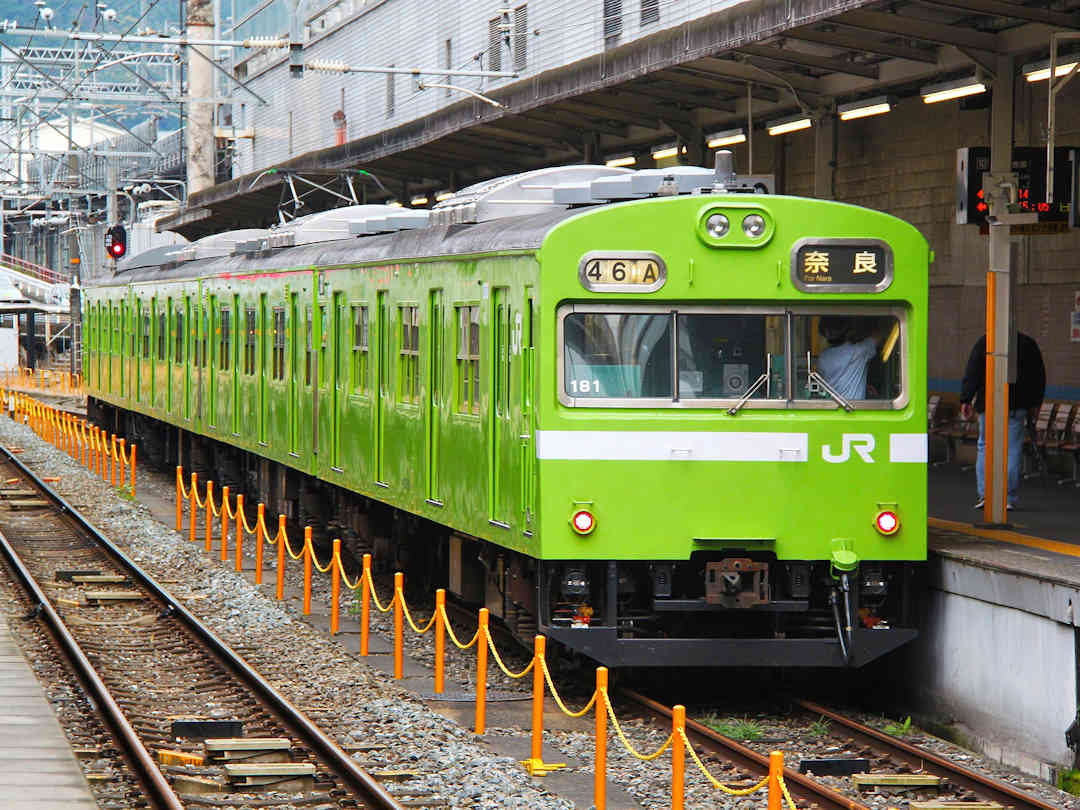
From Kyoto to Nara, the JR Nara Rapid Express only takes 50 minutes | Image courtesy of Sharon Ang on Pixabay
How to get around Nara
Nara’s sights, as we found out the hard way, are pretty spread out. Even just visiting the sights in and around Nara Park will see you clock up the miles quickly.
To make it easier to get around, we recommend renting an electric bicycle from Nara Rent-A-Cycle. This allows you to move at your own pace. And with Nara being relatively flat, riding a bike is not strenuous.
Alternatively, and especially if you don’t get the Kintetsu Rail Pass, consider purchasing a 1- or 2-day Bus Pass. A 1-Day pass already pays for itself if you travel by bus to and from Tōshōdai-ji Temple (see Day 2 of our itinerary).
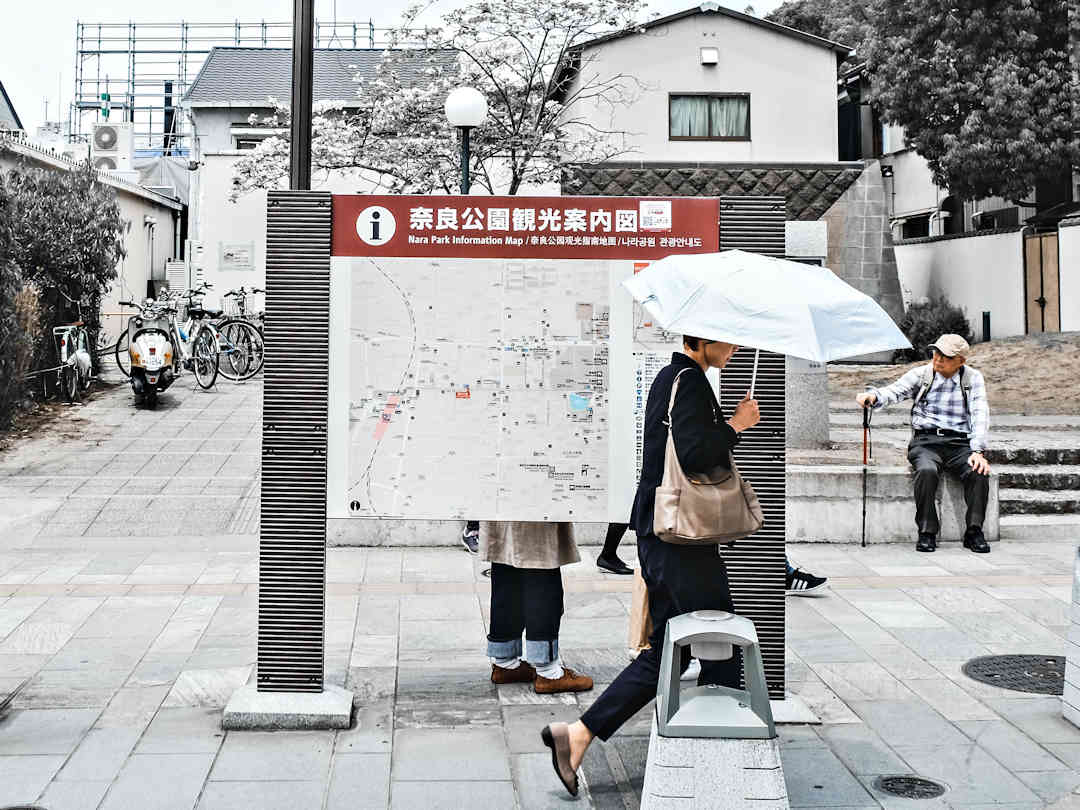
Nara's sights are surprisingly spread out, so hire a bicycle or use public transport to get around town | Image courtesy of Mohamad Ilham Fauzan on Unsplash
How to experience Nara beyond the tourist hotspots
Day 1 – The touristy experience: Nara Park
Arrive by train from Kyoto or Osaka in the morning. To fuel your exploration, grab some provisions from Vie de France [Google Maps location] (at Nara Station). Then drop your luggage at your accommodation.
Hire a bicycle [Google Maps location] and start your exploration with a visit to the Kōfuku-ji temple complex [Google Maps location]. Its Five-Storied Pagoda (Gojunoto) was initially built in the 8th century, with the current structure dating from 1426. Its Northern Round Hall (Hokuendo) is more than 800 years old.
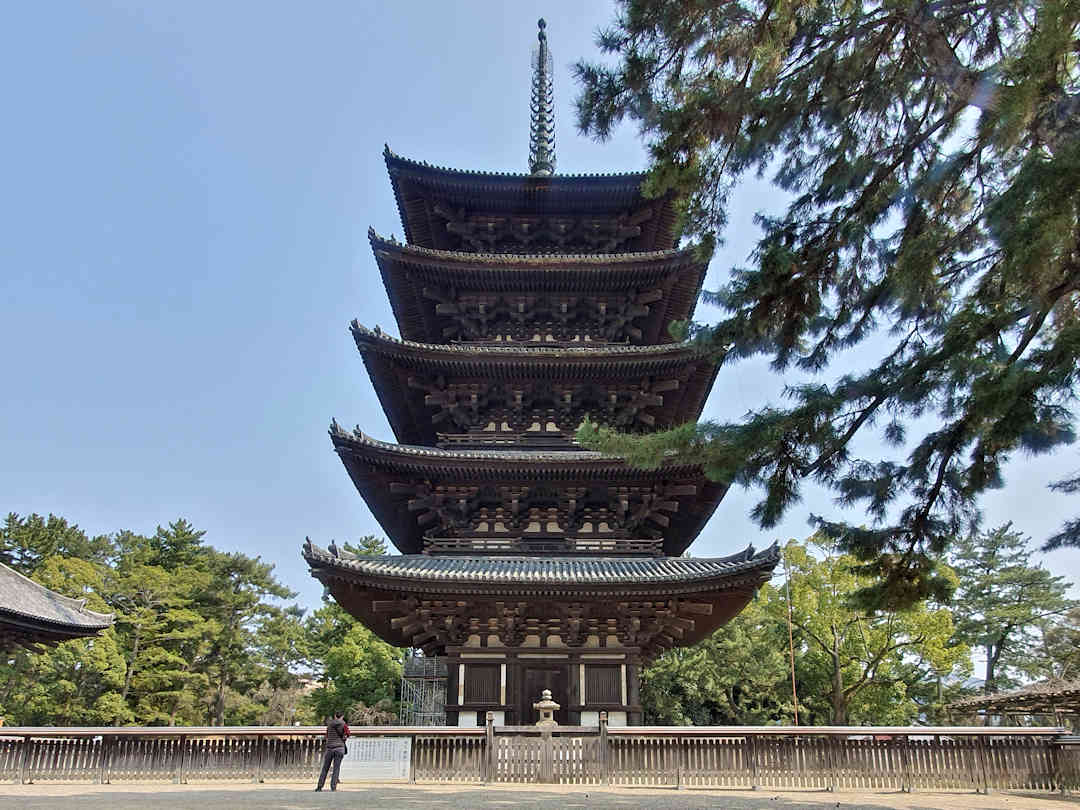
Originally built in 730, Kōfuku-ji Gojunoto's current structure dates from the year 1426
Don’t miss out on Yoshiki-en Garden [Google Maps location], a tranquil oasis with three different styles of traditional Japanese gardens. The entrance is free for foreign visitors.
Next, head to the Tōdai-ji temple complex [Google Maps location], which is home to
- the Nandaimon [Google Maps location], the largest temple entrance gate in Japan,
- magnificent Todai-ji Daibutsuden / Great Buddha Hall [Official website, Google Maps location], while 30 per cent smaller than the original, the current rebuild is the largest wooden building in the world, and
- Nigatsudo [Official website] (February Hall), the current rebuild dates from 1669.
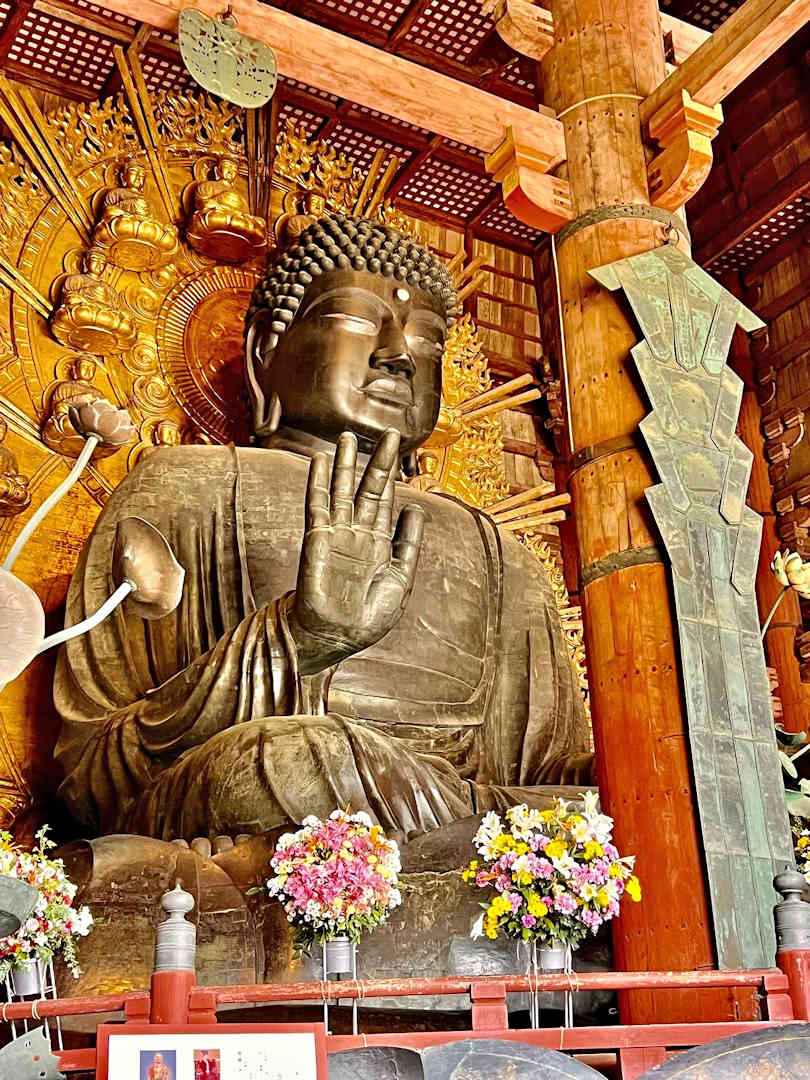
The great Buddha at the Tōdai-ji Daibutsuden is magnificient | Image courtesy of Jennie Ryken
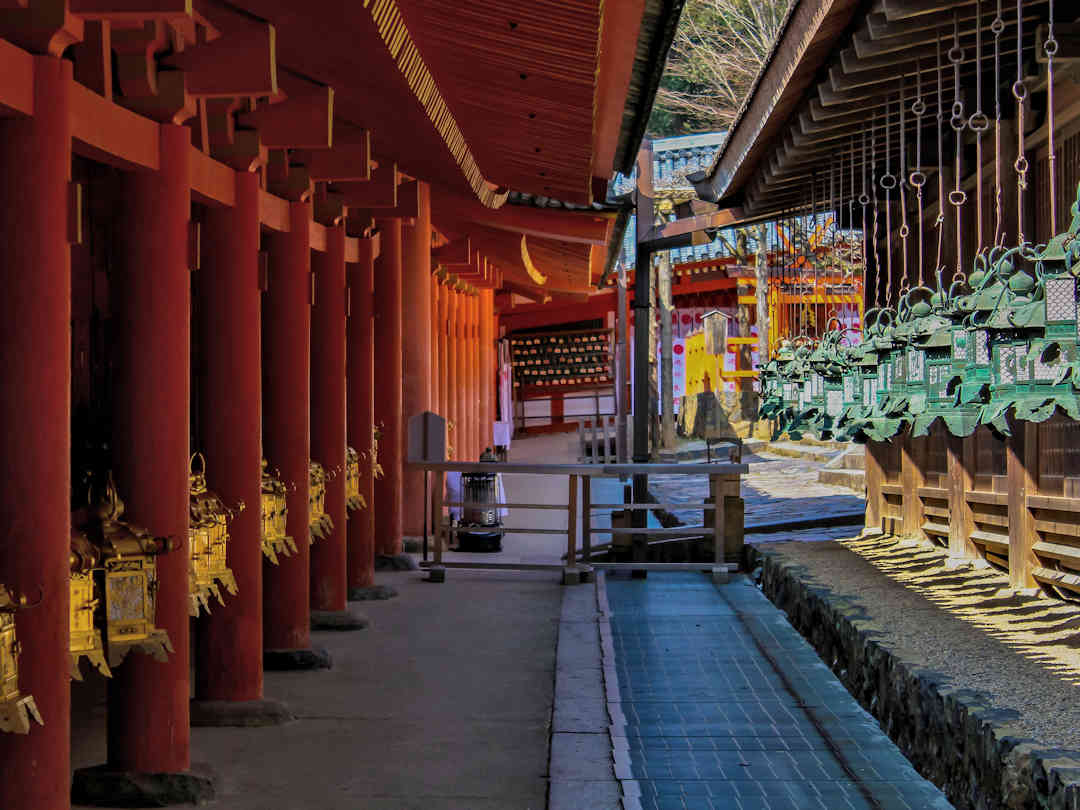
Afterwards, head to Kasuga-taisha [Google Maps location] to marvel at the thousands of lanterns donated by worshippers that give the shrine its magical atmosphere.
As you pass through Nara Park, watch out for the deer roaming the area freely.
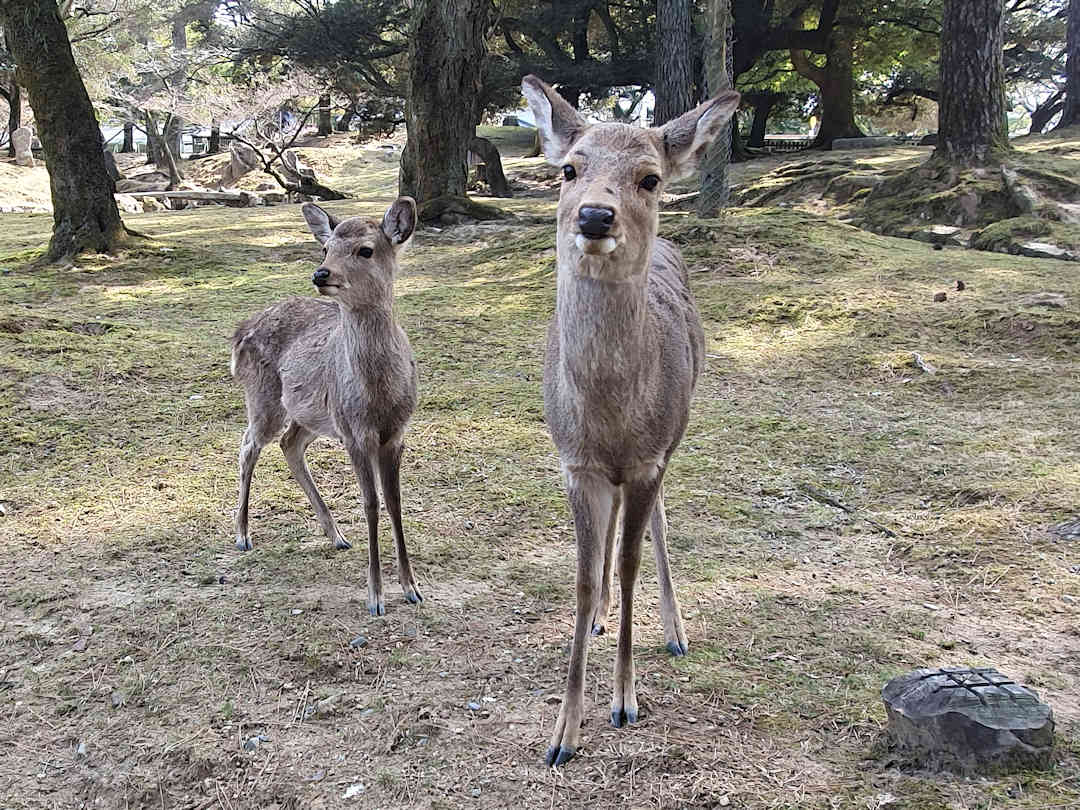
The deer in Nara are wild animals - give them space and don't feed them
Return your bicycle to your accommodation to relax and savour a delicious dinner. Wrap up your day with a stroll around the narrow streets and alleyways of Naramachi, the old merchant town neighbourhood.
Nara Park Deer
Images of Nara almost always include the deer that freely roam Nara Park and the sacred forest. These are Japanese Sika Deer, the same species you’ll find on Miyajima Island. Considered divine messengers, the deer are a national natural monument.
It may not seem so, but deer are wild animals. So, please give them space, don’t touch them, and we strongly recommend not feeding them (no matter how cute they look in your Instagram post). Yes, even the deer crackers being sold are not their natural food source, and feeding these deer alters their natural behaviour.
Be extra vigilant
- in October/November, when male deer can be aggressive during mating season, and
- in May/June, when female deer are especially vulnerable during pregnancy and birth.
Don’t litter and store any paper or plastic securely in your daypack.

Be extra mindful if visiting Nara in June when the baby deer are born | Image courtesy of Willian Justen de Vasconcellos on Unsplash
Day 2 – The off-the-beaten-path experience
Today, we’ve got two more treasures for the history buffs among you:
First, take the bus and visit Tōshōdai-ji [Google Maps location]. The Lecture Hall (Kodo) is the sole survivor of the Imperial complex of ancient Nara, where it was relocated over 1,200 years ago.
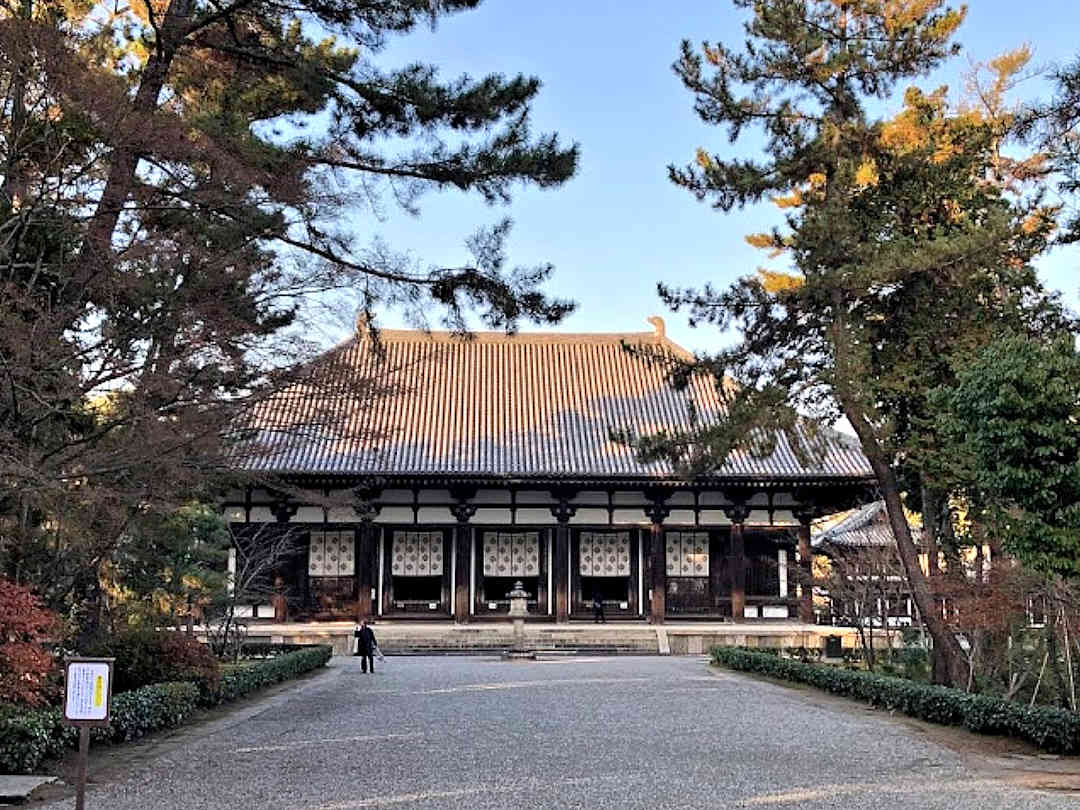
Tōshōdai-ji Kodo is the sole survivor of the Imperial complex of ancient Nara, where it was relocated from over 1,200 years ago
After lunch, head further south to the temple complex of Hōryū-ji, reachable by train (Kintetsu-Kashihara Line) and bus in approximately 1 hour.
Hōryū-ji pre-dates the ancient capital Nara, and thus, its historical value is even more astounding:
- Its Main Hall (Kondo) is the world’s oldest extant wooden structure. Originally completed in 607, it was destroyed by fire in 670 and faithfully rebuilt shortly after.
- The Five-Storied Pagoda (Gorunto) was completed just after the Main Hall rebuild. It is the oldest pagoda of this type in Japan and one of the oldest surviving wooden towers in the world.
These structures offer a glimpse into Japan’s ancient past and showcase the remarkable craftsmanship of the time, so take your time exploring the grounds.
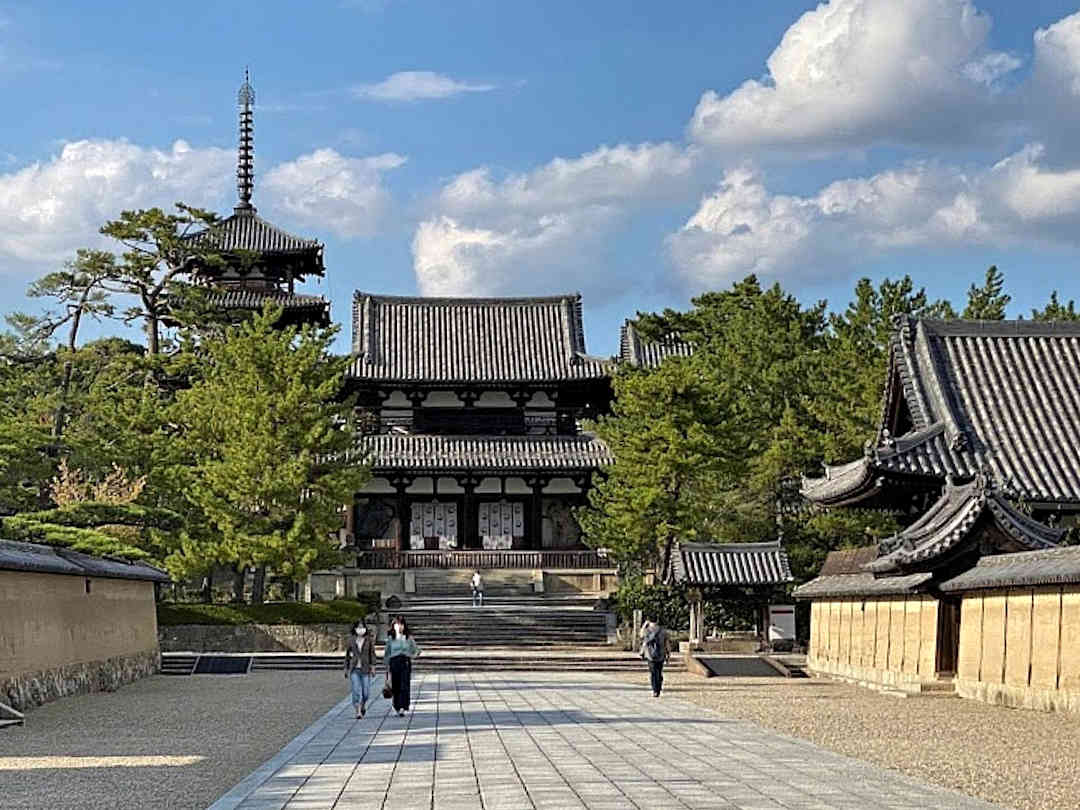
More than 1,300 years old, Hōryū-ji's Kondo and Gorunto are (among) the world's oldest extant wooden structures
On your way back to your accommodation, pop into Naramachi Nigiwai-no-Ie, a traditional tradesman’s house (closed Wednesdays and Thursdays), to experience life in Naramachi over 100 years ago.
Afterwards, enjoy dinner in one of the many restaurants in Naramachi.
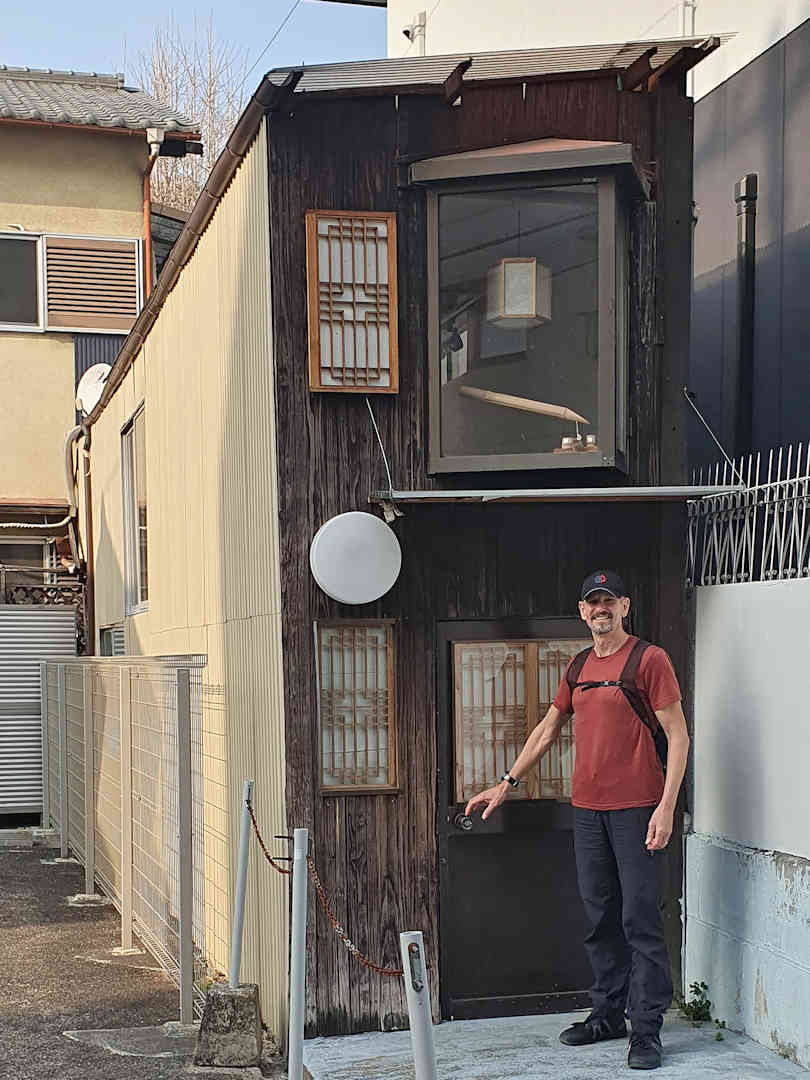
You never know what you might discover as you stroll around Naramachi - we came across what must be the tiniest building in Nara
Special Tip #1
Did you know that Nara offers free private tours held by Nara YMCA Guide Course graduates? That’s right. It’s a win/win for both visitors and guides alike: you get to hang out with a local eager to show you their city, and the guides get to practice their newly learned skills. The initiative started in 1970 when the World Expo was held in Osaka, and it’s still going strong.
If you’d like to do that, contact them at least three days before your visit. While there are recommended routes, the guides can tailor a tour based on your requirements, so just ask.
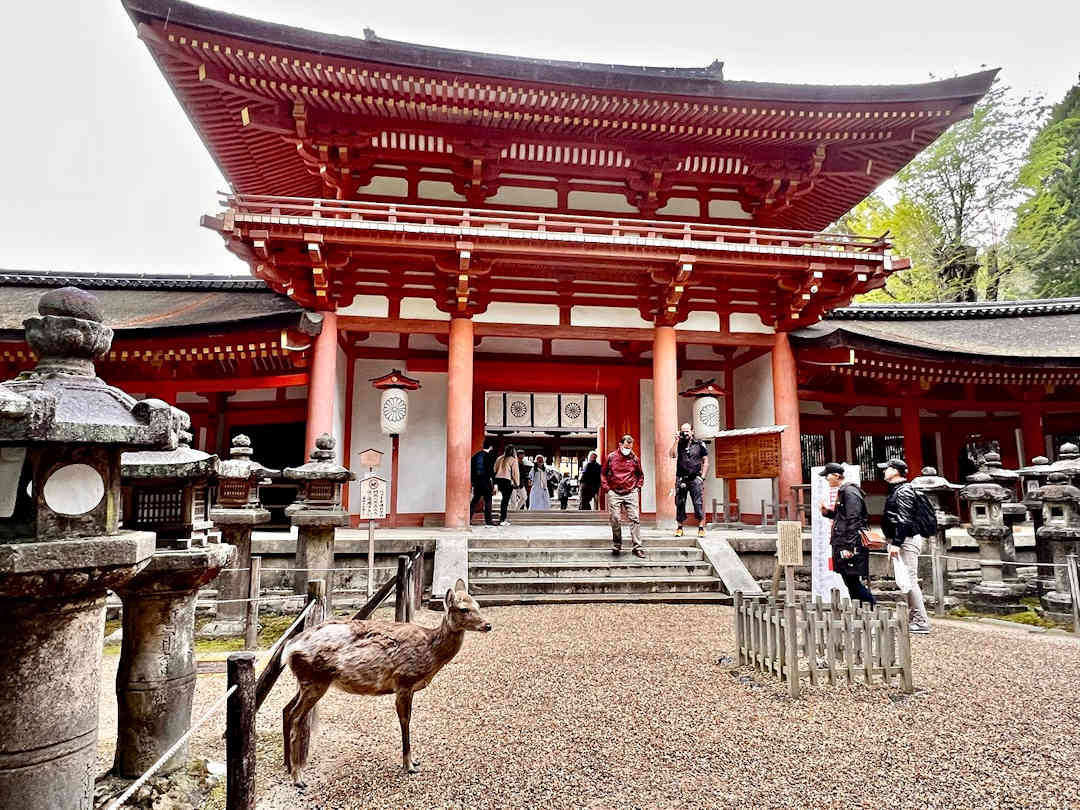
Kasuga-taisha is also the starting point for gorgeous hiking trails into the Kasugayama Primeval Forest | Image courtesy of Jennie Ryken
Day 3 – Farewell to Nara
On your final day in Nara, it’s all about nature. Get up early, check out after breakfast and ask your accommodation to keep your luggage for a few hours (unless you have arranged a late check-out).
Then start exploring the Kasugayama Primeval Forest [Google Maps location]:
- The Wakakusa Forest trail is a 5-kilometre loop through the Mt. Kasuga Primeval Forest and up to the summit of Mt Wakakusa [Google Maps location]. The hike starts and finishes at Kasuga-Taisha and takes about two hours.
- Another popular hike is the 11km loop through the Kasugayama Primeval Forest, around the base of Mt Kasuga [Google Maps location] and Mt Huashan and up to the summit of Mt Wakakusa. This hike takes about four hours and starts and finishes (again) at Kasuga-Taisha.
The latter part of both trails (along the grassy hillside down from the summit of Mt Wakakusa) requires a small entry fee (JPY150).
After your hike, return to your accommodation to shower and pick up your luggage. Then, head to the Nara Train Station for your onward journey.
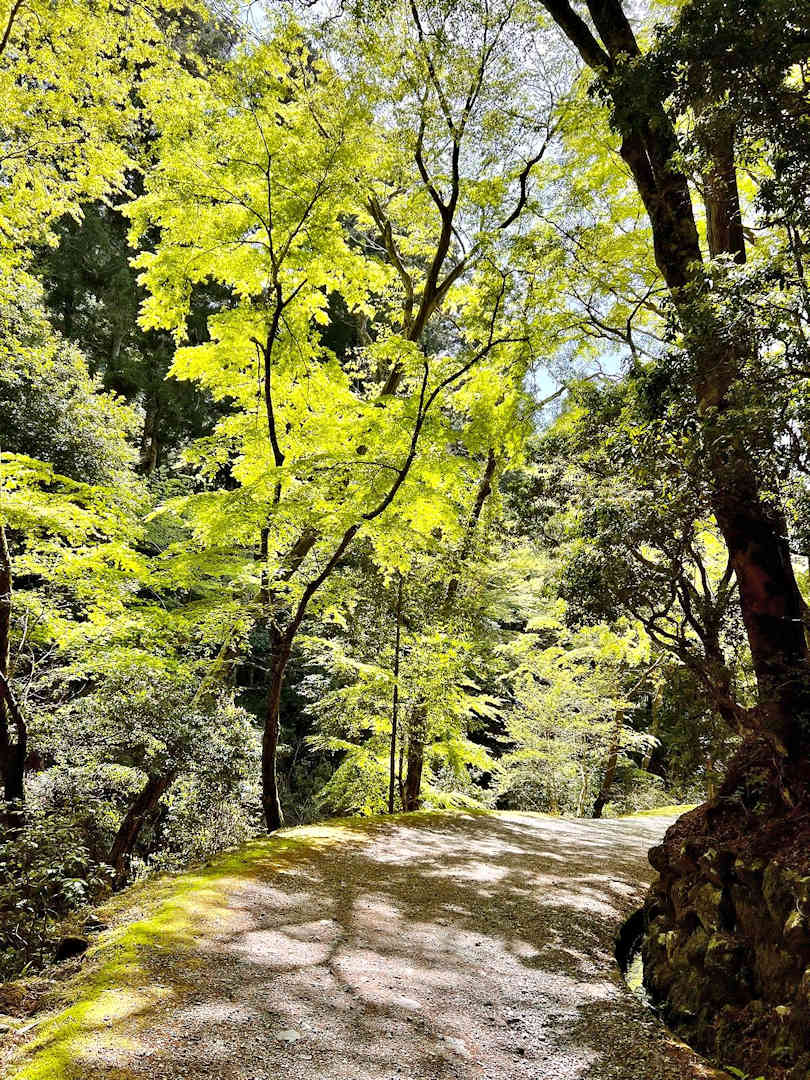
Nara’s sacred forest has been preserved for over 1,100 years | Image courtesy of Jennie Ryken
Special Tip #2
If you travel from Kyoto to Osaka with a few days in Nara in between, you could change the above itinerary as follows:
- Day 2 – Do the hike in the morning and visit Tōshōdai-ji in the afternoon.
- Day 3 – Visit Hōryū-ji [Google Maps location] on your way to Osaka. In that case, take the train to Hōryūji Train Station (there are coin lockers for your luggage before you exit the ticket gates). From the Hōryūji Train Station, it’s a 20-minute flat walk north to the temple complex.
Where and what to eat when visiting Nara
When visiting Nara, there are several culinary options to try.
In Nara-machi, the old merchant town:
- Head to Ajimi Izakaya [Google Maps location] or Totomaru Izakaya [Google Maps location] for a delicious, authentic Japanese dining experience. (Both are closed on Mondays.)
- To taste Nara’s famous okonomiyaki, stop by Surugamachi’s Okonomiyakiya [Google Maps location].
- Vegan Cafe Ramuna [Google Maps location] offers plant-based dining options, with delicious dishes on Fridays, Saturdays and Mondays.
- Shizuka Omiya [Google Maps location] (closed Tuesdays) is the spot to savour Kamameshi, a traditional Japanese rice dish cooked in an iron pot.
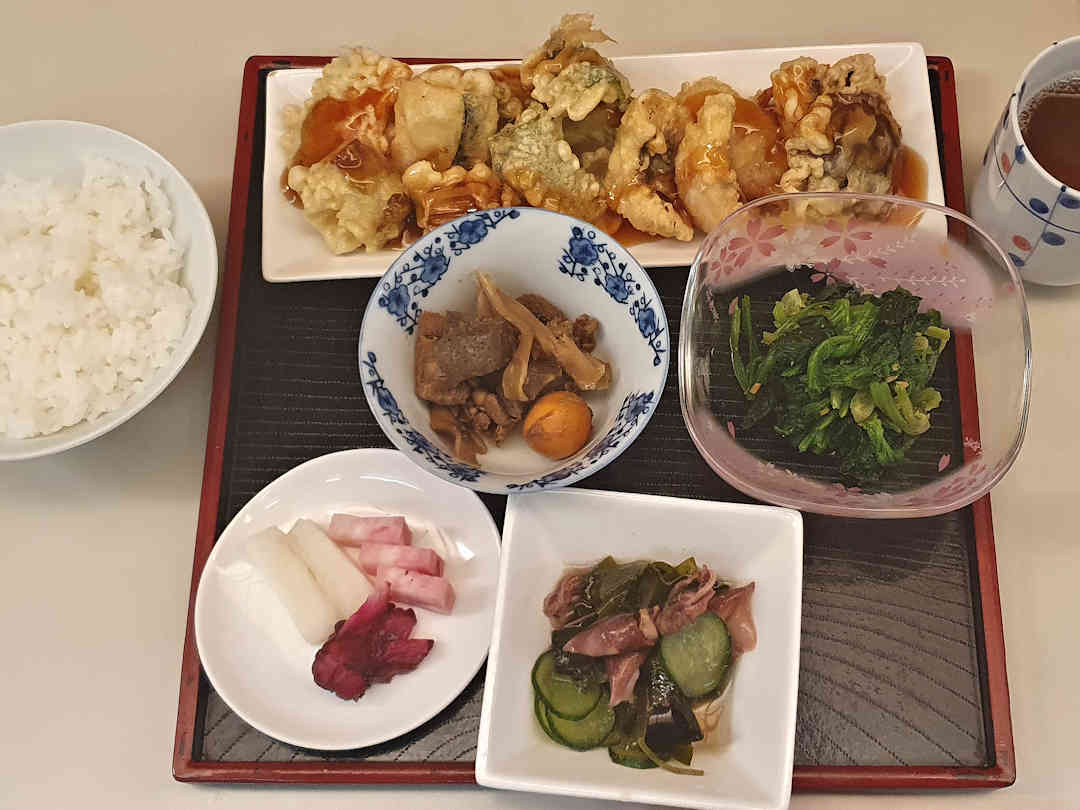
Head to Ajimi Izakaya for a delicious and authentic Japanese dining experience
When it comes to desserts, don’t miss out on trying Dango, rice flour dumplings coated in kinako (roasted soybean flour) and syrup—for example, at Tamausagi [Google Maps location] by the ticket gates at Kintetsu Nara Station.
For a touristy but fun experience, pop by Nakatanidou [Google Maps location] to watch the (lightning-fast) mochi pounding and enjoy a fresh mochi afterwards.
Where to stay in Nara
For accommodation, it pays to shop around and compare like with like. When we book, we check several platforms to find the option that offers the best overall value, and we also look closely at what is and isn't included. Tourist taxes, cleaning fees, breakfast, cancellation terms, and payment timing can vary, so always read the fine print before you book.
If you want to see which booking platforms we use and why, visit our Accommodation Travel Resources. Below are our recommended places to stay, well-located for public transport and the main points of interest.
| Name | Property Features | Type | Price Indicator | Book Now |
|---|---|---|---|---|
| Slow House Nara | About 5 minutes from Kintetsu Nara Station Private bathrooms and family rooms Walk to Nara Park and Kofuku-ji area | Guesthouse | $$ | Book Now |
| Haruya Naramachi | 100-year-old traditional machiya guesthouse Shared kitchen, lounge and garden-view rooms Walk to Nara Park and Naramachi sights | Guesthouse | $$ | Book Now |
| Guesthouse Nara Komachi | About 4 to 5 minutes from JR Nara Station Shared kitchen, laundry and bicycle rental Private rooms and dorm beds available | Guesthouse | $$ | Book Now |
Have you been to Nara?
What time of the year did you visit? How long did you stay? And most importantly, what off-the-beaten gems were your favourites? And if exploring the city on your own isn’t your thing and you prefer a guide, consider a Nara Free Walking Tour. We haven’t done this walking tour, but with a 5-star rating, it is one to consider.
Before you go, if you liked our article and found it helpful, we would appreciate it if you could share it with your friends and family via the Share buttons below. Even better: Leave a short review on Trustpilot or Google, which would help us further build our online reputation as a (trustworthy and helpful) travel and lifestyle blog.