

This article may contain links to products and services we use and recommend. We may receive compensation when you click on links to those products. For more information, see our Disclosure Policy.

As anyone who’s ever looked into travelling to Socotra will know, you can only visit this remote Yemeni island with a guide and on an organised tour. But what tours are on offer? What should you expect (price and otherwise)? And how to go about finding and booking the one that’s right for you? We spent two weeks on Socotra and organised our trip through a local tour operator. The process can be confusing, so this guide explains exactly what to expect when booking a tour.
What does a typical organised tour on Socotra look like?
Attractions/Points of Interest
Most tours on offer are one-week (group) tours which cover the key highlights of Socotra, including (in alphabetical order):
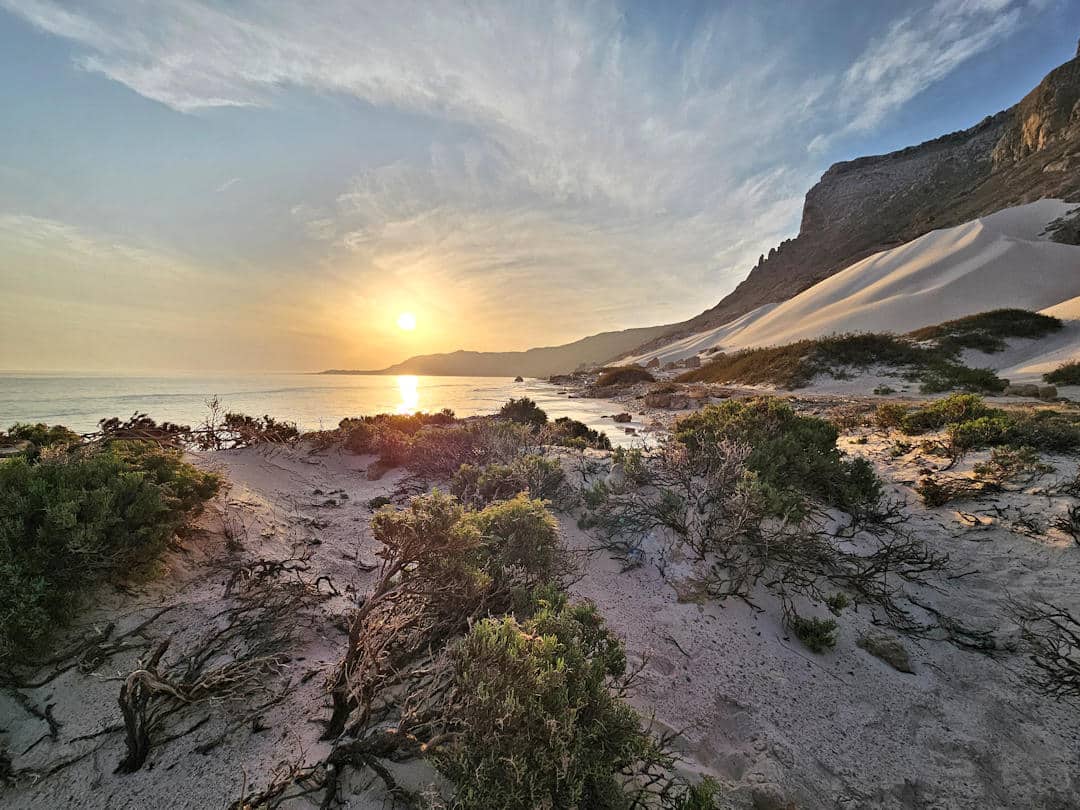
Arher Beach and Dunes
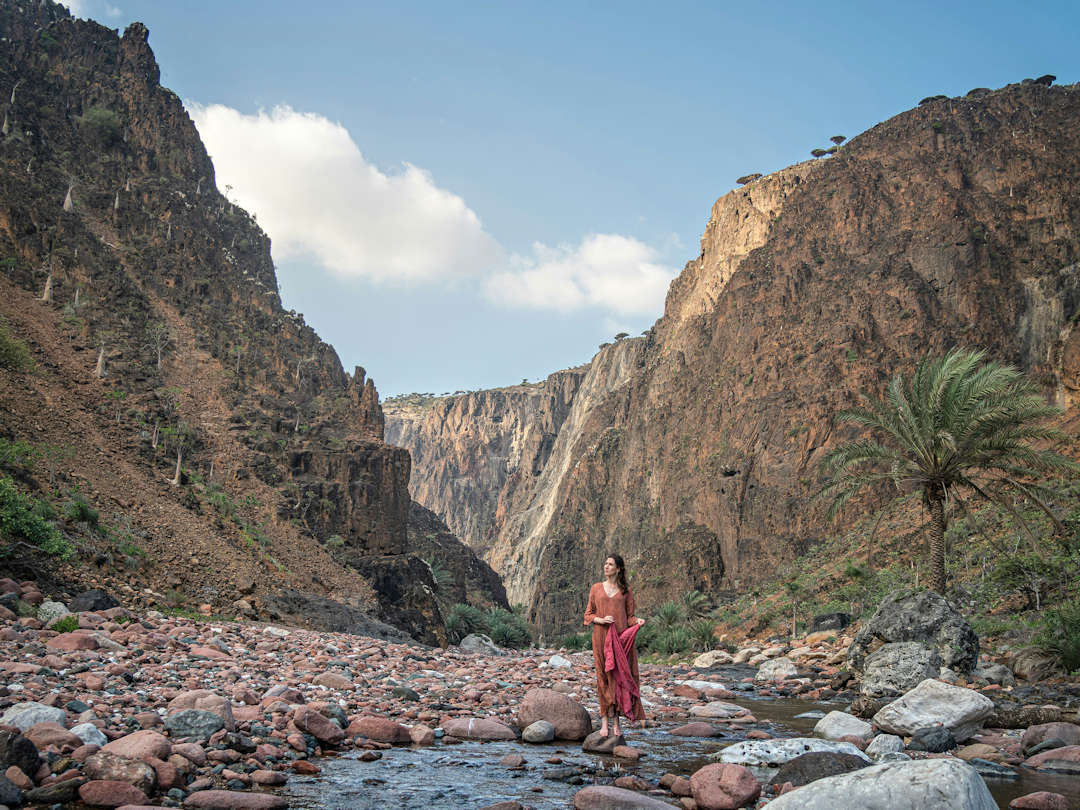
Derhur Canyon
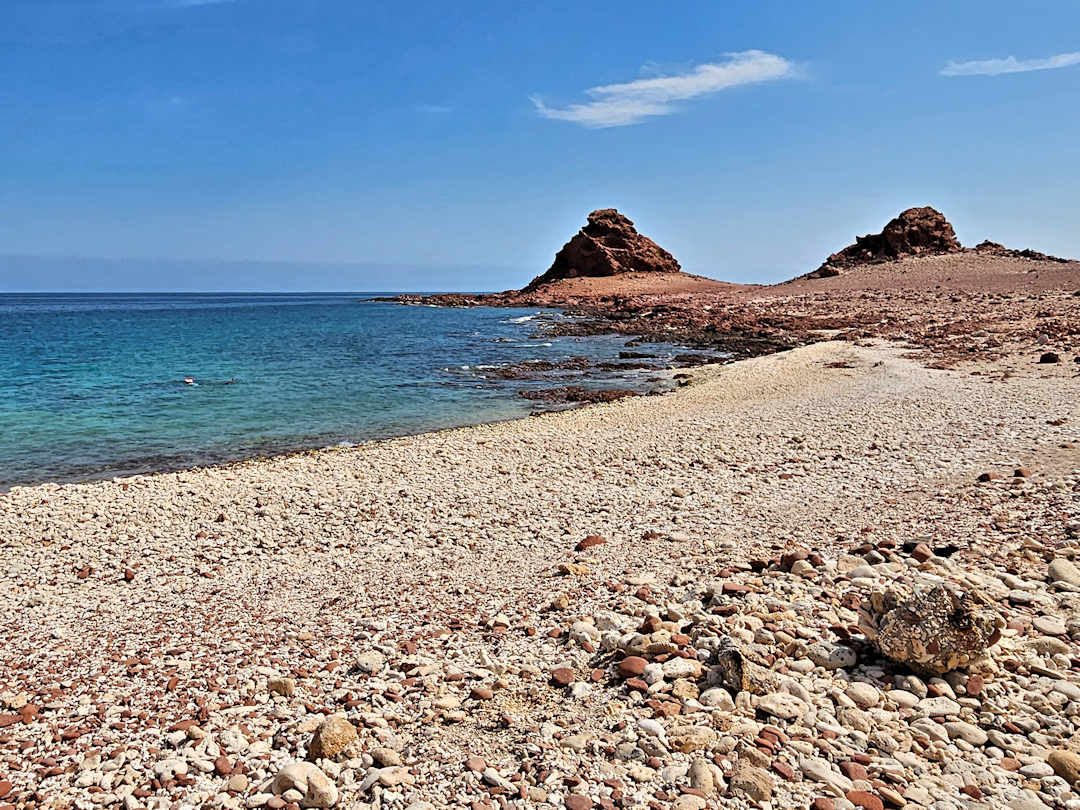
Dihamri Marine Reserve
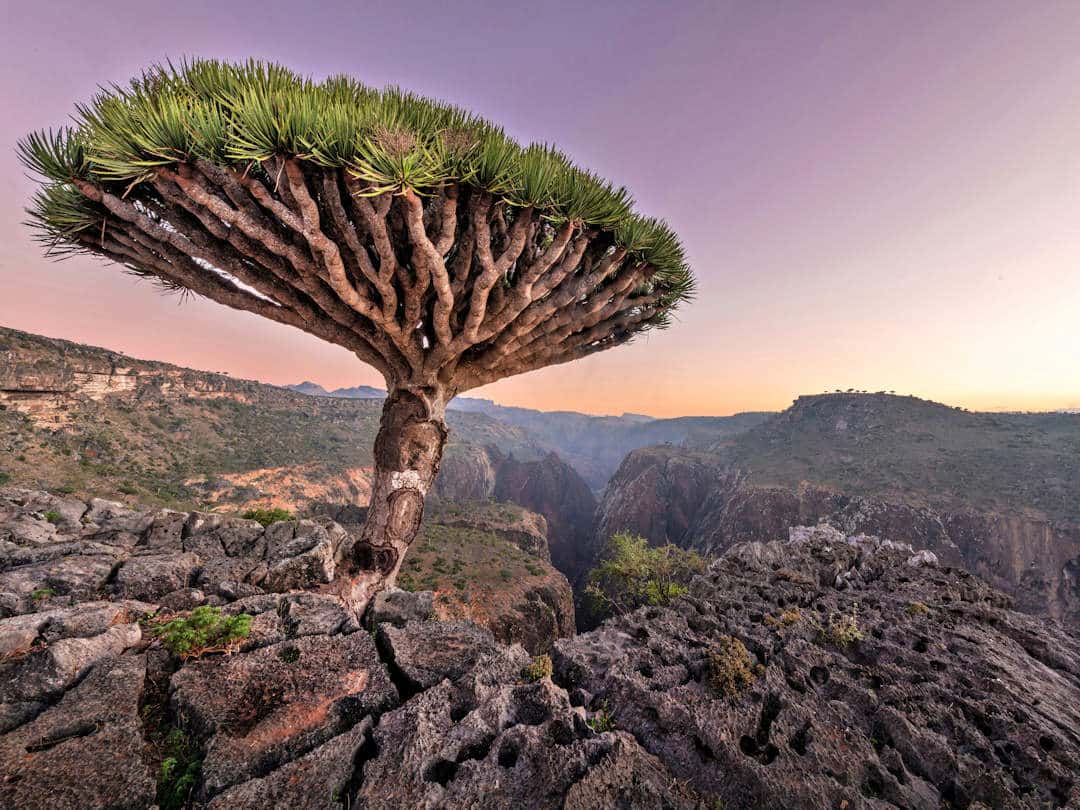
Diksam Plateau
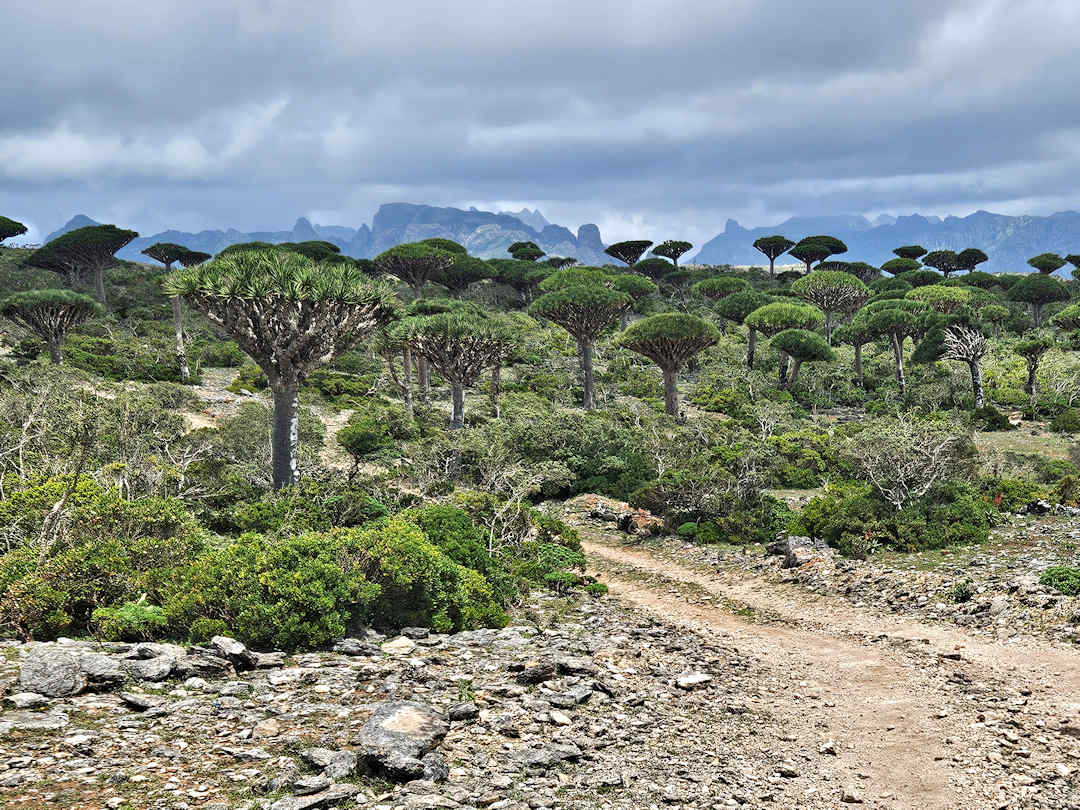
Firmhin Forest
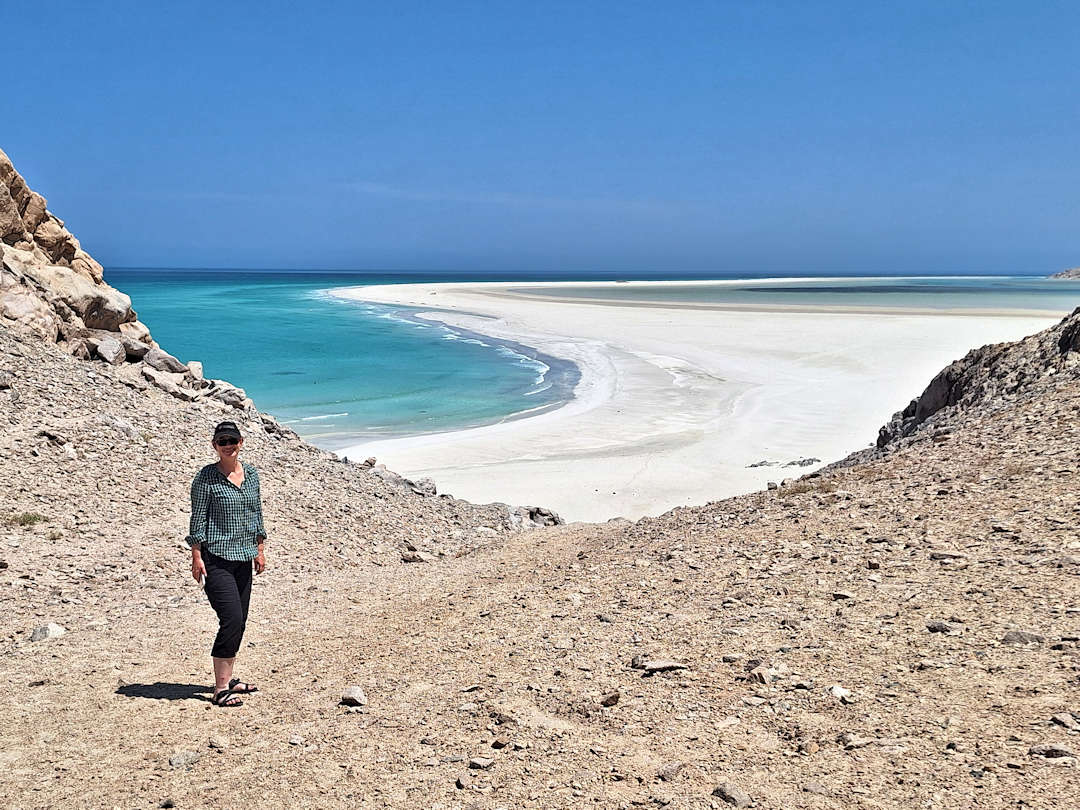
Detwah Lagoon
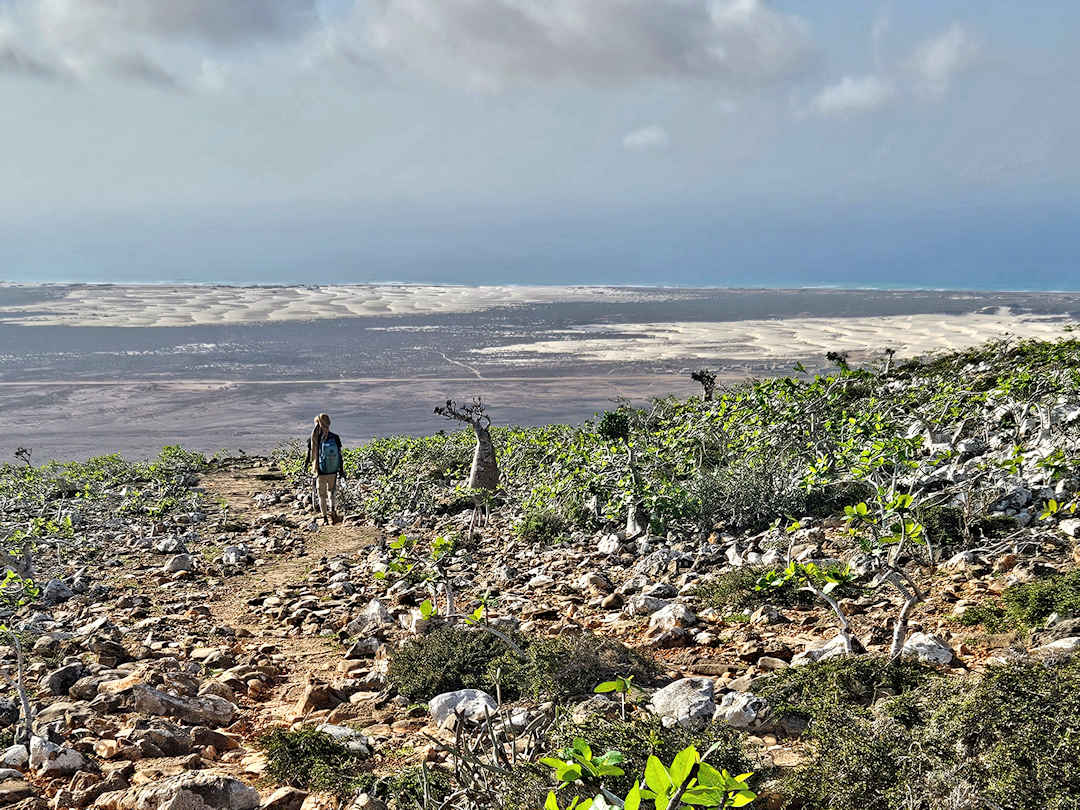
Hayf and Zahaq Dunes
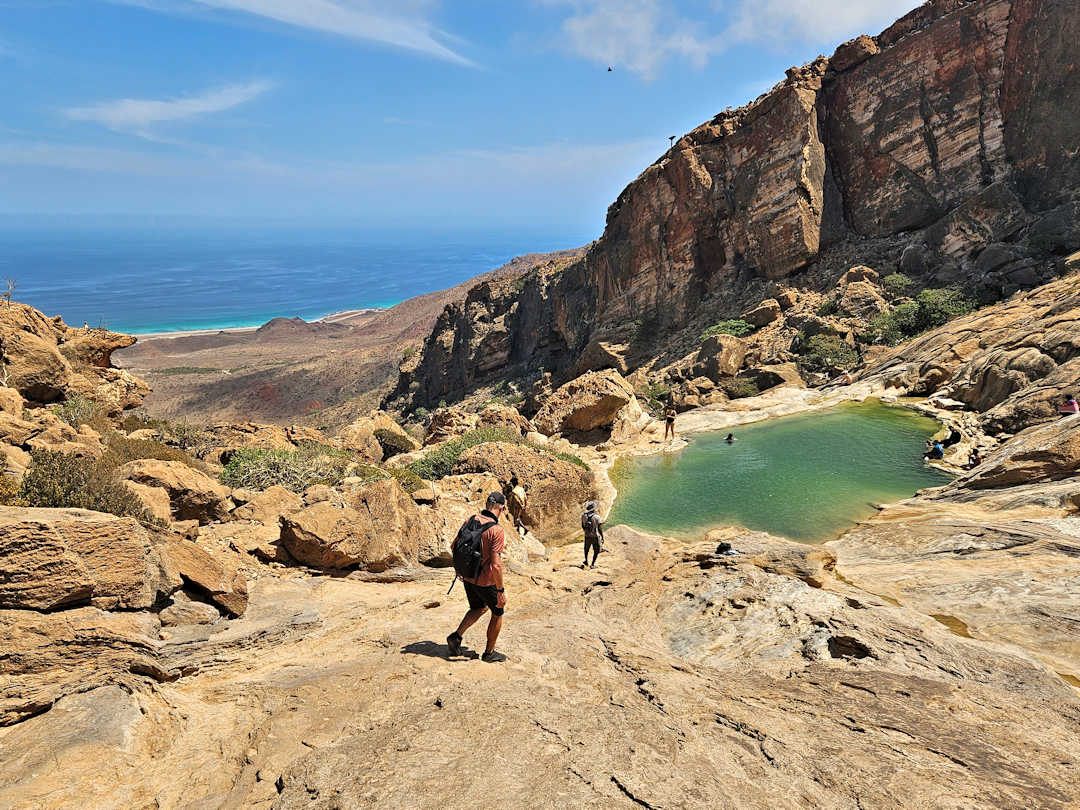
Homhil Protected Area
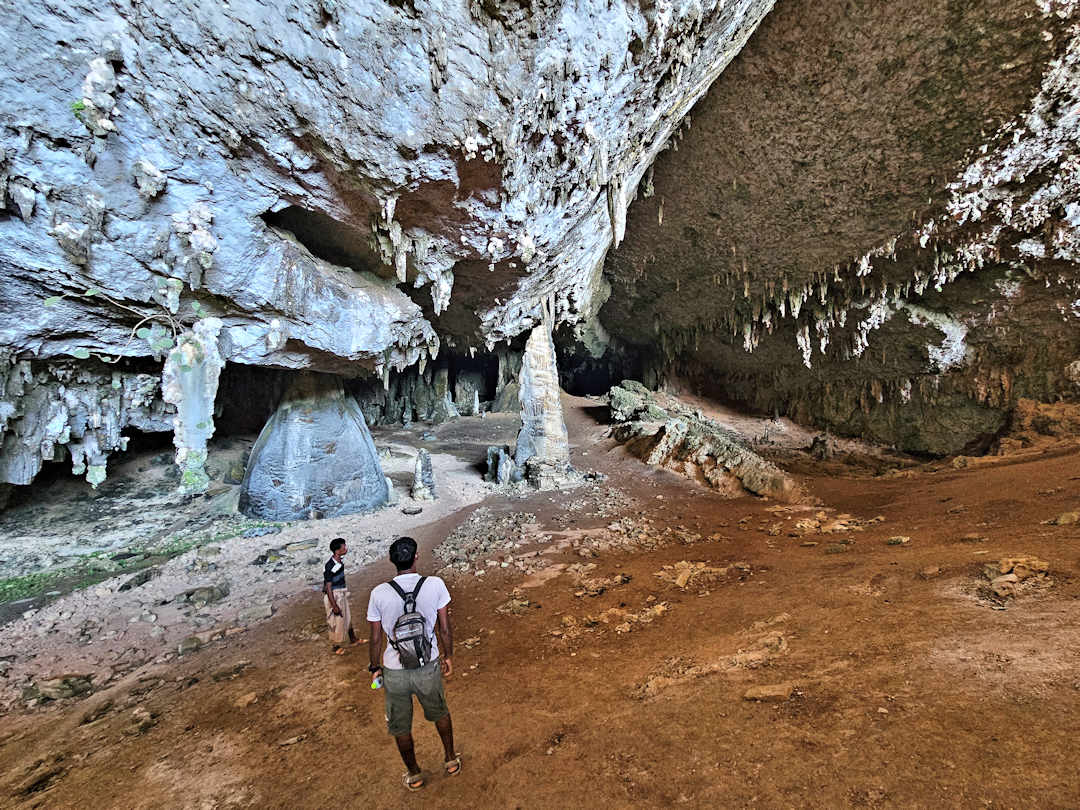
Hoq Cave
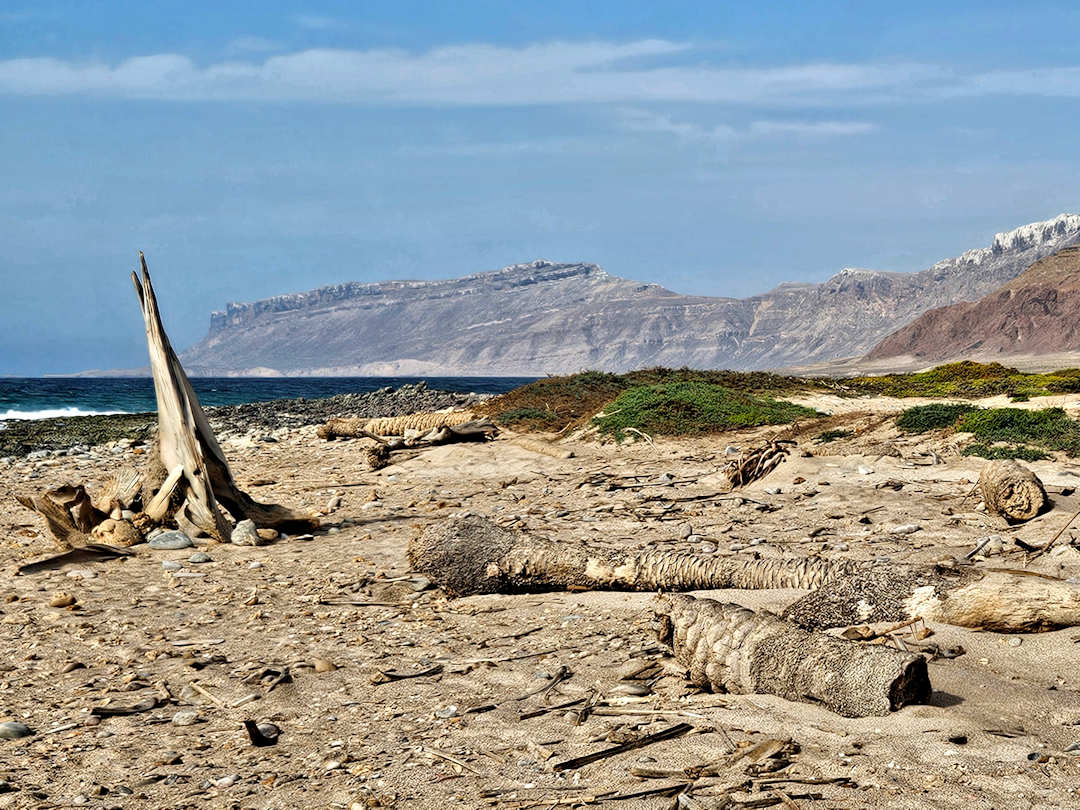
Ra'as Erisel
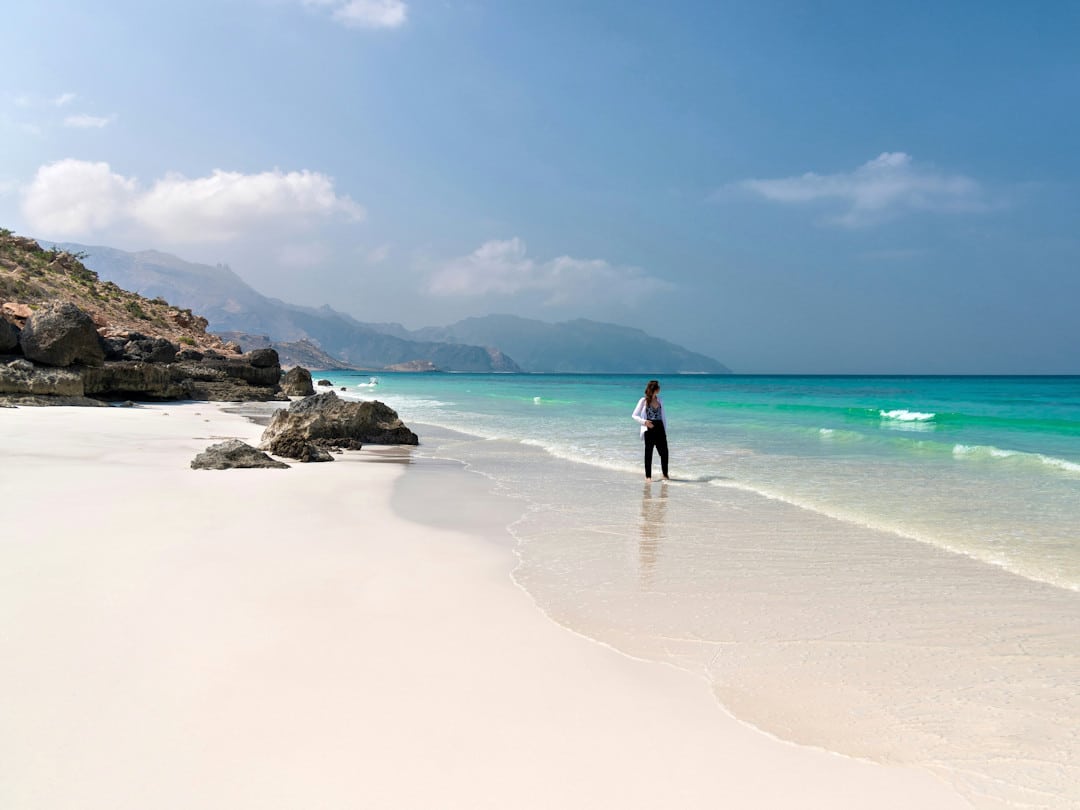
Shoab Beach
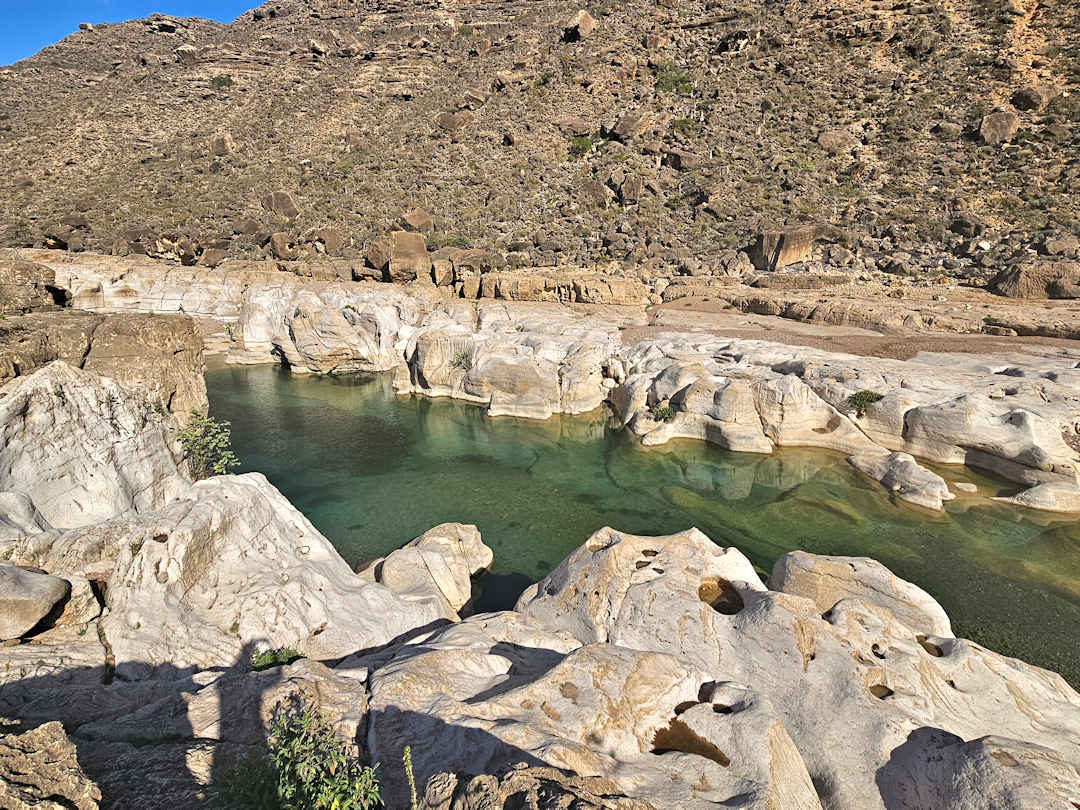
Wadi Kalisan
Most of these highlights are located along or near the coast (except for the Derhur Canyon, Diksam Plateau and Firmhin Forest, which are located in the interior and passed when crossing the middle of the island).
NOTE Translating names from Arabic into the Roman alphabet/Latin script means that you’ll find different spellings for the exact same location – for example, Derhur Canyon could also be called Dirhur Canyon, Wadi Dirhur or even Wadi Di Erho; Amok Beach (near the Hayf and Zahaq Dunes) may also be spelt Aomak or even Omaq. If unsure, ask your Socotra travel agent (or contact us).
Curious about how to make the most of your trip to Socotra?
If you’re planning a trip to Socotra, make sure to explore our essential insider tips to prepare for your adventure and learn how much a visit might cost with our detailed expense breakdown.
Map of Socotra
When we planned our trip, we had difficulty locating many of the destinations mentioned in the tour itineraries. Having visited and explored a large part of the island, we can now include our map with accurate locations of the key highlights and the places we visited:
Group Tours vs Private Tours
Tours offered on Socotra are either group tours (where you share your tour guide, driver and other staff with fellow travellers initially unknown to you) or private tours (where it’s only you and your partner, family or friends who travel with you).
Each tour type has its pros and cons:
- Group tours have a fixed itinerary. While this gives you some planning clarity, it also means you can’t tweak it as you go. Group tours on Socotra are considered small, but even a group size of 10-12 people means you’re travelling in a convoy of 5+ cars: 4+ cars for tour participants, guide/s, drivers and luggage and 1-2 vehicles for the camping and cooking equipment, food, water and waste. Group tours tend to be more affordable than private tours (though that’s not always the case in Socotra).
- Private tours are fully customisable to your preferences and needs; thus, changes on the go are easy to make. Itineraries can focus on a speciality (such as diving, birding or fishing trips) or include less-visited places (more on that below). Private tours tend to be more expensive than group tours (but not always). Other than your Socotri guide, driver (and potentially other local staff), you won’t have any strangers in your group, which is great for some but may be lonely if you travel solo.

Accommodation
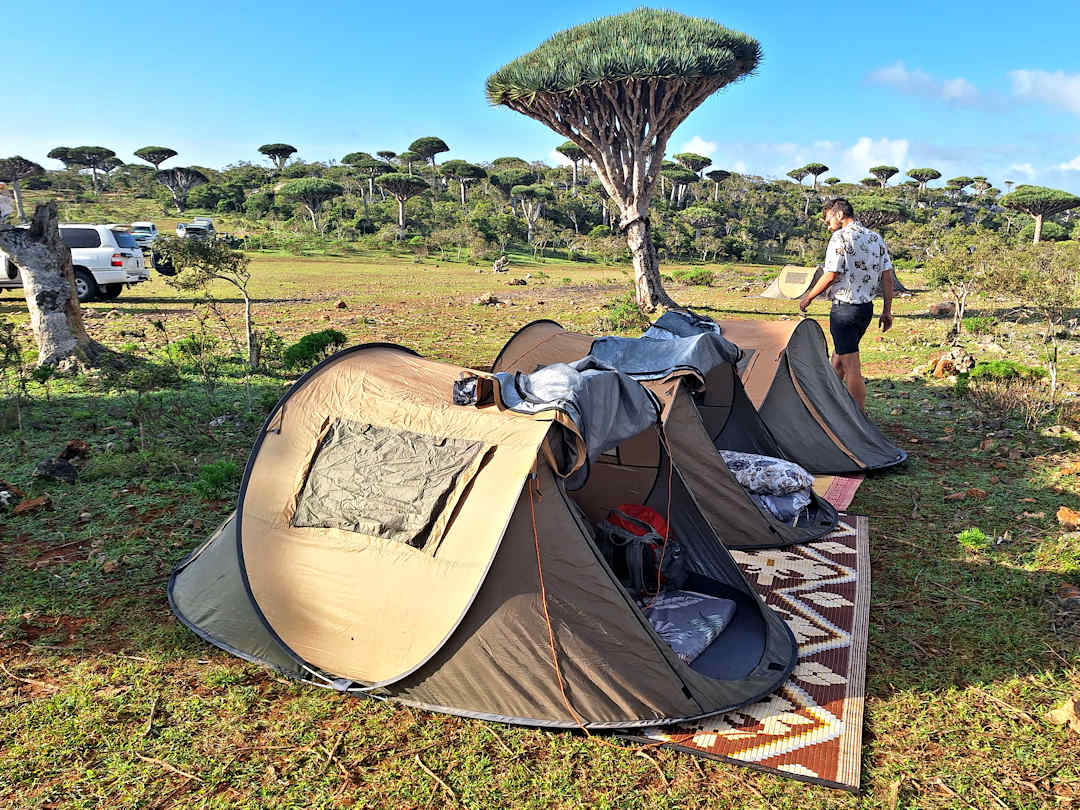
On most tours of Socotra, you’ll sleep in tents. Typically, the tents are quick-assembly tents, not tall enough to stand in, but able to fit (up to) two single mattresses. Next to them, there is enough space for a carry-on-sized bag or suitcase per person. Some tour providers offer upgrades to more luxurious bell tents.
Campsites range from basic sites without facilities to more established campsites with shared (but still basic) bathroom facilities.
Some operators offer tours that include accommodation in one of the island’s few hotels—all in/around Hadibu (usually the Summerland Hotel, sometimes La Sirena Hotel). Very few operators offer hotel-only tours. If hotel accommodation is essential to you, be aware that the island’s priciest hotel (La Sirena) is still only a 2 to 3-star equivalent elsewhere.
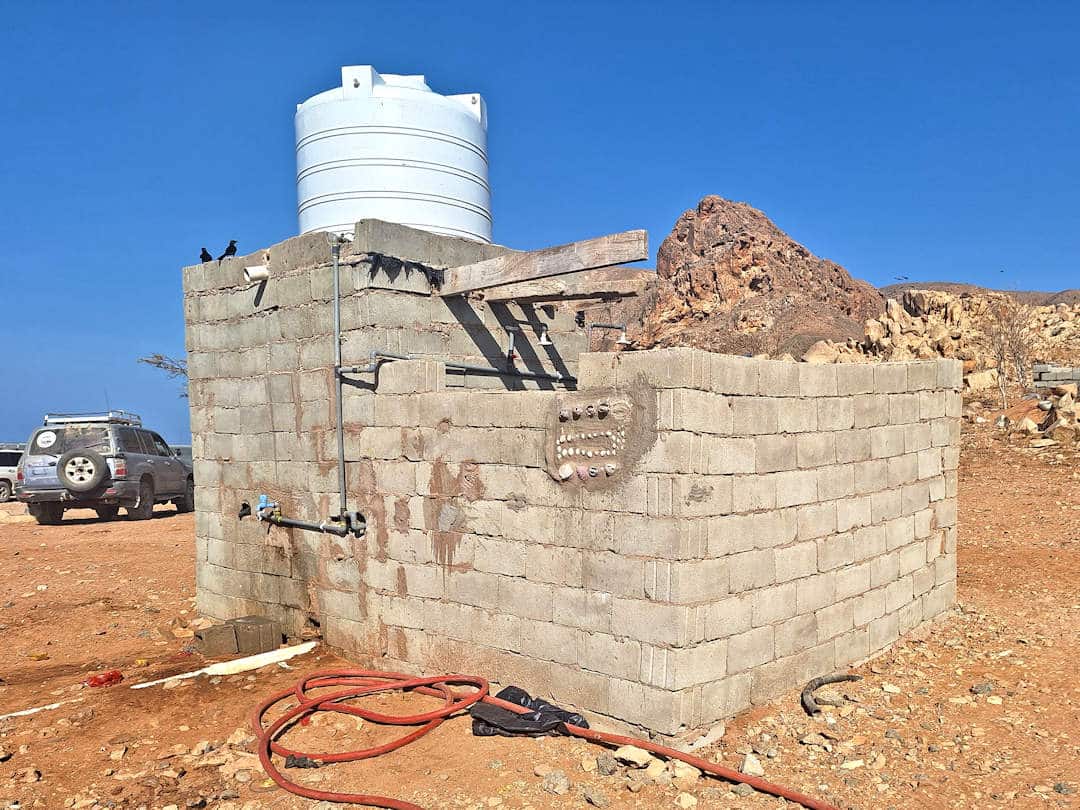
Unless you stay in a hotel, bathroom facilities on Socotra are basic to non-existent
Dining
All meals and drinks are included in the tour price. Staples (like cooking oil, rice, pasta, flat bread) as well as fresh ingredients (fruit, veggies, eggs, fish or meat) are purchased before and during the tour at local shops and market stalls. Speaking of fish: during our week along the coast, we had different fish daily – from tuna and kingfish to grouper, trevally and snapper – freshly caught by local fishermen and deliciously prepared by our driver/cook Zadik.
Transportation
All tours include transportation by 4×4, usually in a Toyota Landcruiser. Two to three people would share one car with the driver (and guide). Luggage, camping/cooking equipment, food, water and waste bags would be carried in the back of the car. The more people per group, the more equipment, food, water and staff are required, and the more vehicles are needed.
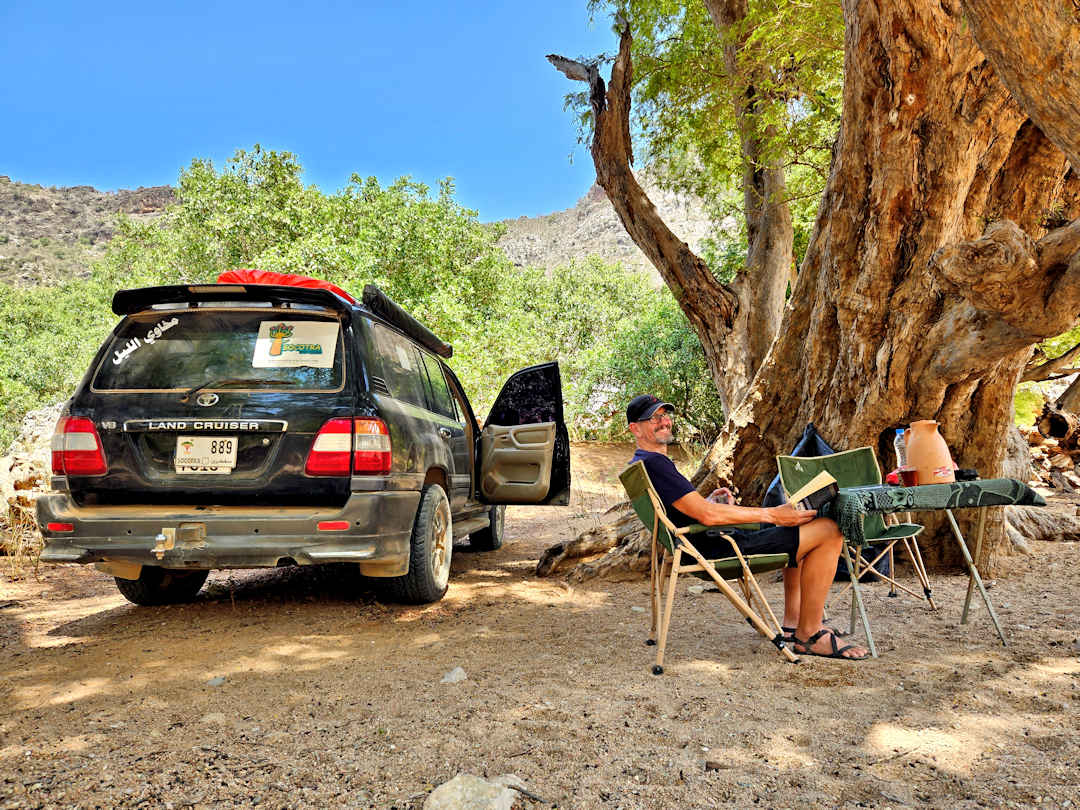
Typical tours on Socotra include transportation by 4x4, usually in a Toyota Landcruiser
Flights
Socotra used to be serviced by Air Arabia charter flights from/to Abu Dhabi (during the tourism season). These flights are now on hold (until further notice), as control of Socotra airport has effectively shifted from the United Arab Emirates to Saudi Arabia in early January 2026.
Update for Travel in 2026
Amid increasing tensions on the mainland, Yemen's government declared a state of emergency on 30 December 2025, which included the grounding of flights to/from Socotra, affecting around 600 tourists who had travelled to Socotra over the New Year and were stranded on Socotra until evacuated on Yemenia flights to Jeddah in Saudi Arabia on 7/8 January 2026.
While Yemenia Airways provided weekly flights between Jeddah and Socotra for the remainder of the 2025/26 tourism season (and is likely to continue in the 2026/27 season), the Air Arabia charter flights between Abu Dhabi and Socotra remain on hold until further notice. If you are planning a trip to Socotra, your Socotra tour operator will be the best point of contact to help you navigate these changes.
To reach Socotra, you now fly from/to King Abdulaziz International Airport (Google Maps location, IATA Code: JED) in Jeddah, Saudi Arabia. Flights are organised through your Socotra Tour Operator. Expect to pay around USD900-950 per person (return). Some operators include the price of the flight in the tour cost (others don’t), so always check.
The tourism season for Socotra runs from October to May. Flights are usually announced about 2-3 months ahead of time (July/August for October-December 2026). We include Yemenia’s schedule from/to Jeddah during February-May 2026 (though no guarantees that it will remain the same):
| From | To | Weekday | Flight Number | Departure | Arrival |
|---|---|---|---|---|---|
| Jeddah | Socotra | Tuesday | IY 525 | 11:00 | 14:00 |
| Socotra | Jeddah* | Tuesday | IY 526 | 14:45 | 19:10 |
* with a brief stopover at Al Rayyan International Airport, Al Mukallah (RIY)
Visa Requirements for Socotra
All non-Yemini citizens must obtain a visa before arrival. Your tour operator typically facilitates the visa process and handles the application on your behalf.
Additionally (since flights to/from Socotra are now from/to Jeddah), you will require a tourist visa to enter or transit through Saudi Arabia. Applying for the eVisa is straight forward. Once approved, you can enter Saudi Arabia multiple times within a year and stay up to 90 days.
Important update regarding Israeli entry/exit stamps in passports
Some travellers we spoke to were concerned that, having previously visited Israel, they might face issues entering Socotra (or Saudi Arabia). According to Taylor from Socotra Specialty Tours, this is not the case. Their immigration representative has confirmed:
Tourists can enter with an Israeli stamp in their passport, but neither the Saudi Arabian nor the Socotri government will issue a visa to someone holding an Israeli passport.
As visa regulations may change, we recommend confirming the latest requirements with your tour operator before booking your trip.
Travellers to/via the US, beware
After you've visited Socotra, you are no longer eligible to enter the United States under the Visa Waiver Program. The same applies to travellers who've visited Cuba on or after 12 January 2021, by the way. So, if you're planning to travel to the USA (or even just transit through) at any time in the future (while these rules are in place), you'll have to apply for a Non-Immigrant Visa, which requires an interview at your local US Embassy or Consulate. While that visa is valid for up to 10 years (an ESTA is only valid for 2), the process is much more time-consuming (and costly). And you may face more significant scrutiny at your arrival/transit airport.
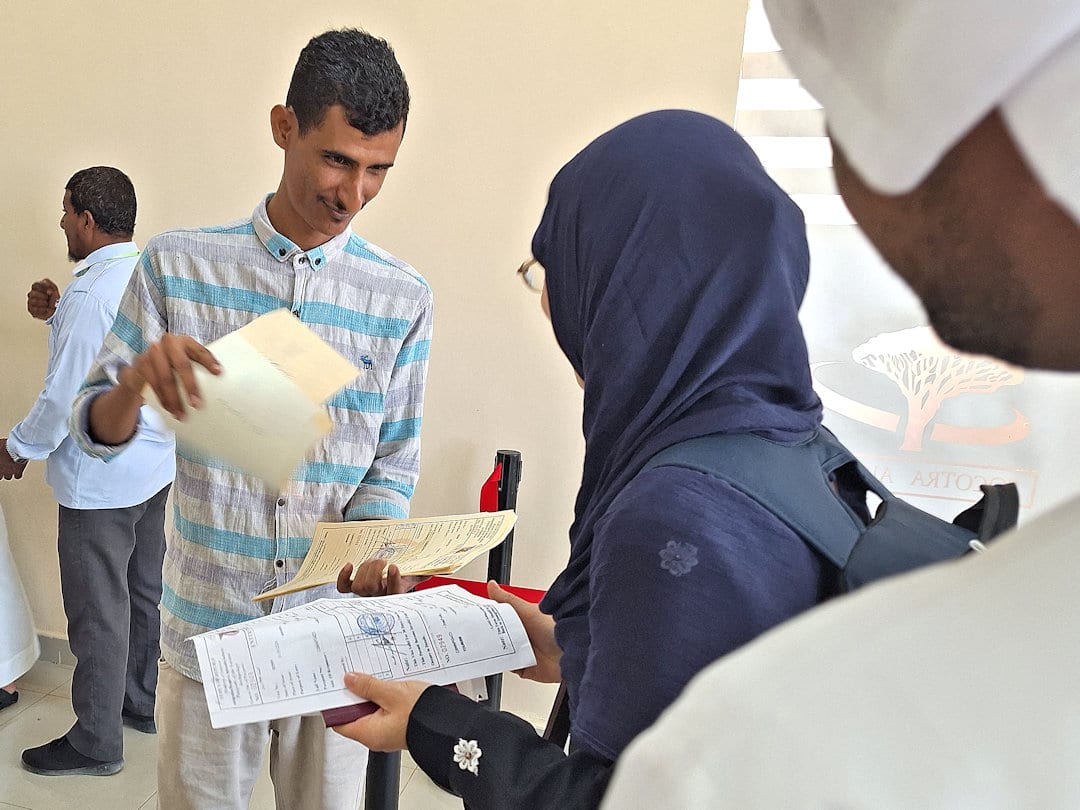
Visas for Socotra are organised by your tour provider and are valid for 30 days upon entry
Which is the best Socotra tour/agency?
Everyone’s needs and preferences differ, and tours to Socotra are not cheap, so do do your research before you buy. We explored the island with Socotra Eco-Tours, a locally-owned company that offers private tours at a competitive price, and with Hussein Ali as our excellent, sustainability-focused guide, who taught us a lot about the Socotri way of life. We also like/d
- Socotra Bliss, the first Yemeni woman-owned tourist agency in Socotra, and
- Traveling Socotra, a Socotri/foreign-(co)owned company with a dedicated focus on responsible travel.
We only learned about the latter two after our trip; otherwise, they would have been strong contenders for our shortlist.
You can browse the full list of (reputable) tour operators on Socotra (and filter it using key selection criteria) at the bottom of this article.
When is the best time to visit Socotra?
Socotra has two distinct seasons - the windy season (from June to September) and the tourism season (from October to May). The weather during the tourism season varies:
- October temperatures reach up to 32 degrees Celsius (90 degrees Fahrenheit). Most of the rain falls from mid-October to mid-November.
- After the brief rainy season, December and January are the most pleasant months, with highs up to 28/82 degrees. This is also when the island is at its greenest.
- February and March are the calmest months. Daytime temperatures reach an average of 29/84 degrees, and the Dragon Blood trees and Desert Roses are in full bloom. March, however, is also the month with the most tourist arrivals, making the key attractions feel very busy (100+ people at the Firmhin Forest campsite are not unheard of).
- April and May are the least comfortable months during the tourism season, with average highs of up to 34/93 degrees.
- While, thankfully, not often, the highest chance of a tropical cyclone (the Indian Ocean equivalent of a hurricane or typhoon) hitting Socotra is in May/June and October/November.
We visited in early October, right at the start of the tourism season, when the island was driest. We expected to miss out on seeing the desert rose in bloom, but even that early in the season, we came across quite a few examples. That said, if we had the choice (again), we would come in January or February.
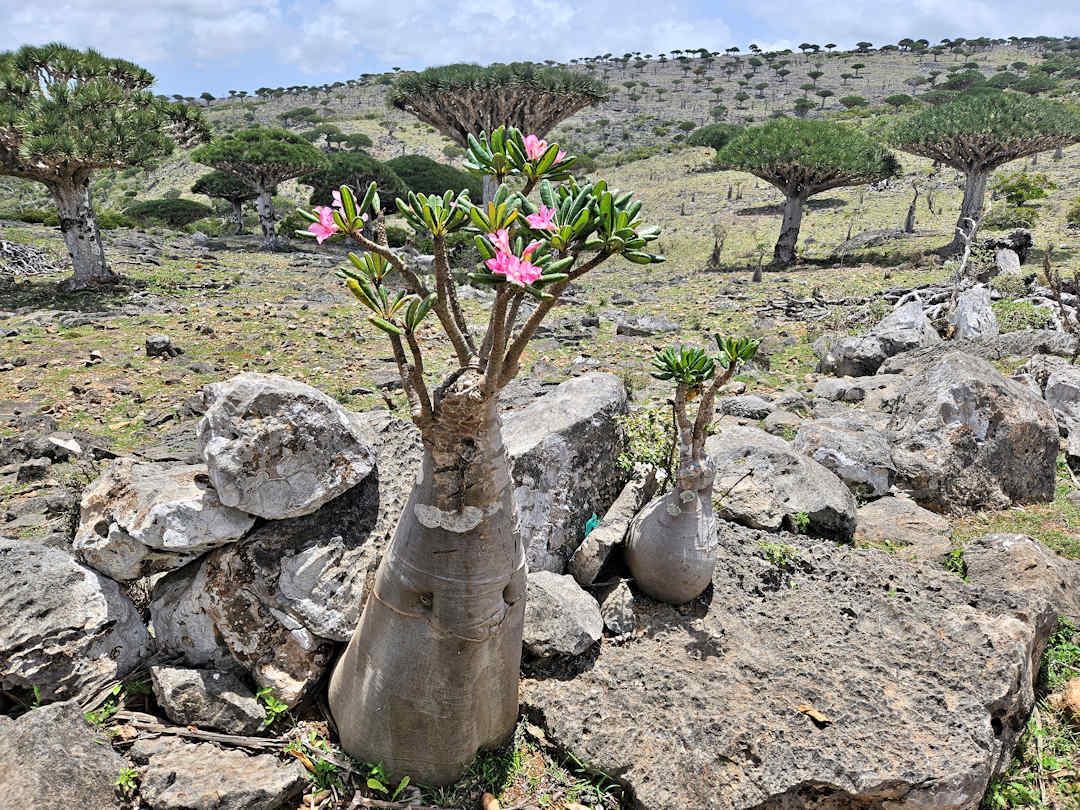
While February and March are best to experience the desert rose in full bloom, you can see the flowers as early as October
How much time should you spend in Socotra?
While most visitors come for just one week, you can stay longer. After all, your visa is valid for 30 days. We highly recommend staying (at least) two weeks, as Socotra has much more to offer than the highlights frequented by every tour group.
During our two weeks on Socotra, we hiked across the interior from north to south in week one and visited some of the highlights (and some lesser-known destinations) along or near the coast in week two. Out of the two, our week of hiking was our absolute favourite, hands down.
Why? For almost a week, we didn’t meet any other tourists. It was just us, our English-speaking local guide, the camel that carried most of our gear and his owner, a local mountain guide and the occasional villagers we would bump into along the way. We got to
- experience the stunning (and much wetter = greener) mountainous interior, home to the magical Dragon Blood trees,
- hike over mountain passes from Wadi to Wadi with panoramic views and daily baths in refreshing mountain streams, and
- have a much greater appreciation for the traditional Socotri way of life.
What’s not to love about that?
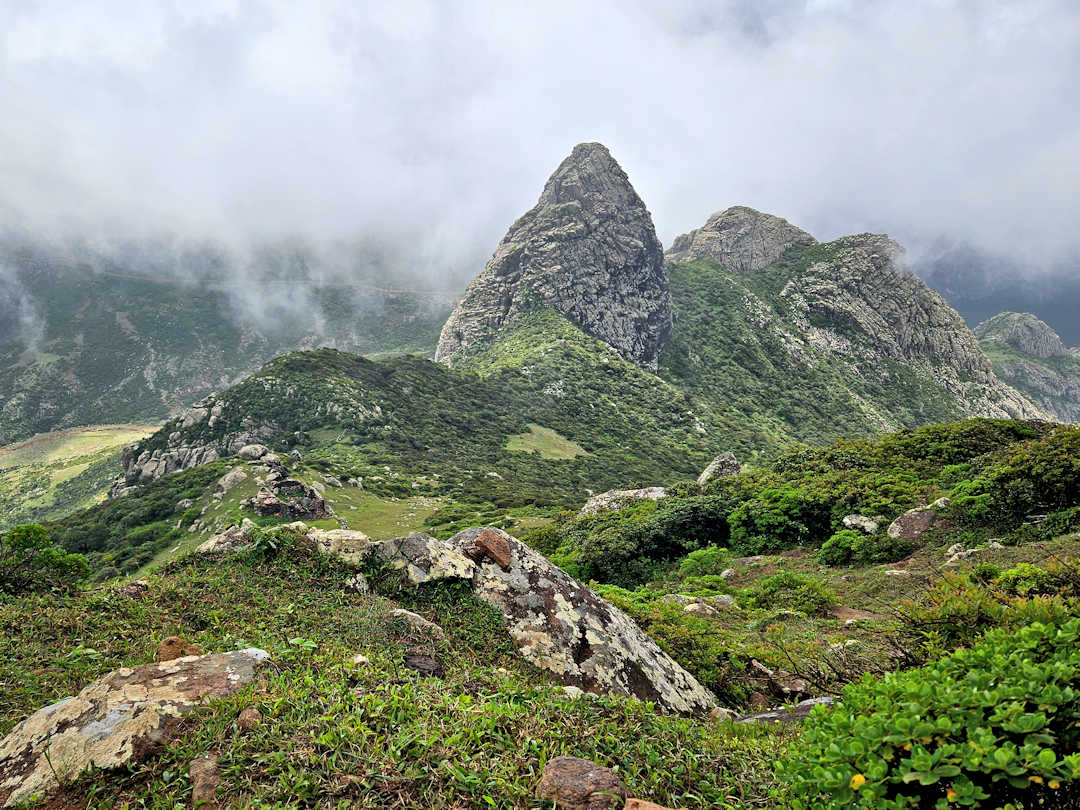
If you only tour the "highlights" of Socotra, you won't be able to experience the green and peaceful Hajhir Mountains
In week two, we made some changes to the usual highlights tour and decided to
- overnight at Wadi Kalisan (other tours only stop here for a few hours),
- visit the waterfall at Wadi Dibarabhar (where water comes crashing down from the highland plateau – best just after the rainy season),
- stay at the beach in Di Saberho (chatting to curious local kids until sunset) instead of the more touristy Amok Beach, and
- spend our final day and night at Ayhaft Canyon, a paradise for birders, towered over by Socotra’s highest mountains.
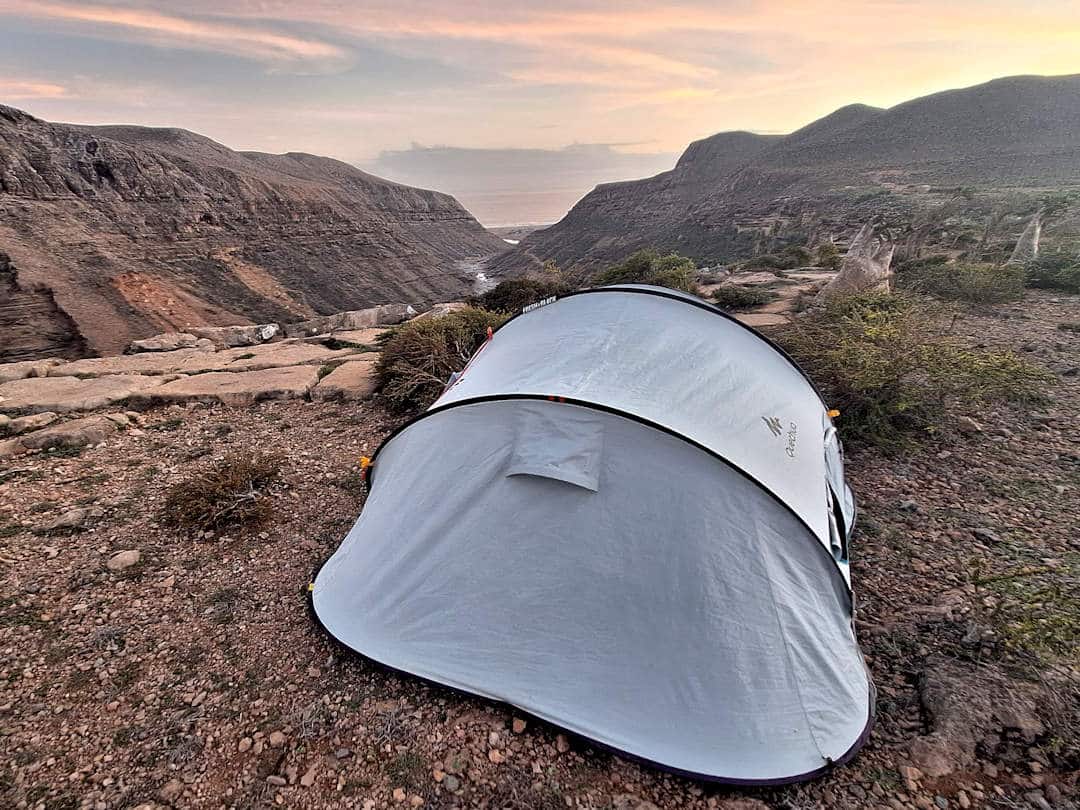
Private tours of Socotra allow you to tailor the itinerary to your needs and make (overnight) stops where other tours won't
What can you expect during a multi-day hike on Socotra?
On our trek, daily hiking distances varied from about 5.5 to about 17.5km, and elevation gains from about 150 to just under 1,000 metres. Leaving the coastal plain near Hadibu with temperatures over 30 degrees Celsius, the temperatures in the Hajhir Mountains were much more pleasant. It even rained occasionally.
The path leading up from the outskirts of Hadibu to the Adoho Dema’alah saddle is a very rugged forest road that quickly turns into a mud pit when it rains. Even our camel struggled at one point after losing its footing one too many times. Fortunately, that happened just before the saddle, so we could take off our gear and carry it for the final few metres.

The trail into the mountains from Hadibu is exposed and rugged but rewards with panoramic views back to the coast
Hiking trails from the saddle through the Hajhir Mountains are mostly single-file tracks, often barely noticeable among the vegetation or through riverbeds. Thus, a local who knows his way around is essential to avoid getting lost.
Each night, we would stay at a different campsite (all without facilities), usually near a river to fetch water to cook with, wash off the sweat and dust accumulated during the day or give our clothes a bit of a rinse. One night, we slept in a simple stone hut belonging to the family of our cameleer, but usually, we would stay in our tent. When nature called, we would walk away from the campsite, go behind a bush and then cover our business with dirt and leaves.
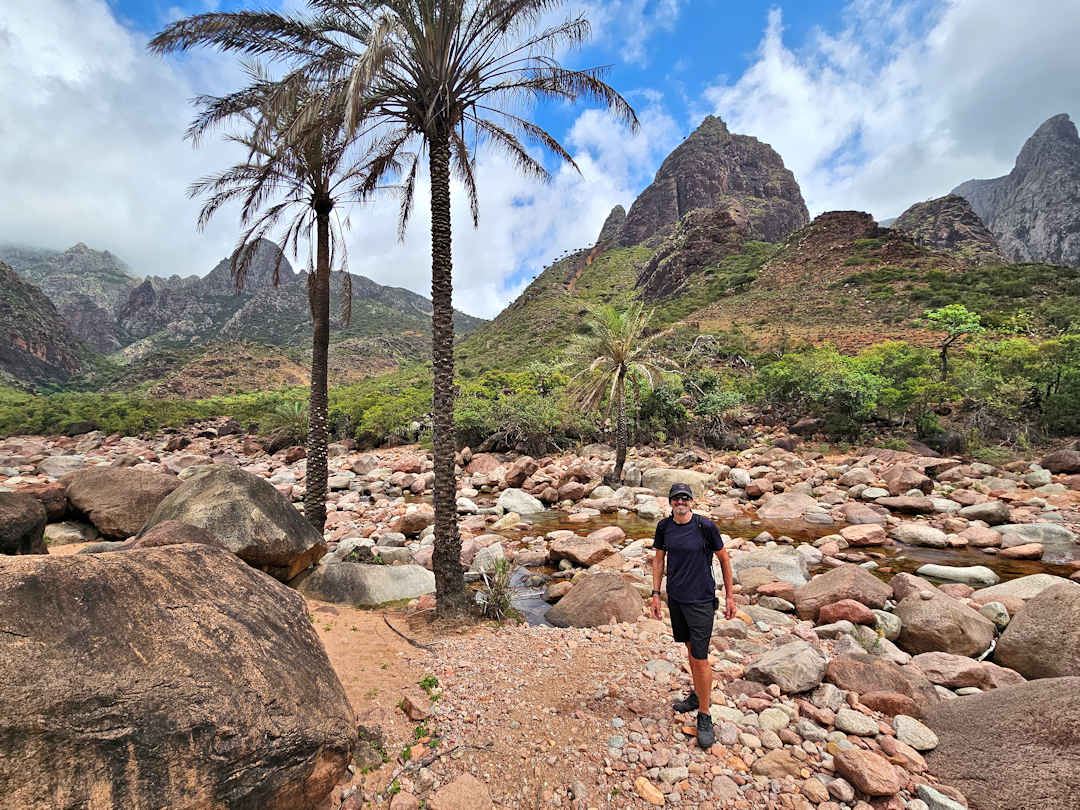
In the Hajhir Mountains, streams like this are welcome sources of fresh water - to filter and drink, bathe and wash your clothes
We would be in rhythm with nature: waking up with the first light, packing up camp before the sun had climbed over the surrounding mountains, resting in the shade during the hottest part of the day, setting up camp and having a bath in the river before the sun would set, and going to bed after dinner and chats with our local companions around the campfire.
We would carry a day pack, water and some snacks; everything else (including our tent, thin futons, travel packs, cooking equipment, food supplies and waste bag) was loaded every morning (and again after lunch) onto our camel. While our guide assured us that we travelled light compared to other guests, we could have lightened our camel’s load even more by leaving one of our travel packs at our tour operator’s office (and sharing the other on the trek). Something to keep in mind if you plan to hike on Socotra.

On Socotra, camels transport all the gear required for your (multi-day) hike, so all you need to carry is your day pack
With obvious weight restrictions, the meals prepared during our trek were more basic (than the meals we would have along the coast):
- Breakfast consisted usually of flatbread with Nutella or jam and dates (and the occasional scrambled egg or stewed lentils/chickpeas).
- We would eat rice or noodles with a veggie stew (and the occasional canned tuna) for lunch and dinner.
We would also receive some fresh fruit (including guava and papaya) from kind locals. While it was always enough to give us sufficient energy for our hike, we also brought along (from overseas) some trail mix and muesli bars as snacks in between.
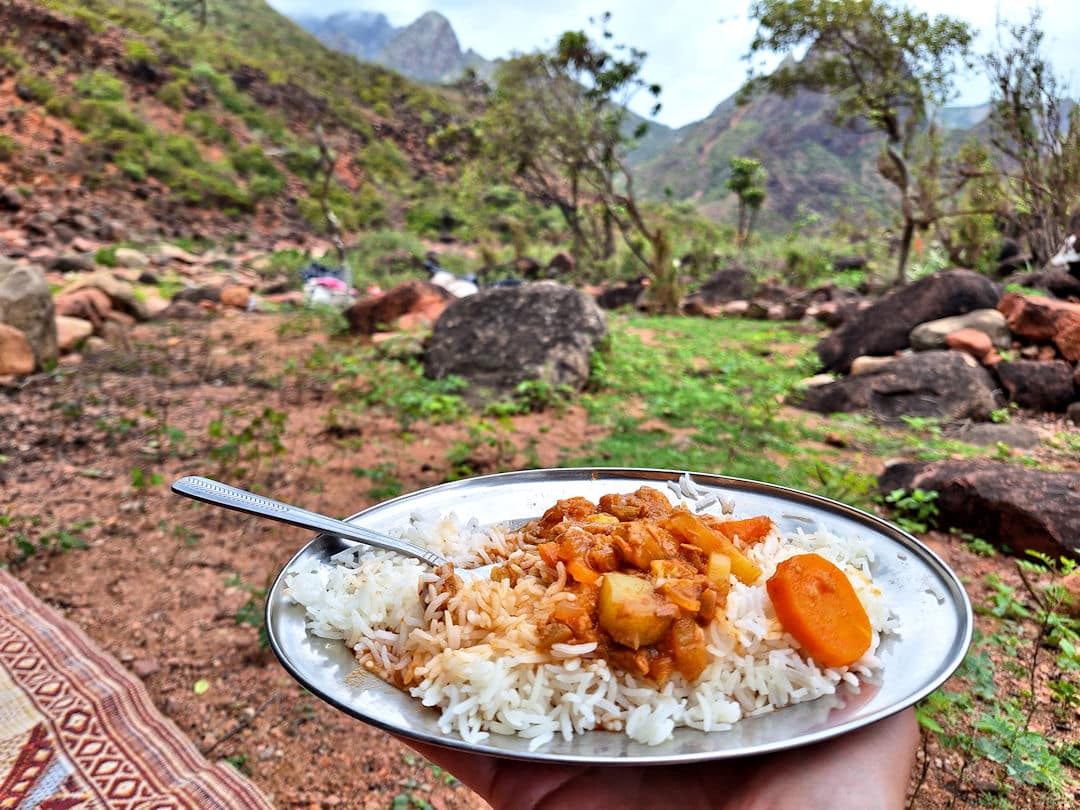
Meals in the Hajhir Mountains are less opulent (than on the coast), given the remoteness of the trails and weight limitations
How much do Socotra tours cost?
While it is often a matter of you get what you pay for, that’s not always the case with tours on Socotra: The cost of our two-week private tour was on par with the prices charged by some tour providers for one-week group tours. Yes, our tour equipment was not the newest (and we didn’t travel with fancy toilet tents or portable wash basins), but that didn’t bother us. So, do shop around, bearing your needs and preferences in mind.
As a rough guideline from a price point of view, here is a high-level comparison of the package types available:
| Package Type | Accommodation | Price Range (Per Person) | Description |
|---|---|---|---|
| Basic | Mostly basic campsites | USD1,200–1,500 (one week) USD2,000–2,200 (two weeks) | Most immersive and budget-friendly |
| Mid-Range | Mix of basic and established campsites (and sometimes one hotel night) | USD1,500–2,000 (one week) USD2,200–2,400 (two weeks) | More comfortable but still immersive |
| Luxury | Alternating camping/hotel or hotel only | USD2,500–3,000 (one week) USD3,500+ (two weeks) | Most comfortable but also most expensive and least immersive |
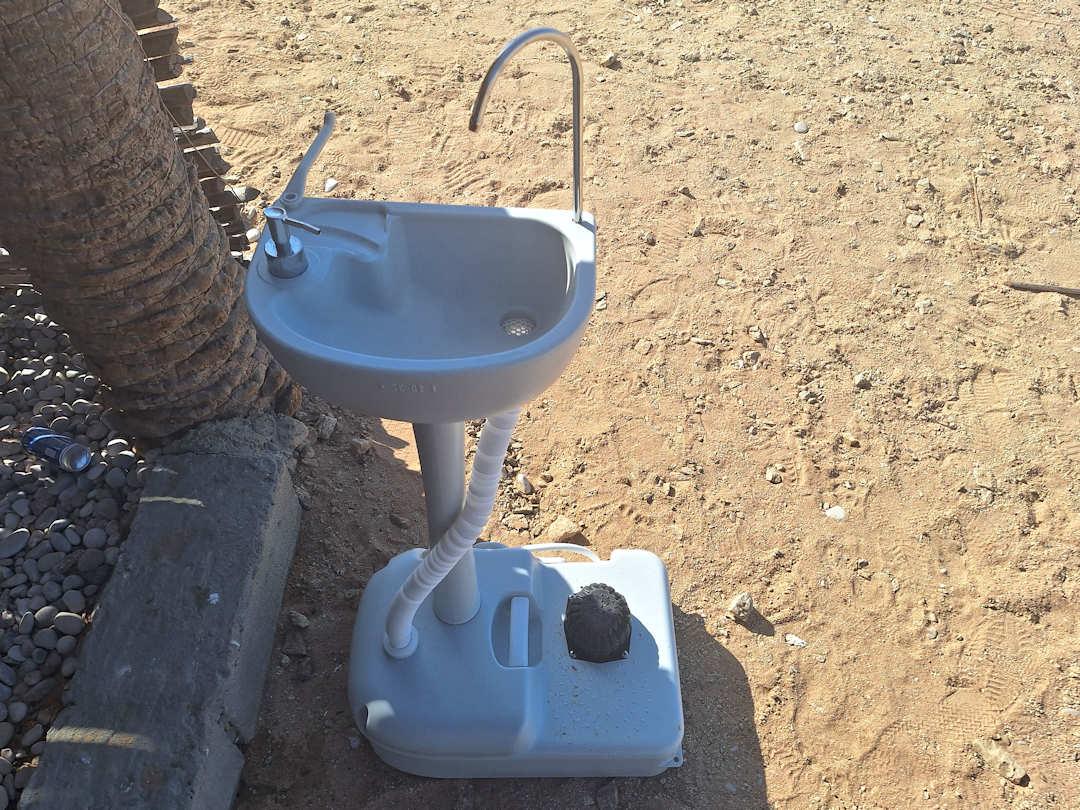
If things like a wash basin or toilet tent are important to you, look for a more expensive mid-range (or luxury) tour
What to look for when booking a Socotra tour package?
Apart from the price (and what’s included/excluded), also bear in mind the following:
- If you book a group tour, pay attention to the group size (ranging from 6 to 12, or even 18 people). Also, check the itinerary. Are all the places and activities you want to see and do included? Great. Are places or activities included that you are not interested in? Maybe the tour isn’t right for you.
- Browse the websites and read the reviews for the tour operators on your shortlist. Is a certain tour guide praised over and over? Note their names and check if you can get them on your tour.
- Contact the providers on your shortlist with any remaining questions, and see how quickly and comprehensively they respond. If the response feels pushy, lacks information or takes too long to arrive, cross them off your list.
Supporting the local communities we visit is crucial for us, as is minimising tourism leakage (money leaving the island). As a result, we always choose locally owned and operated tours instead of those provided by overseas-owned companies, even if they mainly employ locals.
We also look for tour providers with a proven track record in sustainability: Do they take measures to reduce waste? Do they ensure no waste is left behind (or even collect rubbish dumped by others)? Do the guides call out bad behaviour? Does the company contribute funds to local community projects? If we can’t find that information on the company’s website or in the reviews, we ask (before we book). If the response is vague or reeks of greenwashing, we move on.
Socotra Travel Agencies: What operators offer tours in Socotra?
Here is a list of all the tour operators we have come across before, during and after our trip (in alphabetical order) with some key information. Use the filters to narrow down your choice:
Filter tour operators
Show or hide table columns
| Tour operator | Accommodation Type | Duration | Speciality | Ownership | Tour Type | Details |
|---|---|---|---|---|---|---|
| 2SOCOTRA | Camping/Hotel | 7 Nights | Not Specified | Not Specified | Group, Private | More Details |
| Crazy Puffin Adventures Tours | Camping/Hotel | 7 Nights | Not Specified | Foreign | Group, Private | More Details |
| Discover Socotra | Camping | 7 Nights, 14 Nights | Birding, Botany, Canyoning, Caving, Climbing, Culture, Diving, Fishing, Photography, Surfing, Trekking, Zoology | Socotri | Group, Private | More Details |
| Embrace Socotra | Camping/Hotel | 7 Nights, 14 Nights | Not Specified | Socotri | Private | More Details |
| Eye of Socotra | Camping/Hotel | 7 Nights | Not Specified | Socotri | Group, Private | More Details |
| Hello Socotra | Camping/Hotel | 7 Nights | Birding, Climbing, Fishing, Trekking | Socotri | Group, Private | More Details |
| I Love Socotra | Camping, Camping/Hotel | 7 Nights, 14 Nights | Birding, Caving, Diving, Fishing, Photography, Surfing, Trekking | Socotri | Group | More Details |
| Lupine Travel | Camping/Hotel | 7 Nights | Not Specified | Foreign | Group | More Details |
| Penguin Travel | Camping, Camping/Hotel | 7 Nights | Not Specified | Foreign | Group | More Details |
| Rocky Road Travel | Camping/Hotel | 7 Nights | Fishing, Trekking | Foreign | Group, Private | More Details |
| Safar Expeditions | Camping | 7 Nights, 14 Nights | Not Specified | Foreign | Group | More Details |
| Socotra Advisor Tours | Camping, Camping/Hotel | 7 Nights, 14 Nights | Birding, Botany, Diving, Fishing, Photography, Surfing, Trekking | Socotri | Group, Private | More Details |
| Socotra Bliss | Camping | 7 Nights | Not Specified | Socotri | Group, Private | More Details |
| Socotra Eco-Tours | Camping, Camping/Hotel | 7 Nights, 14 Nights | Birding, Botany, Canyoning, Caving, Climbing, Culture, Diving, Fishing, Photography, Surfing, Trekking, Zoology | Socotri | Group, Private | More Details |
| Socotra Exclusive Tours | Camping/Hotel | 7 Nights | Birding, Diving, Fishing, Photography, Surfing, Trekking | Not Specified | Group | More Details |
| Socotra Holidays | Camping, Camping/Hotel | 7 Nights, 14 Nights | Birding, Fishing | Not Specified | Group | More Details |
| Socotra Pioneer Tours | Camping, Camping/Hotel | 7 Nights, 14 Nights | Not Specified | Not Specified | Group | More Details |
| Socotra Rafa Tours | Camping, Camping/Hotel | 7 Nights | Birding, Diving, Fishing, Photography, Surfing, Trekking | Socotri | Not Specified | More Details |
| Socotra Specialty Tours | Camping | 7 Nights | Not Specified | Foreign | Group | More Details |
| Socotra Trek Tours | Camping, Camping/Hotel | 7 Nights, 14 Nights | Not Specified | Socotri | Group, Private | More Details |
| Socotra Trip | Camping, Camping/Hotel | 7 Nights | Birding, Botany, Diving, Fishing, Photography, Surfing, Trekking | Foreign | Group, Private | More Details |
| Tour Socotra | Camping, Camping/Hotel | 7 Nights | Not Specified | Foreign | Not Specified | More Details |
| Traveling Socotra | Not specified | 7 Nights | Diving | Socotri/Foreign Co-Owned | Group, Private | More Details |
| Welcome to Socotra | Camping | 7 Nights | Not Specified | Foreign | Group, Private | More Details |
| Wild Spirit Socotra | Camping | 7 Nights | Not Specified | Socotri/Foreign Co-Owned | Not Specified | More Details |
| Young Pioneer Tours | Camping/Hotel | 7 Nights | Not Specified | Foreign | Group | More Details |
No tour operators match the selected filters.
Planning a trip to Socotra?
Before you go, explore our essential insider tips to prepare for your adventure and learn how much a visit might cost with our detailed expense breakdown. Dive deeper into this extraordinary destination and plan your journey with confidence.
Before you go, if you liked our article and found it helpful, we would appreciate it if you could share it with your friends and family via the Share buttons below. Even better: Leave a short review on Trustpilot or Google, which would help us further build our online reputation as a (trustworthy and helpful) travel and lifestyle blog.