

This article may contain links to products and services we use and recommend. We may receive compensation when you click on links to those products. For more information, see our Disclosure Policy.

Are you planning to explore Eastern Europe and wondering whether to take the night train from Budapest to your destination in Romania, and what to expect? We made the journey recently, and while we didn’t get the best sleep, it was comfortable, and we’d happily do it again. In today’s article, we share everything we’ve learned to prepare you for your overnight train trip.
Are you planning a trip from Budapest to Romania?
Book your transportation to/from Budapest, keeping your carbon footprint in mind:
If you have time for more than just a stopover in Budapest, we recommend these centrally located accommodation options near public transport:
When managing money across countries, we keep fees low and decisions deliberate. We use XE to check exchange rates, Wise to move and spend money internationally, and PocketSmith to track where it all goes.
Buying travel insurance can feel overwhelming. Start by reading our buyer's guide to finding insurance that suits your needs. Then compare options on the Insubuy marketplace (with all the information you need to find the one that's right for you).
Explore the wonders of Budapest and beyond with the best tours and activities powered by GetYourGuide, GuruWalk and Viator. We recommend these sustainable options with local providers:
Why travel by train from Budapest to Romania?
You may still be unsure about train travel between Hungary and Romania, so let’s cover the WHY first.
There are, in fact, a host of advantages to travelling by train between the two countries: Firstly, Hungary and Romania are neighbours, so we’re not talking about huge distances. Both countries boast extensive and well-established rail networks with solid international connections.
There are direct flights between Budapest and Bucharest, but what if you want to visit Romania’s smaller cities and towns, such as Timișoara, Sibiu, Sighișoara, or Brașov? And what if you need to travel at the last minute? Travel by train is the answer.
You could also do the journey by bus (including overnight options). We use Busbud to check routes and availability, including services operated by companies like FlixBus between Budapest and Bucharest (with stops in Timișoara, Sibiu, and Brașov). But train travel offers much greater comfort than being confined to a bus seat for hours. Wouldn’t you agree?
Last (but not least), travelling by train is a more eco-friendly option, minimising your carbon footprint compared to flying or driving. Trains are also a great way to meet fellow (slow) travellers from around the world – there is plenty of time to chat and get to know each other.
Train Schedule for Budapest to Romania Night Trains
The following table outlines the key night trains running from Budapest to various cities in Romania, including their departure times, routes, and arrival times. Whether heading to Bucharest or exploring other picturesque destinations such as Sibiu, Brașov, or Timișoara, this table helps you find the most convenient night train for your journey.
| Number | Name | Via | Notes |
|---|---|---|---|
| IRN79 | Muntenia | Timișoara and Craiova | Leaves Budapest in the mid-afternoon and arrives in Bucharest in the morning |
| NT347 | Dacia | Alba Iulia, Sighisoara, Brașov, Bușteni and Sinaia | Leaves Budapest late at night and arrives in Bucharest mid-afternoon |
| NT473 | Ister | Sibiu, Brașov, Bușteni and Sinaia | Leaves Budapest mid-evening and arrives in Bucharest around lunchtime |
| IRN407 | Corona | Deda and Toplița | Leaves Budapest in the early evening and arrives in Brașov mid-morning |
Map of Points of Interest, Eateries and Transport
Explore the map below to find the key points of interest, recommended eateries, and transport hubs mentioned in this article. Use it to plan your journey, discover must-visit stops, and easily navigate the area.
When is travelling by train from Budapest to Romania not advised?
Travelling by train between Hungary and Romania is not the most sensible option if you’re pressed for time: Train travel—especially on the Romanian side—is slow, which means the (direct) train journey from Budapest to Bucharest may take up to 17 hours.
Those expecting luxury or modern amenities may be disappointed: The trains are operated by either CFR Călători (the Romanian Rail Passenger Services) or MÁV (the Hungarian National Railway), and train carriages date from the last century (which brings back childhood memories for me, but I know, it’s not everyone’s cup of tea).
Likewise, you might struggle to find space on the train if you plan to travel with ginormous suitcases. Unless you leave the kitchen sink at home, travelling by train between Hungary and Romania may not be for you.

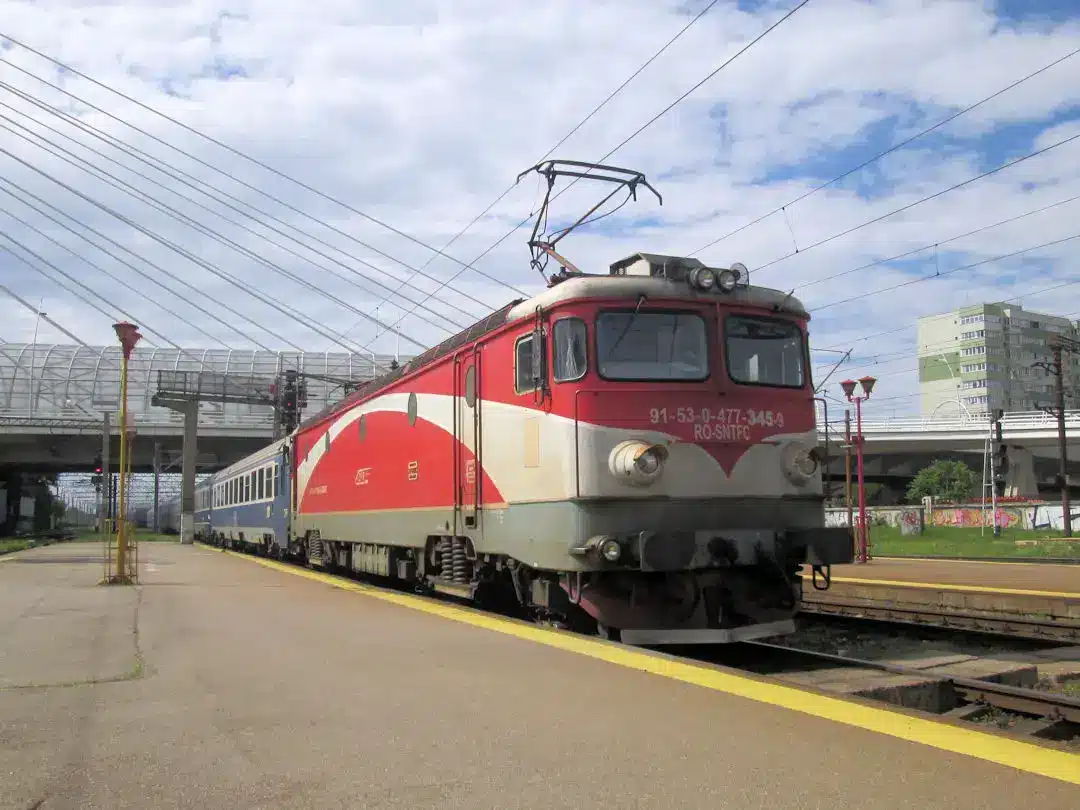
A CFR Călători locomotive pulls a couchette carriage across a bridge in the picturesque Romanian countryside, offering passengers a scenic and comfortable journey between Budapest and Bucharest. Image credit: Wikimedia Commons.
What types of cabins are available on the overnight trains between Hungary and Romania?
With night trains consisting of various carriages, cabin options cater to different budgets and comfort levels. Let’s cover them here, from cheapest/ least comfort to most expensive/ highest comfort.
(Second Class) Six-seat cabins and open seating compartments offer the cheapest option for travellers: The open compartments on our train featured groups of 4 seats around a table. In comparison, the cabins comprised three seats facing three seats (without a table). Armrests between seats were foldable, but only cabin seats could be reclined.
Both types of cabins/compartments offered power points between the seats or along the wall—great if you want to do some work or just charge your devices overnight.
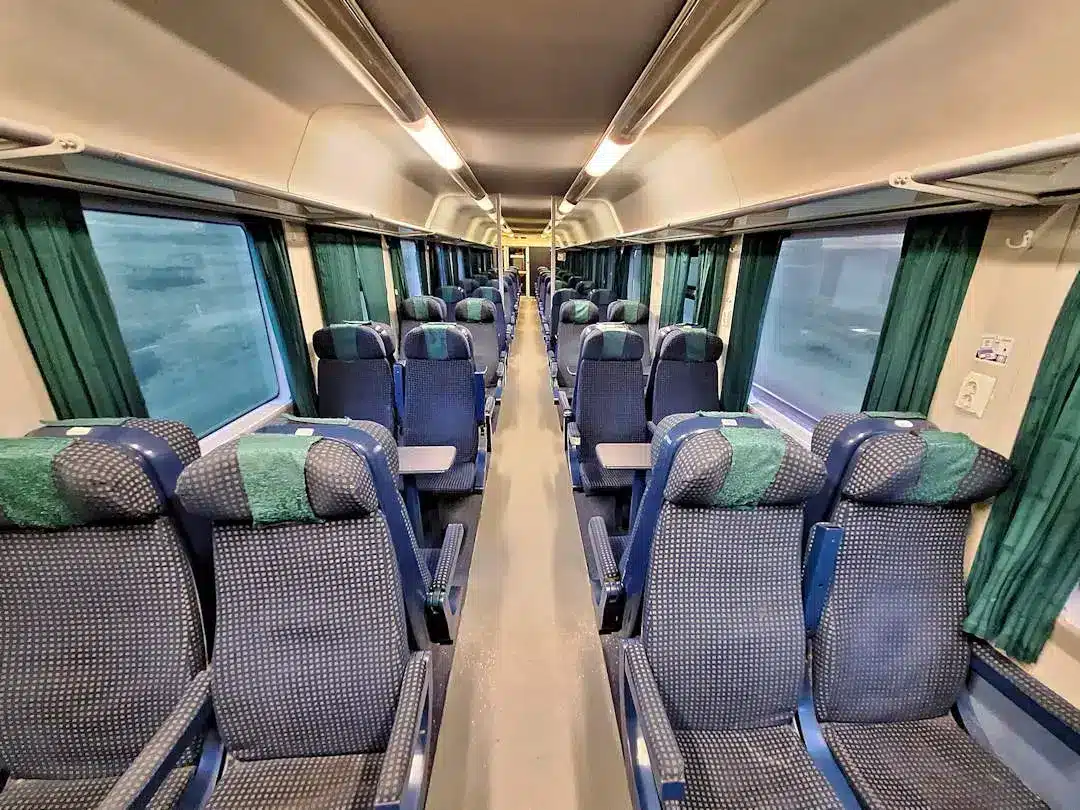
The cheapest option are second class seats in open carriages...

... or in six-seat cabins
For those seeking a bed at the cheapest possible price, the 4/6-bed couchettes feature padded bunk beds (with a shared toilet at the end of the carriage). Couchettes are not private unless you are travelling as a group of 4 or 6 individuals, which means you may share yours with other travellers.
On our train, the couchette compartments had sliding doors (rather than curtains as we’ve seen on other night trains). A blanket and pillow were also provided.

4/6-berth couchettes offer a comfortable bed at the most affordable price point
1/2/3-berth sleeper cabins offer the highest level of privacy and comfort but also come at the highest price.
Sleeper cabins come with duvets, pillows, and clean bed linen. Some sleeper cabins include an ensuite bathroom (with a toilet, wash basin and shower in a wet room setting); others may just have a wash basin (in which case, you’d have to use the shared toilet and communal shower at the end of the carriage).
We’ll talk more about our experience in a sleeper cabin below.

Sleeper cabins offer the most comfort and privacy (but are also the most expensive option)
While our train (at the end of April) was (more than) half-empty, reservation is mandatory for all (EuroNight Ister) seats/cabins on night trains between Hungary and Romania. You can book your seat or accommodation up to three months in advance. If you’re travelling in high season (May to September) or on a public holiday, we recommend you make your reservations as soon as possible.
If you travel with a bicycle, you can take that on board: Our train had a bike rack in one of the seating carriages at the end of the train.
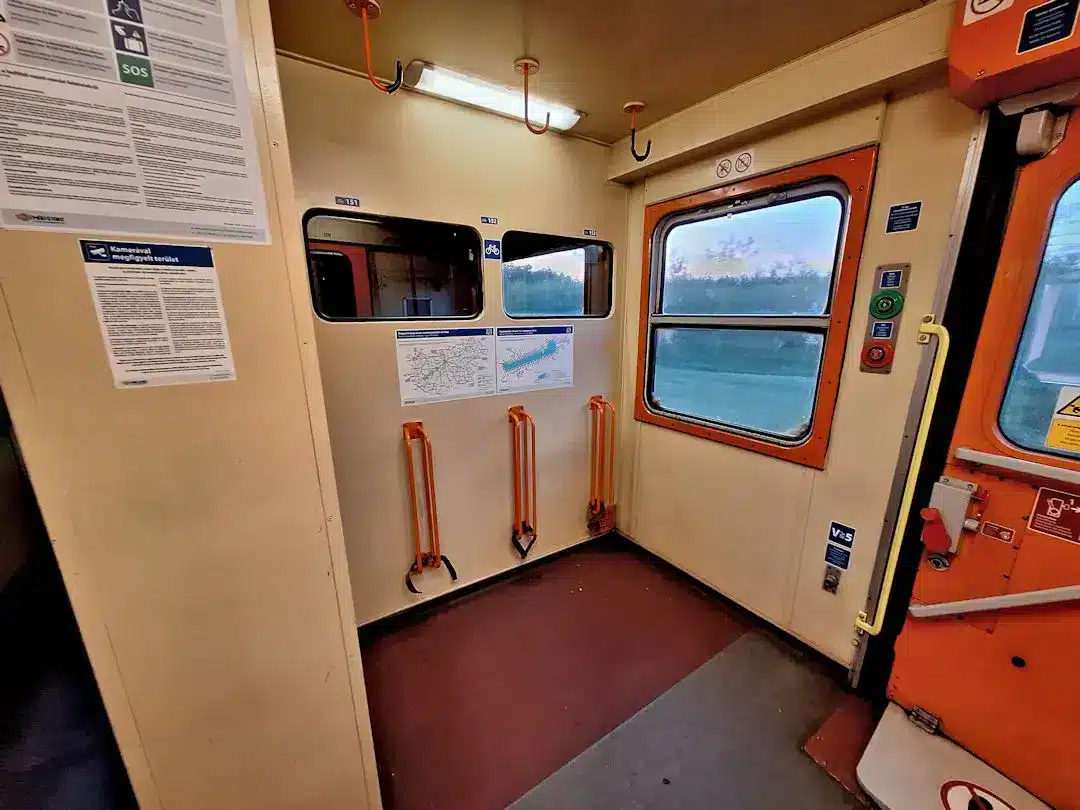
Our night train also had a bike rack
Explore Other Rail Journeys
Are you a rail travel enthusiast or (just) a mindful traveller? Embark on an overland journey of a different kind with our collection of rail travel adventures. Whether from Budapest to Romania or between Bar and Belgrade in Europe, Yogyakarta to Malang in Indonesia, or between Bacalar and Palenque in Mexico, each of our articles offers detailed travel advice, valuable insider tips and thoughtful reflections on intentional slow travel.
Travelling in a sleeper cabin from Budapest to Romania – what is that like?
We took the NT473 Ister train from Budapest to Sibiu, travelling in a 2-berth sleeper cabin at the end of April. We’ll talk about the different night trains in more detail below… after we covered our experience on one.
Before departure
First and foremost, it’s important to know that all trains from Budapest to (anywhere in) Romania leave from the Budapest-Keleti/Budapest-East railway station [Google Maps location].
What we discovered by pure chance (as we were roaming around the station, looking for a place to sit and chill): With sleeper tickets, passengers gain access to the Premium Lounge at Budapest-Keleti, located on the right side of the tracks as you come through the main entrance of the station. As with any (airline) lounge, you are required to show your tickets upon entry.
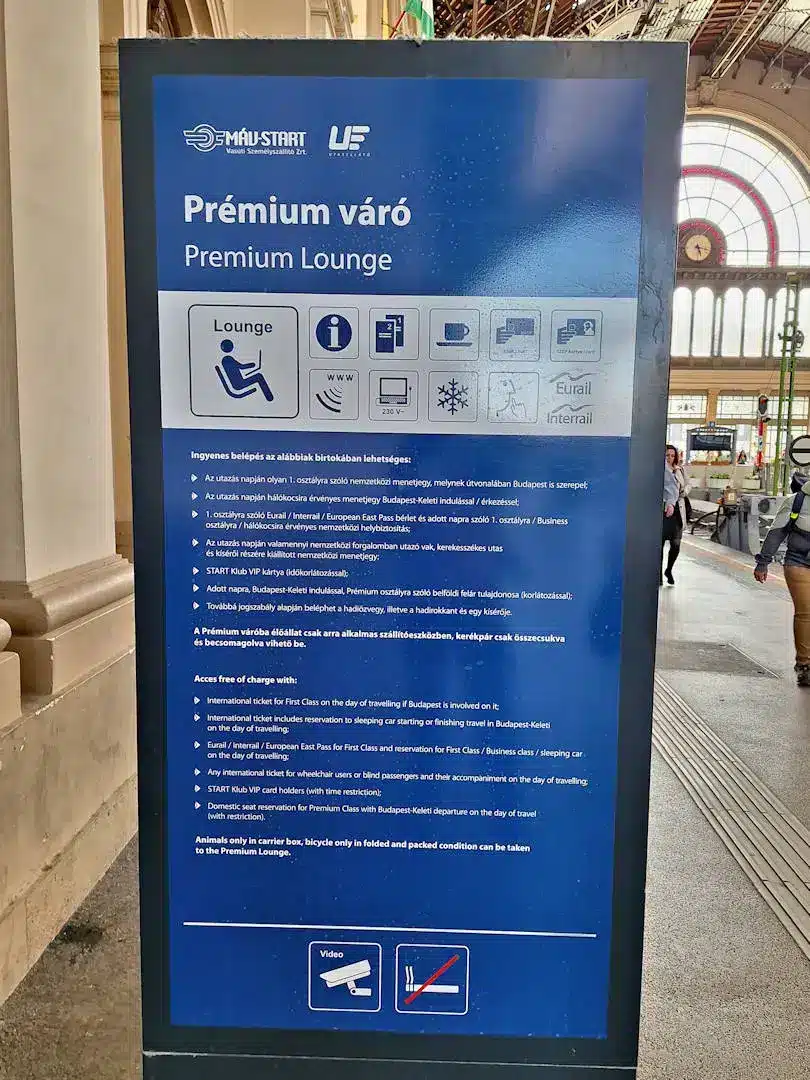
Sleeper tickets include pre-departure access to the Premium Lounge at Budapest-Keleti Station
The Premium Lounge has Wi-Fi, air conditioning, clean toilets, comfortable armchairs with coffee tables, and a row of desks with bar stools (and power points) to do some work if needed. The staff also served food and drinks, some of which were included in the lounge access.
Ensure you keep an eye on the departure screen to avoid missing your train. Announcements are not made inside the Lounge, and it’s so comfortable that it’s easy to forget the time. Our train departed from platform 1, the furthest left of the tracks, which took us about 5 minutes to walk to.
The numbering of the carriages on our train was confusing, but there was only one sleeping car – at the front of the train, right behind the locomotive. The cabins inside our carriage were numbered clearly, and it was easy to find ours. There was also a dedicated attendant on duty (in fact, the same person looked after the sleeping car during the entire journey).
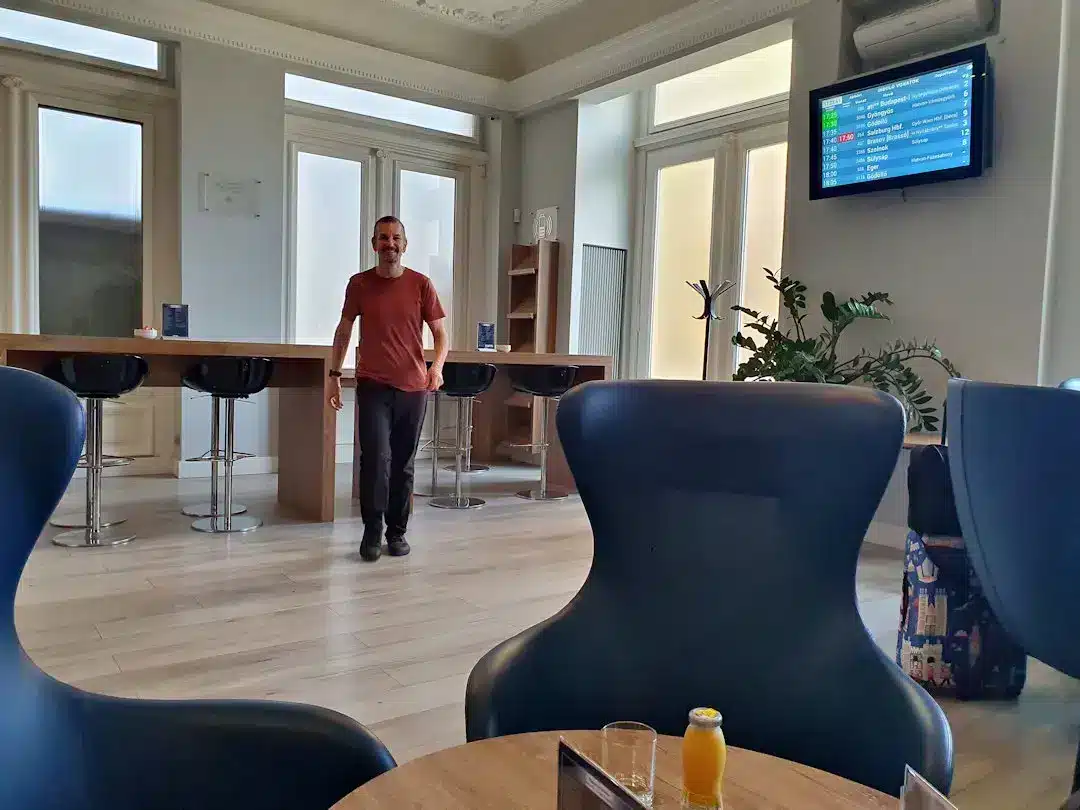
The Premium Lounge has comfortable seating areas and work stations (as well as complimentary food and drinks)
Craving a Romanian Adventure Off the Beaten Path?
Discover the raw beauty of Piatra Craiului National Park on a rewarding day hike from Brașov. Perfect for slow travellers and nature lovers, this guide shows you how to explore responsibly—without a car, without the crowds, and with a deeper connection to place.
On the train
Our sleeper carriage comprised multiple sets of duplex cabins, with the two cabins in each set connected by a door (handy if you’re a family travelling with children – otherwise, make sure the interconnecting door is locked).
Only one of the two cabins in each set had an ensuite (toilet, wash basin and shower); the other only had a wash basin. Both cabins only had a power point for shavers (by the wash basin). It’s pure luck which cabin you’re going to get, so be prepared for any eventuality:
- Bring some toilet paper, as your ensuite and the shared toilet at the end of the carriage may not have any.
- Also, bring a lightweight power bank (we use the Nitecore NB10000) to keep your devices charged overnight when power access is limited.

This sleeper has an ensuite and internal door to the neighbouring cabin

This 3-berth sleeper cabin has a wash basin with vanity above
All cabins in our carriage were 3-berth, with the middle berth removed for those who had booked a 1- or 2-berth cabin.
Upon boarding, the berths were already set up as beds (with bedding). Each traveller also received a 500ml bottle of water (the water from the wash basins is NOT potable) and an amenity kit comprising a disposable wash cloth/towel, a toothbrush and toothpaste, a small bar of soap, and two wet wipes.

Upon boarding, sleepers were already set up with bedding, a water bottle and amenity kit for each traveller
In our cabin, there was storage space for luggage underneath the bottom bunk and on a shelf atop the bathroom/connecting door.
Both the ensuite bathroom in our cabin and the shared bathroom at the end of our carriage were surprisingly clean (as far as train bathrooms are concerned).
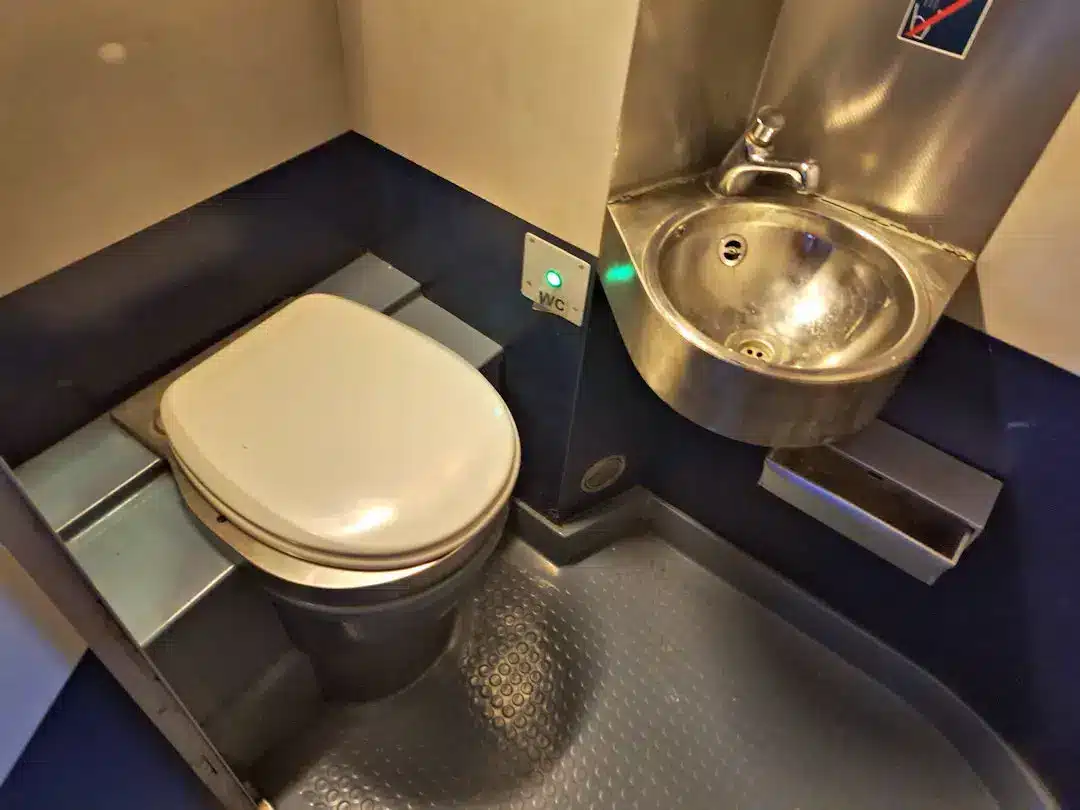
Our ensuite bathroom and the shared toilet at the end of our carriage were surprinsingly clean
On our train, no food or drinks were being sold during the entire journey (and this seems to be the case with all trains between the two countries since COVID). So, pending your destination in Romania, ensure you bring dinner/ breakfast/ lunch on board. Inside Budapest Keleti Station, you’ll find food stalls and small shops, while the surrounding area offers supermarkets and even a shopping mall with a food court—perfect for stocking up before your journey.
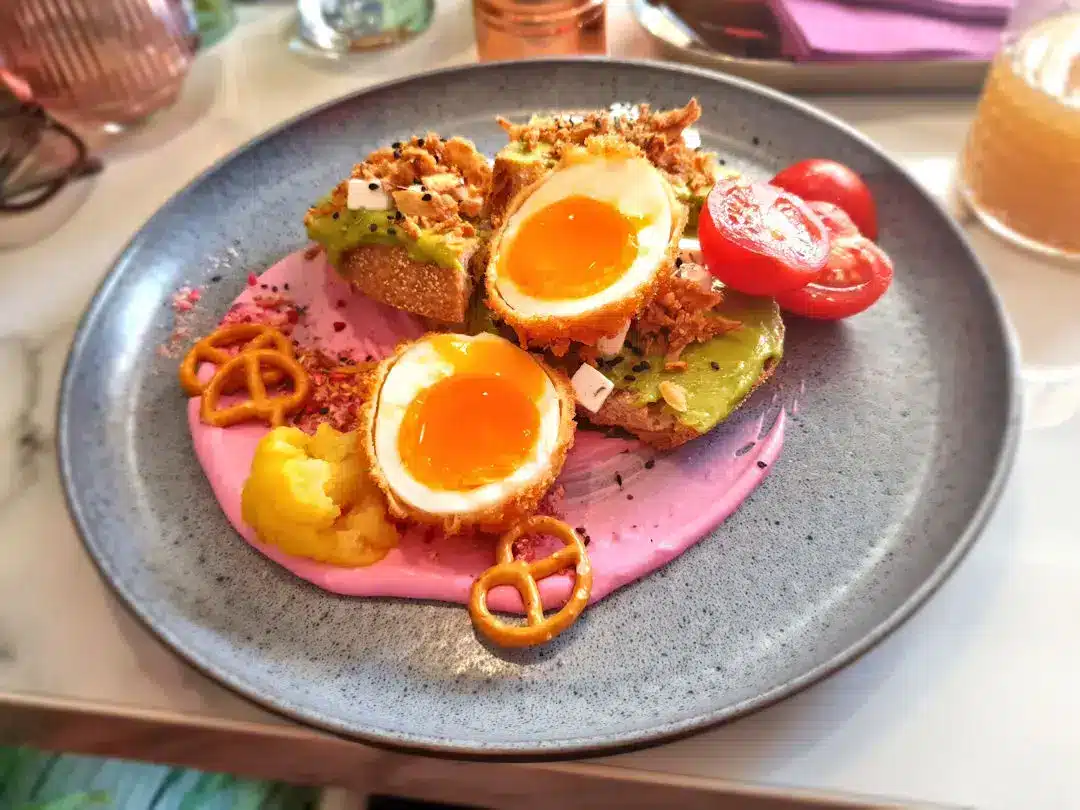
The night trains have no onboard catering, so make sure you have a good lunch and stock up on provisions before your trip
Border crossing
Pending the route your train takes, you will cross the border at Nyírábrány (near Debrecen—IRN407) or Curtici (near Arad—IRN79/ NT347/ NT473). There are two passport controls—in Hungary and in Romania—each taking about 30 minutes. You stay in your cabin during the whole process as the Border Police come on board.
On both sides of the border, our passports were processed on the spot (and not taken away for processing). On the Hungarian side, the Border Police also looked for stowaways under the bottom bunk and in/atop the bathroom. On the Romanian side, the border stop included a locomotive change.
It is also worth noting that Romania is an hour ahead of Hungary, so make sure your watch or phone time changes as you cross the border.
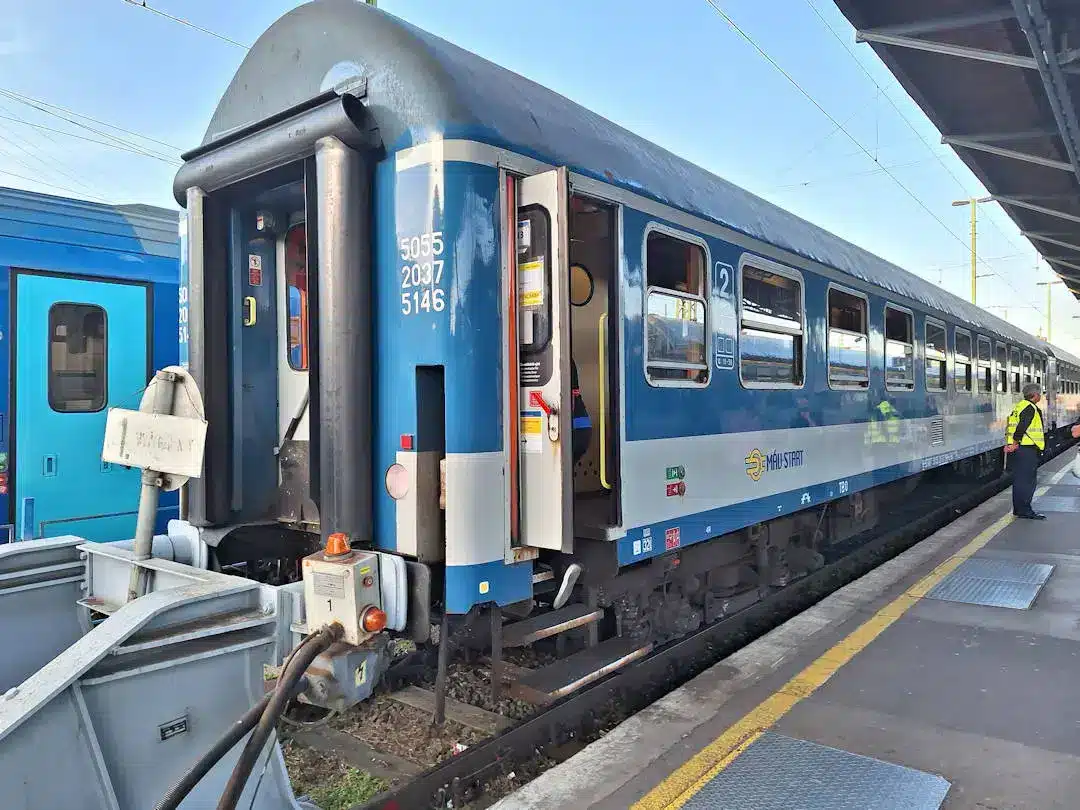
While Romania joined Schengen in March 2024, there are still border controls between Hungary and Romania
The journey
In the sleeper cabins, the room temperature and lighting are adjustable. The temperature setting is above the door, and the light switch is on the door frame (it took us a bit of time to find it).
Our cabin featured clean bedding, a secure barrier on the top berth and a block-out screen on the window to keep out external light. While comfortable, our two berths weren’t created equal: with the top berth close to the ceiling, it got very warm during the night (even in the lowest temperature setting). The window in our cabin didn’t open.
If your sleeper carriage is right behind the locomotive (as it was for us), use earplugs if you want to sleep. Romania’s railway crossings don’t have boom gates, so the train horn is frequently used.
If you’re getting off before the final stop, the carriage attendant will knock on your cabin door (around 30 minutes in our case) before your arrival (but set an alarm as well, just in case).
Stay connected the moment you land
We use Airalo eSIMs on (almost) every trip to avoid roaming charges and the hassle of buying a local SIM. You can install your eSIM before you travel and get online as soon as you arrive. Airalo works in 200+ countries (we've used it across the Americas, Europe and Asia), but not everywhere - so check coverage before you buy.
New to Airalo? Use code NEWTOAIRALO15 for 15% off
Already a customer? Use AIRALOESIM10 for 10% off
What’s the scenery like en route?
The first part (through Hungary and the first hour or so after the border) is flat, rural countryside with the occasional larger settlement – nothing exciting, IOHO.
The nicest part of the journey happens after sunrise, as you cross through Romania. That is, if you take the NT347, NT473 or IRN407. These trains travel through Transylvania, where time seems to have stood still. Looking out the window, you may spot fortified churches in quaint medieval villages, giant haystacks in the fields, and horse-drawn carriages on country roads, often with the Southern Carpathian mountains as a backdrop. After Brașov, the NT347 and NT473 traverse the beautiful Carpathians. Villages and towns have a distinct alpine character.
The IRN79 also travels through the Southern Carpathians, but further west, following the Cerna and then the Danube rivers until the town of Drobeta-Turnu Severin. Unfortunately, this (best) part of the journey happens at night.
After the Carpathians, the road is flat as a pancake to Bucharest, and the scenery becomes increasingly urban and industrial as the train approaches the capital.
Upon arrival
If you arrive at your destination in Romania in the early morning, be aware that most shops/restaurants/cafes don’t open until 10:00. When we arrived in Sibiu at 6:00, only one bakery (the Simpa Gara just up the road from the train station – Google Maps location) was open.
If your destination is Sibiu, you may find storing your luggage in the luggage lockers useful. These are opposite the bar inside the train station. Some half-drunk figures may be loitering around, but we found the lockers easy and safe to use. Credit card payments are accepted.

Those arriving in Sibiu, Brașov or Bucharest will find lockers like these at the train stations
Exploring the streets early in the morning has advantages: it’s perfect for a peaceful introduction to a town otherwise bustling with tourists (and the light is excellent for taking photos).
By the way, if you can’t wait until 10:00 to get your coffee fix, there are vending machines dotted around town, and the coffee is surprisingly tasty (especially those serving Lavazza coffee).
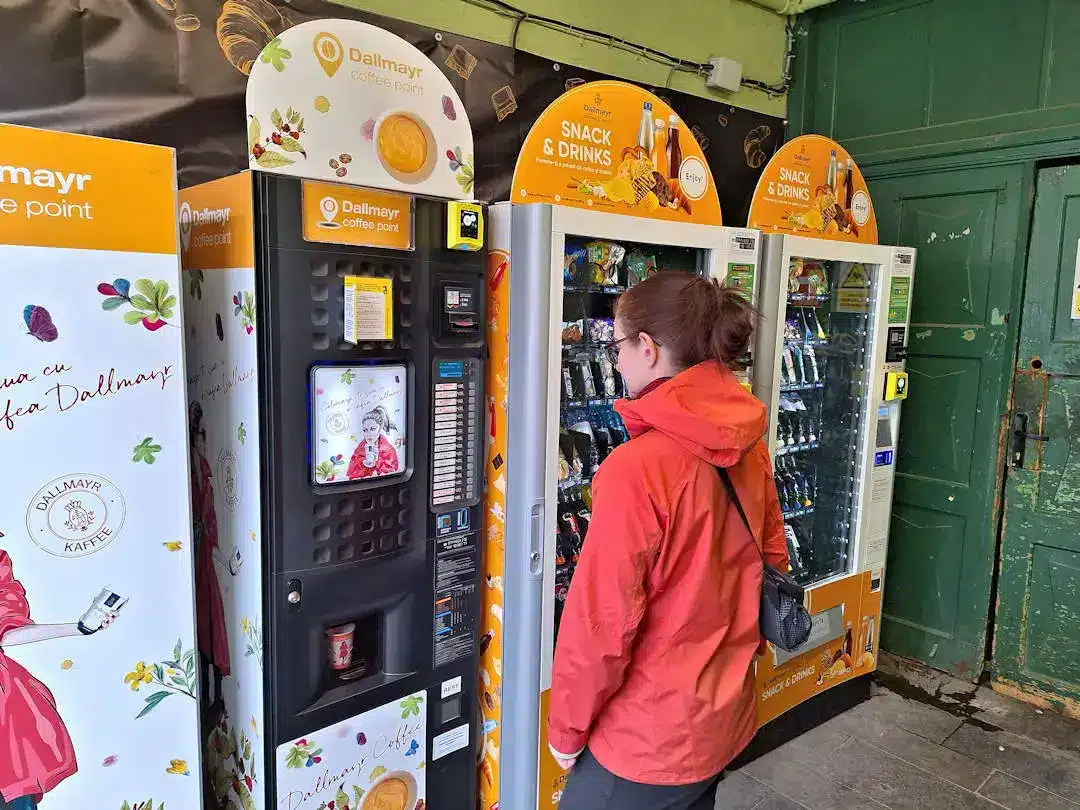
With most shops and cafes in Romania not opening until 10:00, vending machine coffee might be your only option after an overnight train ride
Where can you buy train tickets for the night train from Budapest to Romania?
Purchasing train tickets for the overnight journey is simple and straightforward:
- Online booking is the best option, as digital tickets eliminate the need for printing.
- If you require or prefer personal assistance, you can also buy tickets in person at Budapest-Keleti’s international desk.
If you want to go to Bucharest, you’ll need to book tickets to București Nord (the final stop).

Using Eurail/Interrail between Hungary and Romania
While we bought our tickets individually, we met many people doing Eurail/Interrail in Hungary and Romania—from all walks of life: a couple our age from the Netherlands, two older guys from the England, a retired couple from South Korea, a group of pensioners from Belgium, and a guy in his 20s from Denmark.
The Eurail or Interrail pass offers a cost-effective way to explore Eastern Europe. These passes cater to both European residents (Interrail) and non-Europeans (Eurail), and you can choose between
- a pass that allows you to travel on x number of days (called Flexi Pass) or
- a pass that allows you to travel on any day (called a Continuous Pass).
Each within a specified period. If you have the former and travel on an overnight train, that journey counts as one day/the departure day (not two), provided the arrival day falls within the pass validity.
Regardless of your pass, you must still pay for compulsory seat reservations (including seats, couchettes, and sleeper cabins on overnight trains).
Is Budapest a stopover on your (Eurail/Interrail) journey? Here is how to spend the day
While Budapest warrants a few days of exploration, there is still a lot of ground you can cover if you arrive in the morning and continue your journey on the overnight train to Romania. Here are our suggestions for spending the day in Budapest.
Drop your luggage (more on that below), then start your exploration by taking bus #16 or #216 from Deák Ferenc tér / Deák Ferenc Square [Google Maps location] to Halászbástya / Fisherman’s Bastion [Google Maps location], a picturesque spot offering panoramic views of the (Pest side of the) city, the Danube and its many bridges. Bus payment is easy – pay via your credit or debit card as you board the bus.
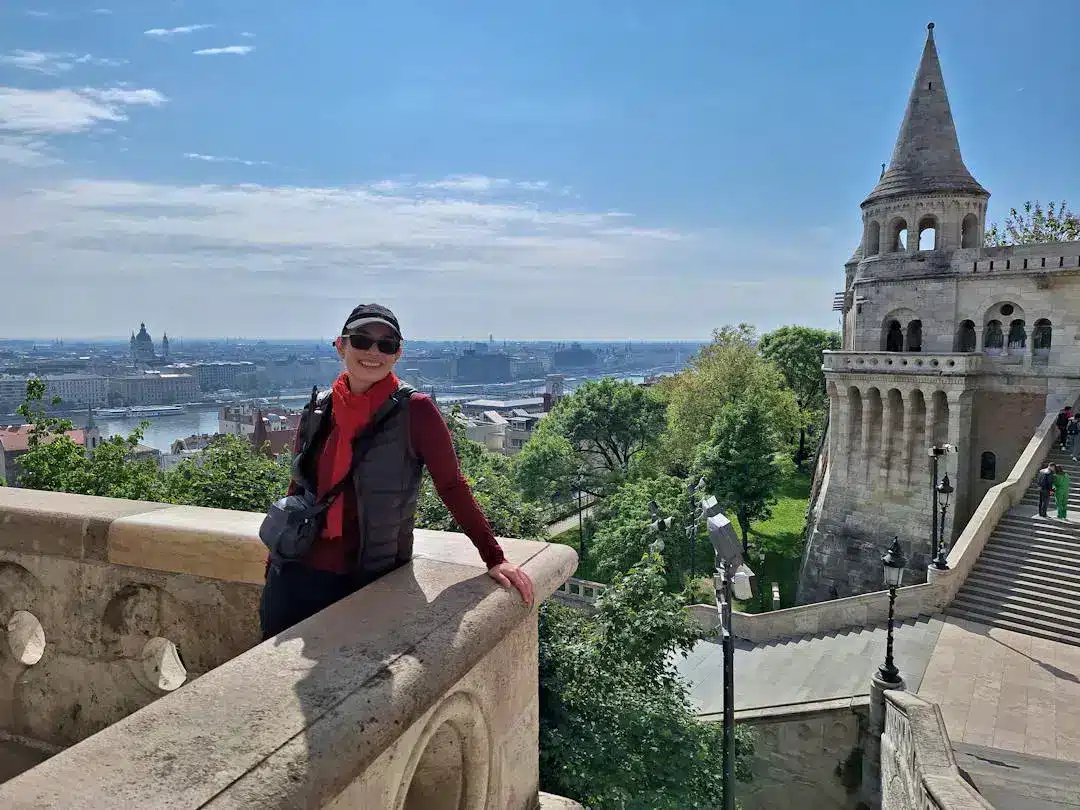
If you only have a few hours in Budapest, head to the Fisherman's Bastion for panoramic views of the city
As you explore the surroundings, treat yourself to a delicious breakfast or morning tea at Buda Rétesvár [Google Maps location]. The service is not the friendliest, but the strudel here is THE BEST we’ve had in Eastern Europe. And the coffee isn’t too bad either.
Then venture to Buda Castle, where you can delve into Hungary’s rich history at the Buda Castle Museum [Google Maps location] or admire masterpieces at the Hungarian National Gallery [Google Maps location].
Afterwards, walk down the Vízhordó-lépcső/ Water Carrier Stairs [Google Maps location] to Várkert Bazár. If you’re hungry after all that exploration, we can recommend brunch/lunch at Zileat, about 500 metres south of Várkert Bazár [Google Maps location]. Then head across the Erzsébet Híd / Elizabeth Bridge or Széchenyi Lánchíd / Chain Bridge back to Pest, enjoying the stunning vistas along the way.

Stop for morning tea at Buda Rétesvár - their strudel is divine
Join the Highlights and Secrets of Budapest free walking tour at 13:00, starting from Szent István / St. Stephen’s Basilica [Google Maps location]. Book in advance to secure your spot.
After the tour, continue around Pest to absorb more of the city’s vibrant atmosphere. Then, as your day draws to a close, pick up your luggage and stock up with provisions on your way to Keleti Station [Google Maps location].
If you have sleeper tickets, you can relax and have a bite to eat at the Premium Lounge before boarding your overnight train.

Travelers finish the Highlights and Secrets of Budapest small-group walking tour, proudly holding the Hungarian flag near the Danube River. The breathtaking view of Buda Castle and Matthias Church marks the perfect end to a day of exploring Budapest’s hidden gems.
Where to store your luggage while you explore Budapest?
If you arrive at Budapest-Nyugati/Budapest-West [Google Maps location], there is a luggage storage facility 5 minutes’ walk from the station [Google Maps location]. It’s inside the offices of a property management firm (open daily from 9:00-17:30). The staff is super-welcoming, and you can even have a shower there for EUR10 per person—great on a hot and sweaty summer’s day. Budapest-Keleti Station also has luggage lockers on the lower ground floor (credit cards are accepted).
Before you go, if you liked our article and found it helpful, we would appreciate it if you could share it with your friends and family via the Share buttons below. Even better: Leave a short review on Trustpilot or Google, which would help us further build our online reputation as a (trustworthy and helpful) travel and lifestyle blog.