

This article may contain links to products and services we use and recommend. We may receive compensation when you click on links to those products. For more information, see our Disclosure Policy.

If you want to explore Japan‘s natural beauty, the Kumano Kodo should be a must-do on your itinerary. In this article, we will break down the expenses associated with hiking the Nakahechi route of the Kumano Kodo – including transportation, accommodation, meals and any additional fees or costs you might incur. Whether you are travelling on a budget or seeking a more luxurious experience, we’ve got you covered.
First things first: Key cost determinants for your Kumano Kodo hike
Everyone travels differently – what’s for one person a luxury is essential for someone else. That said, how much your Kumano Kodo adventure will cost you will always depend on the following:
- Whether you organise the hike yourself or join an organised tour;
- How many days you plan to hike;
- What accommodation you choose;
- Whether you buy a meal plan every day or self-cater (for parts of the hike or overall);
- How fast (and comfortable) you want to travel to/from the Kumano Kodo; and
- If you carry your luggage or need someone else to transport it for you (every day or only occasionally).
We’ll talk about each in a bit more detail below.
Please note: While all prices in this article are actual (quoted or paid), prices change over time. We update this article regularly to reflect inflation, but it can only be indicative.
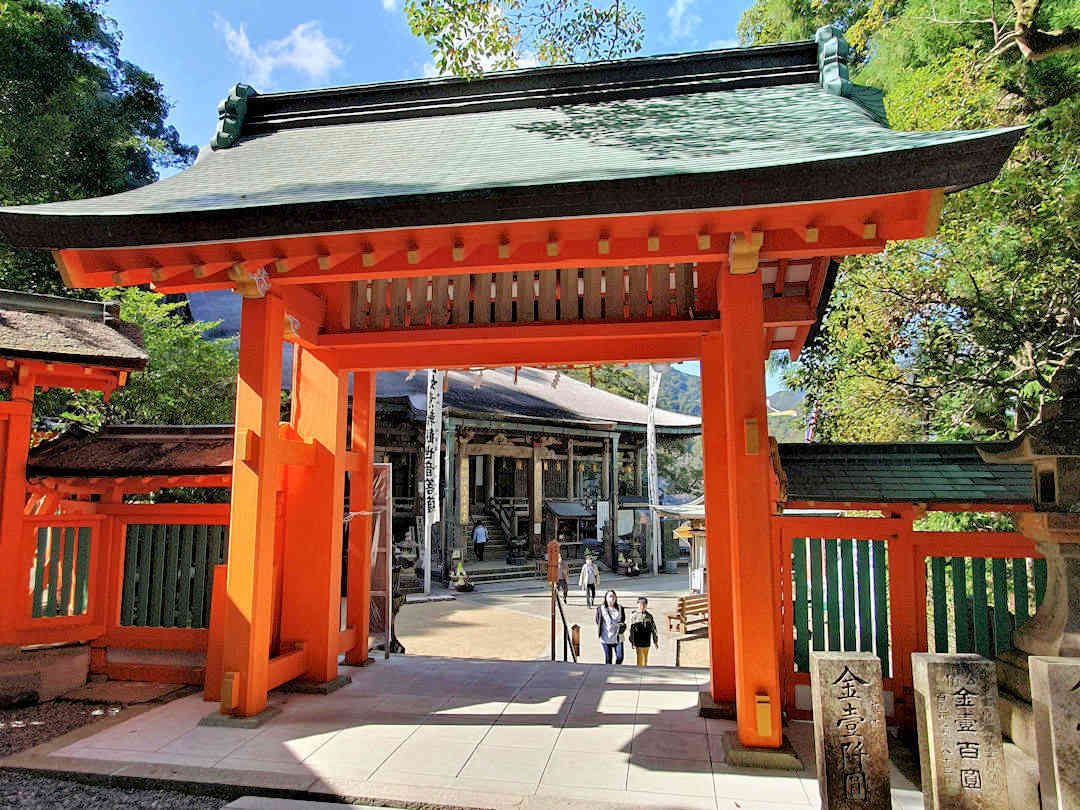
The UNESCO world heritage Kumano Kodo trails connect sacred Shinto and Buddhist sites
Hiking the Kumano Kodo: DIY or Organised Tour?
Pros/Cons of an Organised Tour
We organised our Kumano Kodo experience (almost) entirely on our own. But you can also join organised (self-guided) tours. And doing so definitely has advantages:
- You save time researching and organising your itinerary – a lifesaver when busy.
- Tour organisers have local knowledge and speak the language – a great asset when your accommodation hosts tend to speak only Japanese.
- Tour operators provide 24/7 support on the ground – so if something goes wrong, it can be fixed quickly.
On the flip side:
- Organised Kumano Kodo hiking tours are more expensive (as is accommodation organised via Kumano Travel) – after all, they have to pay for overheads;
- An organised tour may include stuff you don’t want or need; and
- Half the fun of preparing for a trip is the research and the organisation (at least for us).
Learning Japanese before your trip?
You don’t need fluency to travel well, but knowing some Japanese can make everyday situations easier and more meaningful. Busuu offers a practical way to practise the language before you go, so you can decide how much effort is actually worth it before committing to classes or courses.

Organised Kumano Kodo hiking tours are more expensive and may include stuff you don’t want or need | Photo by Cerqueira on Unsplash
Typical Tour Group Costs
Kumano Travel offers several self-guided programs, ranging from JPY110,000 per person for a 3D/2N tour to JPY170,000 per person for a 6D/5N program.
Walking tour specialist RAW Travel’s self-guided Kumano Kodo itineraries range from AUD2,350 per person (approximately JPY223,000) for a 6D/5N Nakahechi program to AUD4,850 (around JPY460,000) for a 12D/11N program comprising the full Nakahechi and Kohechi routes (including two nights at a Buddhist Temple in Koyasan – which is not cheap, but we highly recommend it).
Based on the above, an organised Kumano Kodo hiking tour could cost between JPY34,000 and JPY55,000 per person per night (including accommodation, most meals and luggage transfers on hiking days).
Budget between JPY34,000 and JPY55,000 per person per night for an organised Kumano Kodo trek | Photo by Mickey Estes on Pixabay
DIY Costs
For comparison, our 6D/6N Kumano Kodo adventure cost us JPY 85,815 in total (or JPY 7,151.25 per person per night). Adjusted for inflation, this trip would cost us approximately JPY 92,685 (or JPY 7,723.75 per person per night) in 2025. These costs included
- four nights’ accommodation in traditional Japanese inns and two nights’ accommodation in a hostel (all private rooms)
- all food and beverages
- luggage storage (one bag/one week) and luggage forwarding (one bag/same day), as well as
- public bus transportation on the Kumano Kodo (not included in the cost of organised tours).
The above does not include the train to Kii-Tanabe Station [Google Maps location] or from Kii-Katsuura Station [Google Maps location].
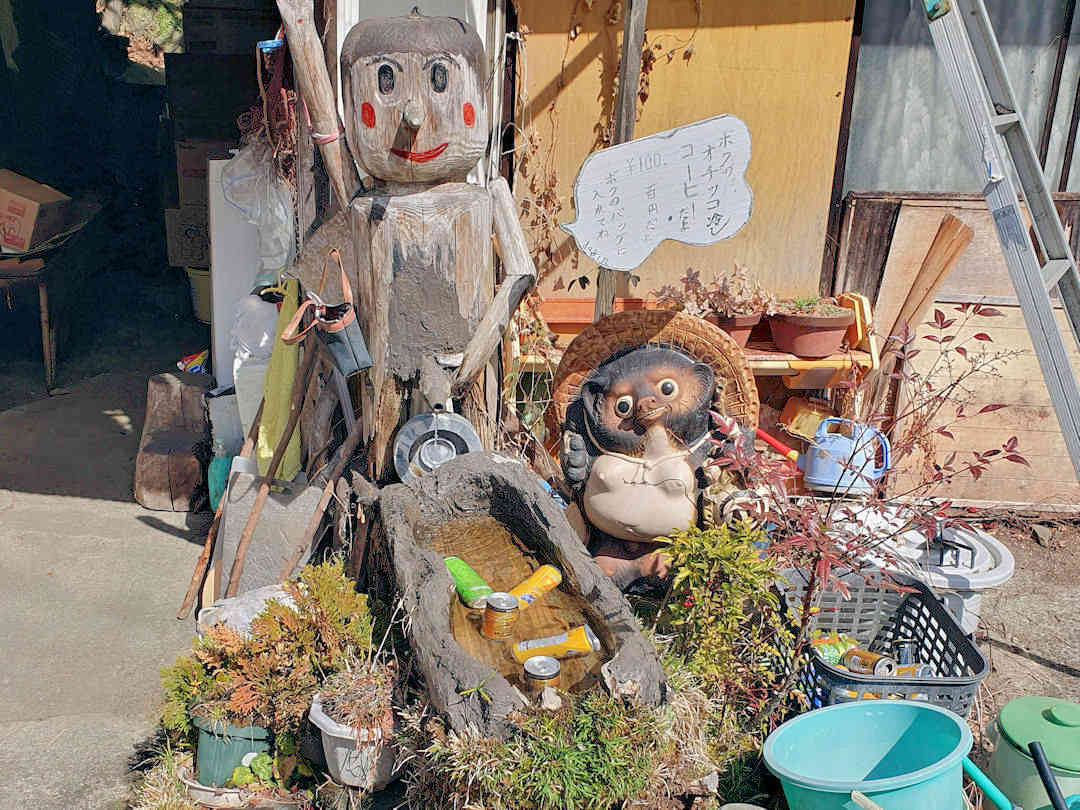
Cool drinks on a hot day - a win/win for pilgrims and locals along the Kumano Kodo
How much to budget for accommodation on the Kumano Kodo?
The most common types of accommodation on the Kumano Kodo/Nakahechi Route are traditional Japanese inns (Minshukus and Ryokans):
- If you want a bit more luxury (and are willing to pay more), stay in a Ryokan.
- If you travel on a budget yet still want to experience the warm hospitality of a family-run guesthouse, choose a Minshuku.
Excluding the meal plan in Koguchi, our six nights’ accommodation on the Kumano Kodo cost us JPY45,950, averaging around JPY7,660 per room per night. Booking the same accommodation in 2026 would cost us a total of JPY 56,580 (or JPY 9,430 per room, per night).
Only our accommodation in Kii-Tanabe required cash; all others accepted card payments (in advance or on-site).
| Name | Property Features | Location | JPY Cost Per Night | Book Now |
|---|---|---|---|---|
| Guest Cafe Kuchikumano | 1-star guesthouse with 5-star service. Highly recommended as a great starting accommodation for your pilgrimage. Japanese-style rooms with tatami floors Rooftop terrace, café and laundry Quiet base near Tanabe and the Kumano area | Kii-Tanabe | 4,500 (2025: 5,600) | Book Now |
| Minshuku Nakano | Traditional tatami rooms Shared kitchen and lounge Japanese-style dining room with irori hearth | Chikatsuyu | 9,800 (2025: 11,000) | Book Now |
| J-Hoppers Kumano Guesthouse | Private indoor and outdoor onsen baths Full kitchen and laundry facilities Right on the Kumano Kodo in Yunomine Onsen | Yunomine Onsen | 7,625 (2025: 10,440) | Book Now |
| Koguchi Shizen-no-Ie | Converted schoolhouse lodging Dinner, breakfast and lunch box available Key stop between the Ogumotori-goe and Kogumotori-goe | Koguchi | 9,800 (2025: 11,000) | Book Now |
| WhyKumano | Opposite Kii-Katsuura Station Shared kitchen, lounge and bar Private rooms and dorm beds available | Kii-Katsuura | 6,600 (2025: 8,100) | Book Now |
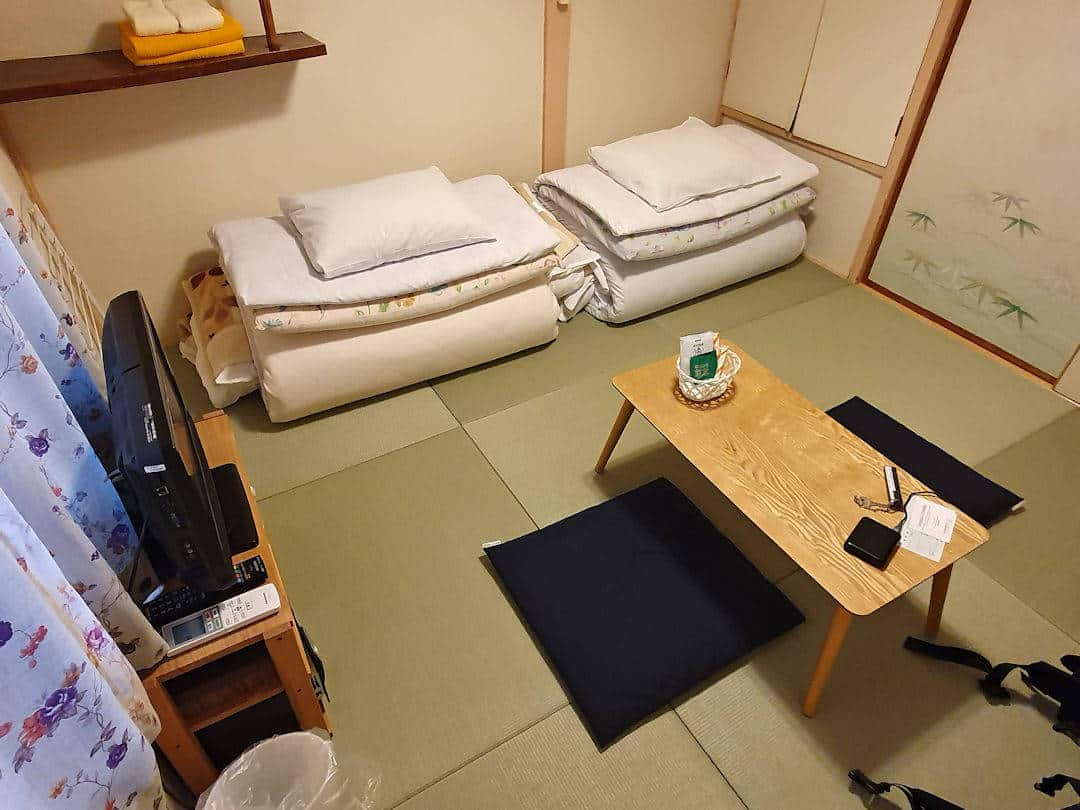
Your bedroom in a Japanese guesthouse may not be large but has everything you really need
What to budget for food and beverages on the Kumano Kodo?
Researching our route in advance, we knew
- which accommodation offered the opportunity to self-cater and which offered a meal plan, and
- where the shops and local restaurants were along the route – there aren’t many, so you do need to plan accordingly.
We stopped at the following shops, cafes and restaurants on the Kumano Kodo/Nakahechi route:
| Name | Location | Meals | Payment Method | Cost per couple (JPY) | Comments |
|---|---|---|---|---|---|
| Gyomu Super Asso-ekimae Supermarket | Asso | Dinner (Day 0); Breakfast, lunch, snacks (Day 1) | Credit Card | 1,476 | |
| Coffee Keyaki Cafe | Takahara | Morning tea (Day 1) | Cash | 970 | Great mid-hike stop with home-made pastries, nice coffee and amazing views |
| Tororoya Restaurant | Chikatsuyu | Dinner (Day 1) | Credit Card | 3,180 | Delicious set dinner |
| A Coop Supermarket | Chikatsuyu | Breakfast, lunch (Day 2) | Credit Card | 1,047 | |
| V Shop Yunomine | Yunomine | Snacks, dinner (Days 2/3) | Cash | 2,660 | |
| Miyazushi Hongu Restaurant | Hongū | Lunch (Day 3) | Cash | 2,000 | Delicious set lunch |
| Yamazaki Y Shop Shimoji | Ukegawa | Lunch, snacks (Day 4) | Cash | 1,202 | |
| Koguchi shizen-no-ie | Koguchi | Snacks (Day 5) | Cash | 700 | Dinner (Day 4) and breakfast/ lunch box (Day 5) were provided by our accommodation (JPY9,000) |
| Nachi Kurotei Mimuro Shop | Nachisan | Ice cream (Day 5) | Cash | 600 | |
| Nachi Kurotei Mimuro Shop | Kii-Katsuura | Dinner (Day 5) | Cash | 3,795 | Delicious a la carte dinner |
| Olive Cafe | Kii-Katsuura | Breakfast (Day 6) | Cash | 1,000 | Set breakfast |
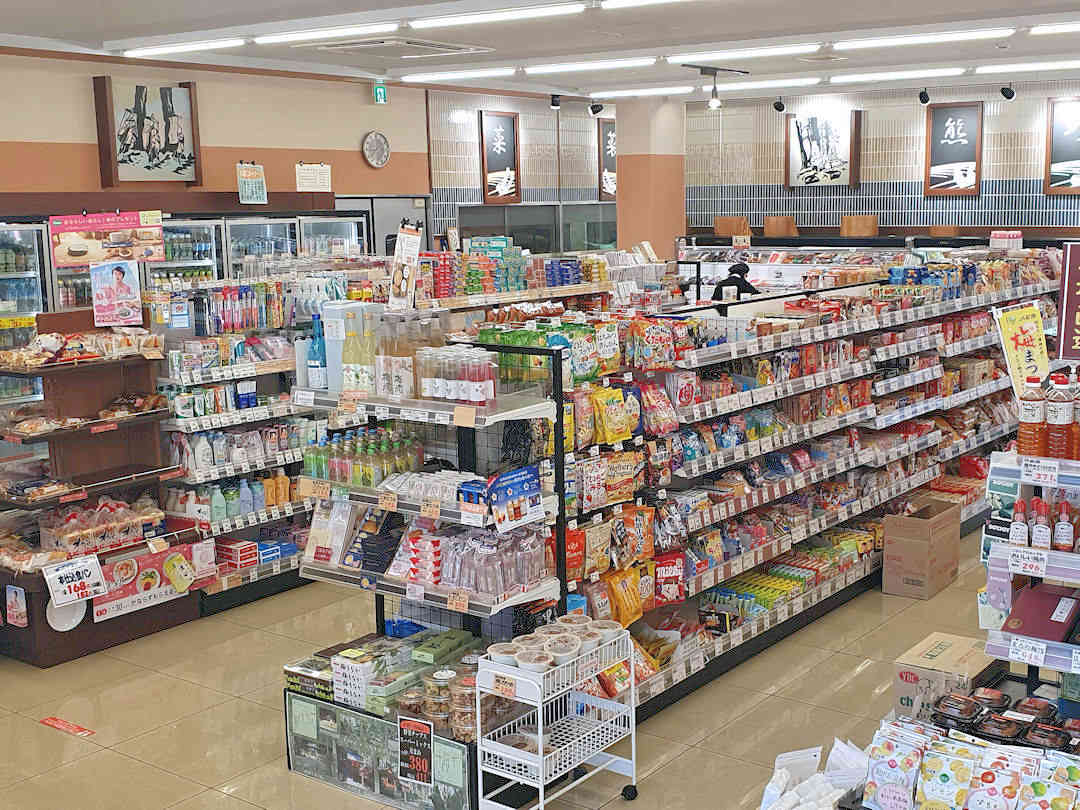
Supermarkets and convenience stores are great places to stock up on food before and during your hike
Our main staples on the hike were rice balls (onigiri—the best invention ever), pastries (especially melon pan), biscuits, muesli bars, apples, and bananas. Eggs and sweet potatoes, freshly boiled in the hot spring and given to us by a lovely Japanese family while we waited for the bus in Yunomine, supplemented our day 3 lunch.
Whenever we did eat out, we tried to get the set menu, which was always substantial and cost significantly less than ordering à la carte. That said, we found food in Japan – at the supermarket, convenience store or restaurant – generally way more affordable than in Australia or New Zealand.
Including the meal plan in Koguchi, we spent a total of JPY27,630 on food and beverages during our Kumano Kodo hike, averaging JPY2,300 per person per night. Adjusted for inflation, this would equate to JPY29,315 (or ~JPY2,443 per person per night) in 2026.
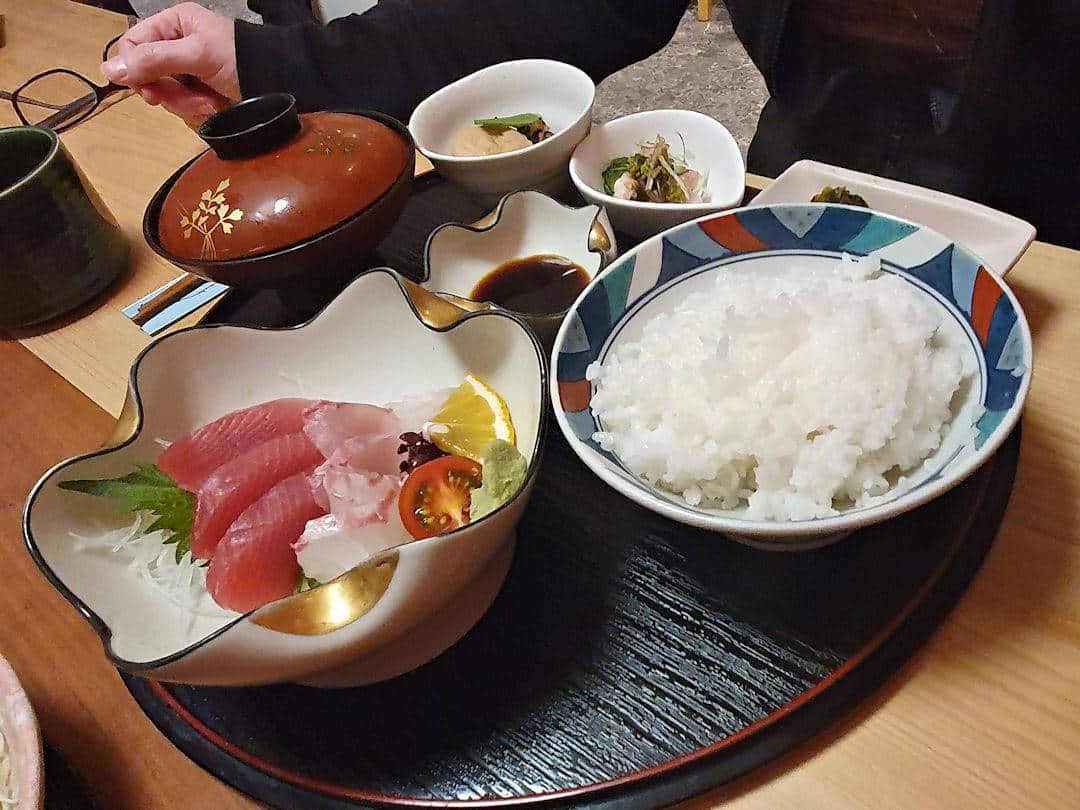
This delicious and filling set meal at Miyazushi Hongu cost us JPY1,000 (in 2025: JPY1,700) - much less than ordering a la carte
How much to budget for transportation to/from/along the Kumano Kodo?
Like many hikers on the Kumano Kodo Nakahechi route, we arrived in Kii-Tanabe by train from Osaka. After finishing the hike, we continued from Kii-Katsuura to Koyasan by a mix of train and bus.
Train ticket costs
The JR Kuroshio Limited Express from Shin-Osaka to Kii-Tanabe costs JPY5,810 per person, while the journey from Kii-Katsuura to Shin-Osaka costs JPY7,460 per person. Seat reservations are mandatory on these trains. Tickets can be bought at station ticket machines, but bring enough cash, as the machines do not accept foreign credit or debit cards.
If you have a JR Pass, the train to and from most Kumano Kodo access points will usually be covered, as long as you are travelling on JR-operated services. To work out the most practical and cost-effective option for your travel date, use the search tool below to compare current routes, fares, and journey times.

The JR Kuroshio Limited Express connects the Kii Peninsula with Osaka | Photo in Wikimedia Commons
Bus fares
The cost for local buses between Kii-Tanabe/Kii-Katsuura/Shingū and the Kumano Sanzan is as follows (per person):
- JPY630 (Kii-Katsuura to/from Kumano Nachi Taisha)
- JPY1,560 (Shingū to/from Kumano Hongū Taisha)
- JPY2,100 (Kii-Tanabe to/from Kumano Hongū Taisha).
Kumano Hayatama Taisha is within walking distance from Shingū train station (approximately 1.5 kilometres/15 minutes), but if you want to save your energy, the super-short bus ride would cost you JPY200.
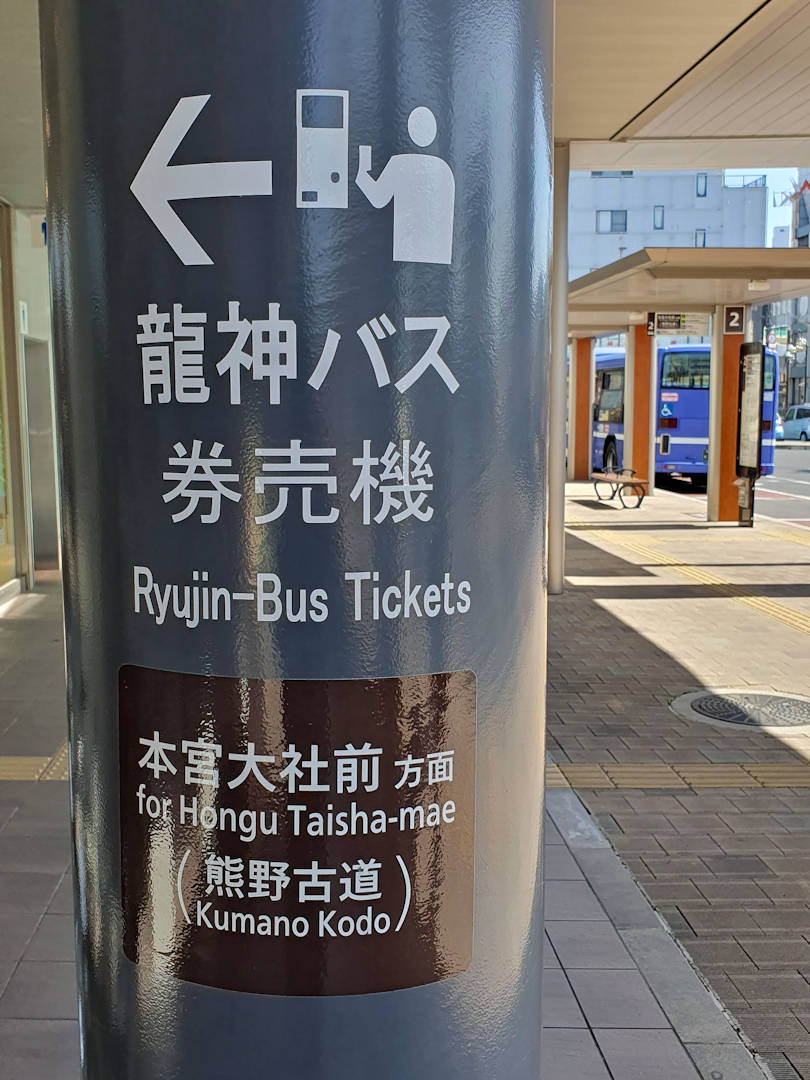
Buses are the predominant mode of transportation in the Kii Mountains
Other typical bus fares along the Nakahechi route are (per person):
- Kii-Tanabe to Takijiri-oji JPY970
- Kii-Tanabe to Hosshinmon-oji JPY2,340-2,570
- Chikatsuyu-oji to Doyukawa-bashi JPY420
- Yunomine Onsen to Doyukawa-bashi JPY670
- Yunomine Onsen to Hosshinmon-oji JPY570
- Yunomine Onsen to Kumano Hongū Taisha JPY310
- Yunomine Onsen to Ukegawa JPY340.
Bus rides can only be paid in cash. As you enter the bus, pick a ticket from the dispenser. When you get off, pay the fare using your ticket number (as shown on the display above the bus driver). If you don’t have the correct amount, there is a change machine next to the bus driver. Change first, and then pay the correct amount.
We paid a total of JPY3,580 per person for seven bus rides over six days (~JPY600 per person per night). Bus fares have not changed between 2023 and 2026.

Bus rides along the Kumano Kodo need to be paid in cash
What does luggage storage and/or forwarding cost on the Kumano Kodo?
You can hike the Kumano Kodo/Nakahechi Route point-to-point (changing your accommodation each night) or base yourself in a central location, and take buses to/from the starting/end points of each stage. If you base yourself in one location, you can leave your luggage at your accommodation and hike with a day pack.
If you hike point-to-point, you’d want to reduce the amount you carry to the absolute minimum (whilst still having enough gear, food and water to hike safely). That’s where luggage storage and/or luggage forwarding can come in handy:
- Luggage storage: While coin lockers are almost everywhere in Japan, we do not recommend storing your luggage there (it’s way too costly, and they do have a time limit). Instead, if you want to store excess luggage during your hike, look for a storage operator, like Daikoku near Shin-Imamiya Station in Osaka. A carry-on-sized bag costs us JPY 80 per day (the same price is still advertised on their website as of 2026).
- Luggage forwarding: If you prefer to carry a daypack with food and water but would like to have your main luggage available at your accommodation each night, same-day luggage forwarding is available along the Nakahechi route. The best is to ask your accommodation to organise this for you. We paid JPY2,500 for one 45-litre travel pack from Koguchi to Kii-Katsuura (organised by our host in Koguchi on the evening of our arrival) – Expect to pay a little more than that in 2025. Luggage Forwarding can also be organised through Kumano Travel, though they require a 20-day notice and are significantly more expensive.

Same-day luggage forwarding is available along the Nakahechi and Kohechi routes of the Kumano Kodo
What other expenses can you expect on the Kumano Kodo?
Given you are paying your respects at Shinto shrines (and Buddhist Temples), consider some cash for donations.
How much cash should you bring when hiking the Kumano Kodo?
Cash is still King in Japan, especially in rural areas. So what percentage of your budget will be cash (vs credit/debit card)?
We prefer to pay with a credit card because it offers interbank exchange rates (our card providers don’t charge foreign transaction fees) and helps us maintain a better spending record.
On the Kumano Kodo/Nakahechi route, 33% of our spending was in cash (for transportation, one night’s accommodation, food and beverages, and luggage storage and forwarding).
How much did it cost you to hike the Kumano Kodo?
Please send me details of your budget/costs (together with the route you took and the time you travelled) – I’d love to reference them in my article. Don’t hesitate to contact me if you have any questions I haven’t answered.
Before you go, if you liked our article and found it helpful, we would appreciate it if you could share it with your friends and family via the Share buttons below. Even better: Leave a short review on Trustpilot or Google, which would help us further build our online reputation as a (trustworthy and helpful) travel and lifestyle blog.