

This article may contain links to products and services we use and recommend. We may receive compensation when you click on links to those products. For more information, see our Disclosure Policy.
Have you ever wondered how someone can fit their whole life into a carry-on travel pack and travel the world (with no end in sight)? It’s not that difficult, even for us women, and once you’ve tried travelling light on a short trip, you won’t want to go back, even when you travel longer.
How do I know? I lugged around a 70-litre backpack on a three-month backpacking trip in 2012, and while this was great for toning my muscles, it wasn’t much fun schlepping this monster around in 30+ degree heat and near 100% humidity. I can tell you, travelling with a carry-on is so much more pleasant.

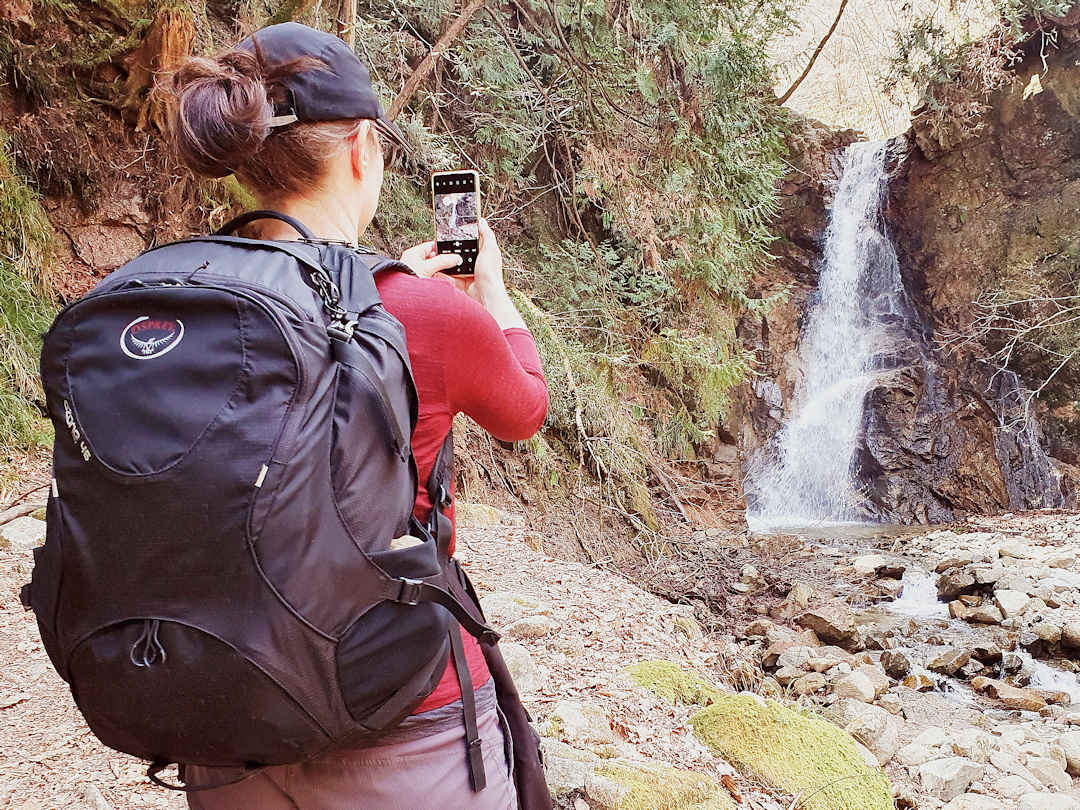
In 2012, we still travelled the world with large backpacks
Initially, I struggled with the strict volume and weight limitations – until I came across the capsule wardrobe concept. My packing list is based on the same principle. I don’t only share my (current) packing list with you, but also what I’ve learnt since living full-time on the road from 2016. By the way, my packing list has got you covered for travel in any season and any weather.
That said, you may want to adjust it according to the weather/climate at your destination and the time of year you travel. To give you an example, I added a pair of 200-denier tights before we headed to the Snow Festival in Sapporo, knowing I would be outdoors in sub-zero temperatures for long periods.
Lastly, while my article today is for fellow female travellers, if you’re a guy reading this (or a male loved one who could use some advice), you may find our Carry-On Packing List For Men more to your liking.
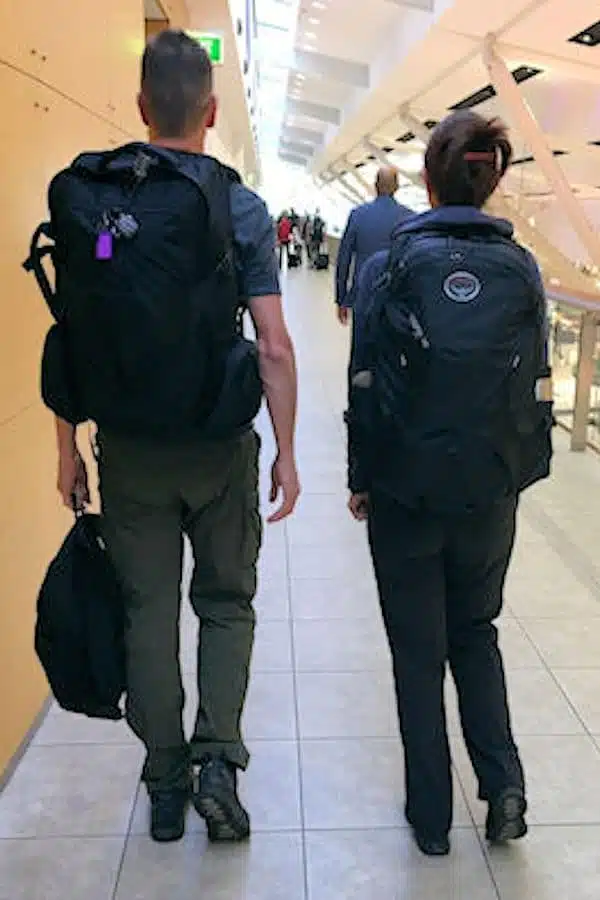
That's us with our carry-on luggage leaving Sydney in 2016
Luggage and Organisation
Let’s start with the stuff that holds my stuff.
Travel Pack / Packing Cubes
If you don’t have carry-on luggage, check out our guide for the carry-on travel pack.
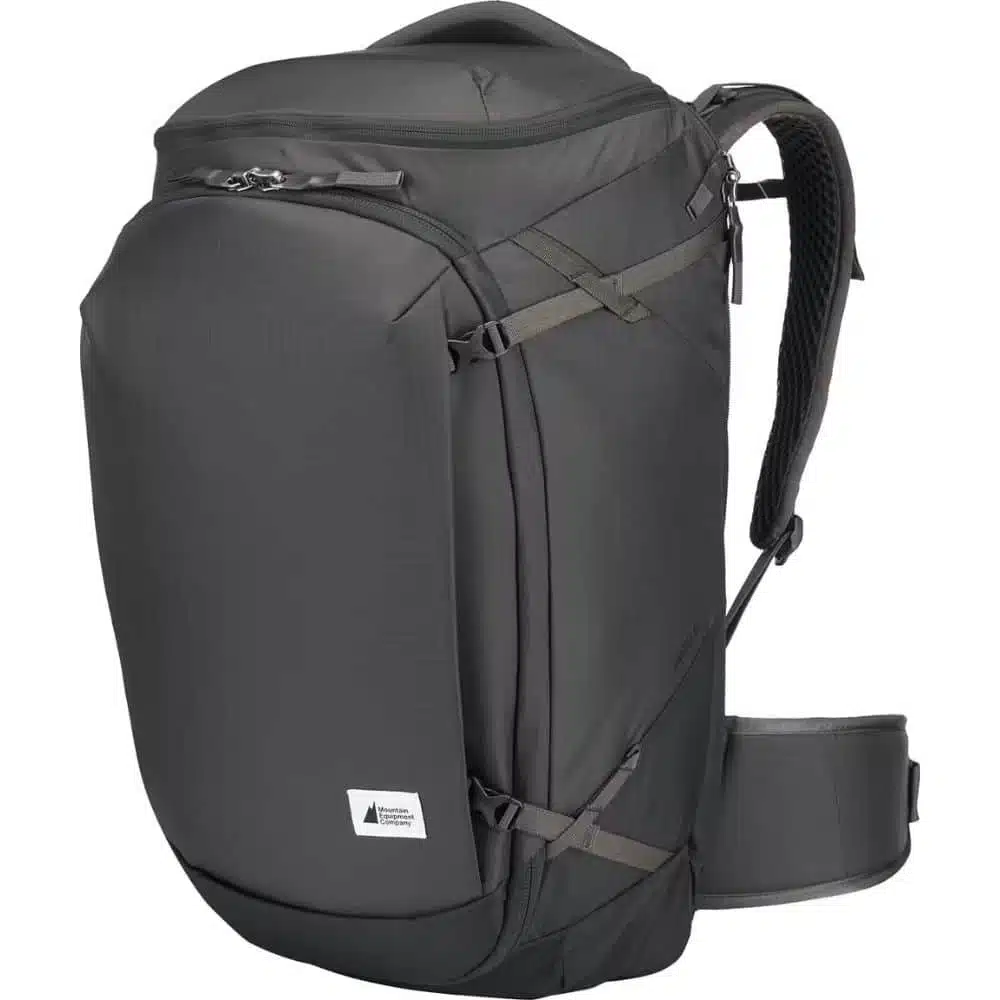
Below are the luggage and organisational items I currently travel with, or – if an item is no longer manufactured and available for sale – what I would purchase if I had to replace it today. For example, y current travel pack is the Osprey Ozone 46, which I’ve had since the beginning. It’s a great pack; so far, there is no need to replace it. BUT. If I had to, I wouldn’t buy another Osprey pack (at least none of the ones currently available, as much as I like the company). My replacement pack would be the MEC Pangea 40. It ticks all the boxes regarding my requirements, and going down slightly in volume wouldn’t be an issue (as I never fully utilise the extra volume in my current pack).
Packing cubes and travel packs go hand in hand – another trick for travelling light (even though you’re adding a little bit of weight). They help keep everything neat and organised (like having drawers in your travel pack), making it easy to pack up on travel day or locate an item on the go.


Daypack / Handbag
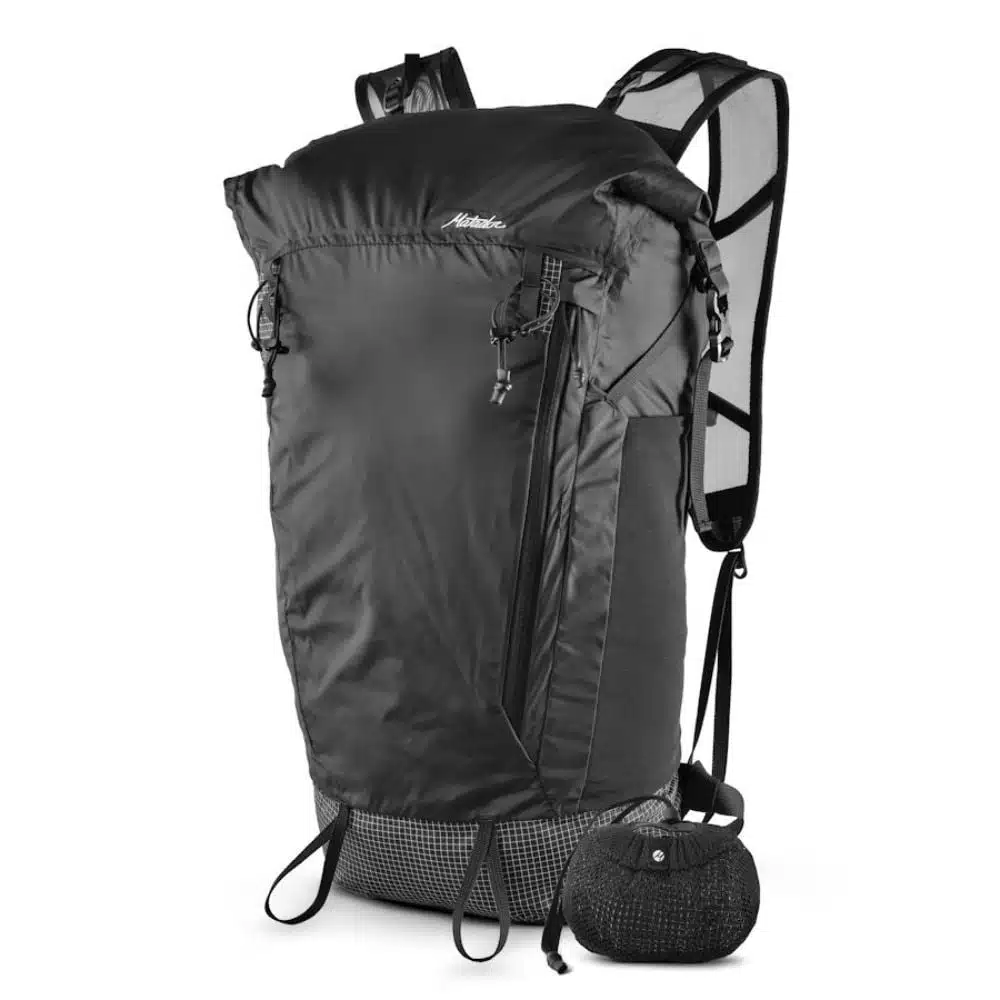
Paul and I currently share a Matador Freerain22 Daypack. This is our fourth daypack in 9+ years of travel: We started with a Tortuga daypack. When that broke, we moved to a 16-litre Matador daypack. While the seams were the downfall of the Tortuga, the most significant weak point on the 16-litre Matador was the main compartment zipper. Fortunately, Matador learned from its (early) quality issues: Our subsequent Matador Freerain24 Daypack lasted more than 4 years (the mesh pockets holding our water bottle, snacks, sunscreen, and glasses disintegrated in the end).
Like our daypack, my handbag gets daily use—so it needs to be small, reliable, and easy to carry all day. So, no wonder I’m now onto my fourth handbag in 8+ years. After comparing several small everyday bags in 2023, I chose the Bellroy Lite Sling Mini for its size, weight, and simplicity, and it’s become an essential part of my minimalist travel wardrobe. Compact and incredibly lightweight, it carries exactly what I need for a typical day out – no more, no less: a phone, wallet, passport, sunglasses, reusable shopping bag, and lip balm.
It sits comfortably across the body, keeping essentials secure and accessible while moving through a city or airport, and thanks to its clever magnetic strap clasp, it’s easy to take on and off—even on the go. What stood out to me was the material choice—the fabric is made from recycled PET plastic bottles. It’s water-resistant and durable, with a soft, crinkled texture that feels great without looking too technical. When I don’t need it, it packs down small and fits easily inside my daypack.
It’s simple, functional, and thoughtfully made—everything I look for in my carry gear. If you want a small, lightweight bag that carries only what you need and handles daily travel, the Bellroy Lite Sling Mini is worth considering.



Other Organisers
Some people’s purses are ginormous bricks, bursting with loyalty and payment cards, photos, cash, etc. Since my wallet was stolen shortly after moving to London in 2001, I only carry what I absolutely need. Thus, my wallet is the smallest I can get away with.
I use a stuff sack/compression sack for several reasons:
- to keep my smelly and dirty clothes separate from my clean clothes;
- to store wet clothes when I head to the beach or pool for a swim, and
- to protect valuables in our daypack when out and about on the water or in pouring rain. To be on the safe side, a waterproof bag inside a waterproof bag.
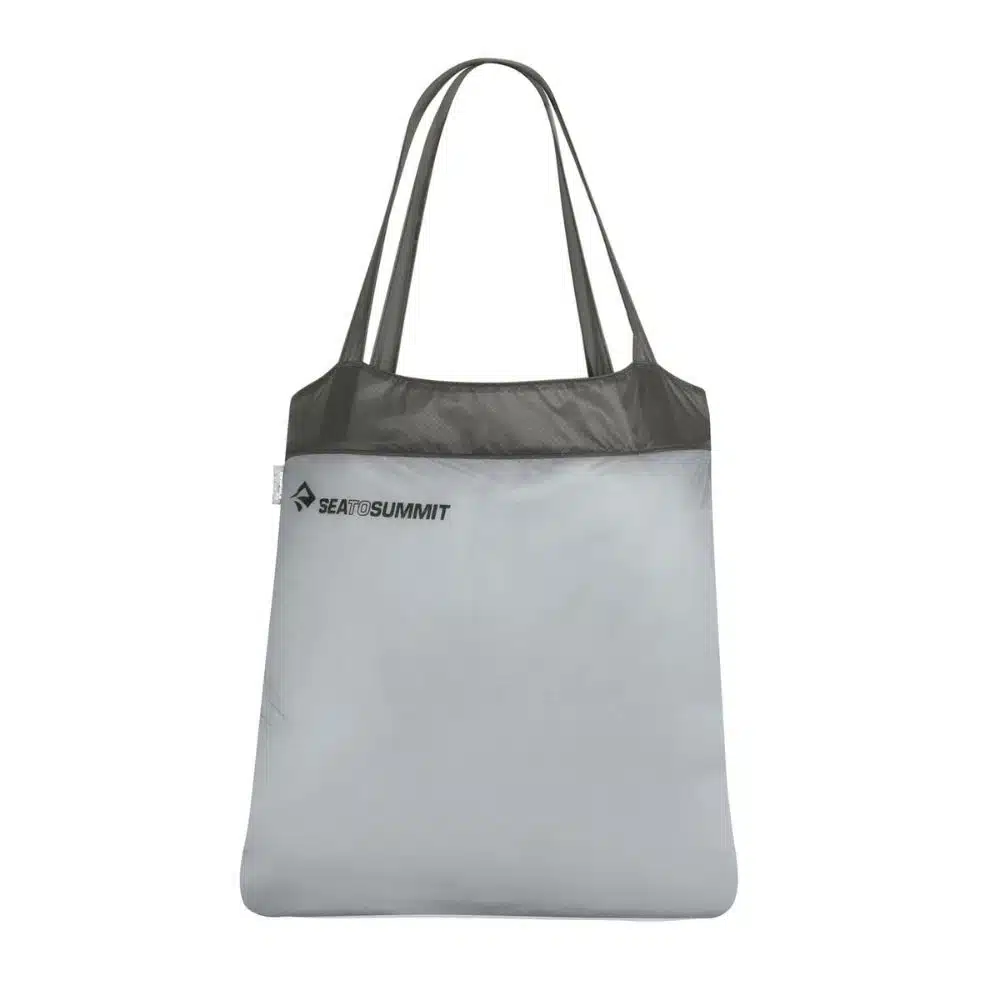
My shopping bag weighs next to nothing and occupies very little room, yet it’s super-versatile. I use it to carry groceries, take the washing to/from the laundromat, and as a personal item in the rare instances I need to reduce weight in my travel pack to stay within airline restrictions.
Having dual citizenship means we travel with three passports—two for me and one for Paul. I like to keep them together in one place and, therefore, travel with a super-lightweight passport pouch.
Your Essential Travel Safety Tips
No one can guarantee your safety while travelling. But following these essential tips may reduce your risk and help you stay out of harm’s way on your travels.
Clothing
You need to layer your clothes when you travel with a carry-on only in all four seasons. It’s a simple but very effective trick for travelling light:
- On a hot day, I wear just one layer (not counting my bra): a singlet or a T-shirt.
- On a cold winter’s day, I can wear up to six layers (not counting my bra): a Merino singlet, a Merino t-shirt, a Merino long-sleeve, a Merino zipper jacket, my down vest and my rain jacket. This is toasty, guaranteed. Five layers are usually enough (minus the t-shirt or the long-sleeve) – even when skiing in Sapporo.
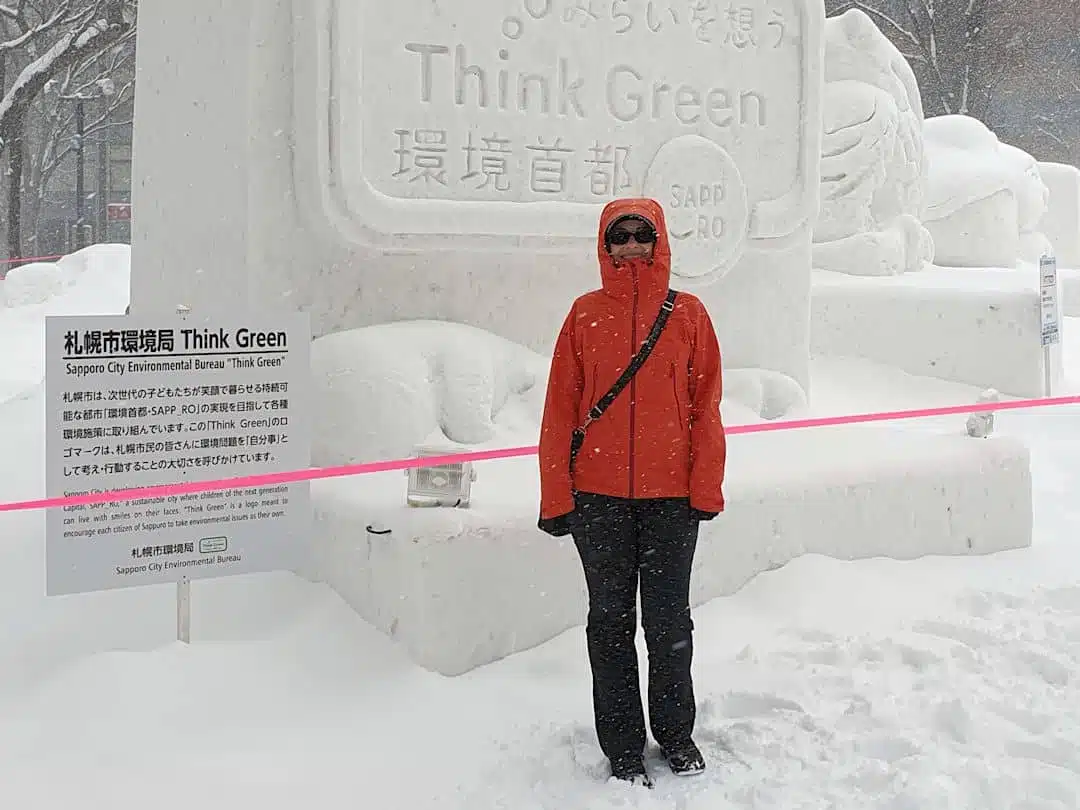
I only own one jacket - with multiple layers underneath, it keeps me toasty warm, even during the Sapporo Snow Festival
Below are the clothes I wear, or, if they are no longer manufactured and available for sale, what I plan to buy as replacements once they reach the end of their life.
Underwear / Sleepwear / Swimwear / Socks
I’m onto my fifth set of undies in 8+ years:
- For the first two years, I wore Uniqlo Seamless Bikini Briefs. I loved their shape and the fact that they were seamless. However, they have become larger and larger over time, and Uniqlo is NOT a role model for ethical and environmentally friendly manufacturing.
- My second set of Macpac Merino Bikini Briefs was only a few months old. After a few months, tiny holes appeared in the fabric around the hips. I left a review on the Macpac website recommending product improvements, but my review was never published.
- After more research, I tried Saint Basics St Eva briefs made of Lyocell, an eco-friendly cellulose fibre from eucalyptus trees. Those briefs lasted over three years (and as Saint Basics went out of business, I had to find another replacement when they finally died).
- My next pair of undies were the best of both worlds: a mix of Merino and Lyocell. Allbirds might be best known for their shoes, but they also make incredible apparel. My Allbirds undies were my favourites so far, but sadly, Allbirds’ undies are not sold.
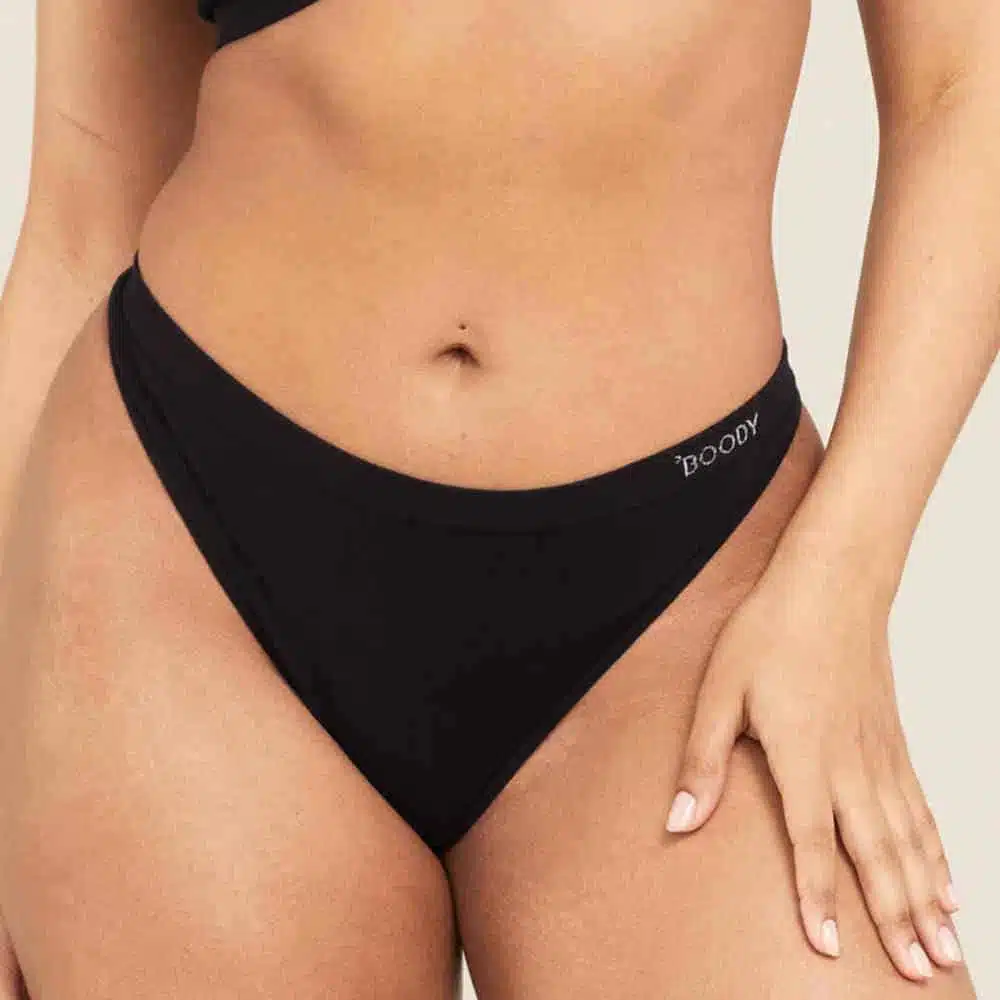
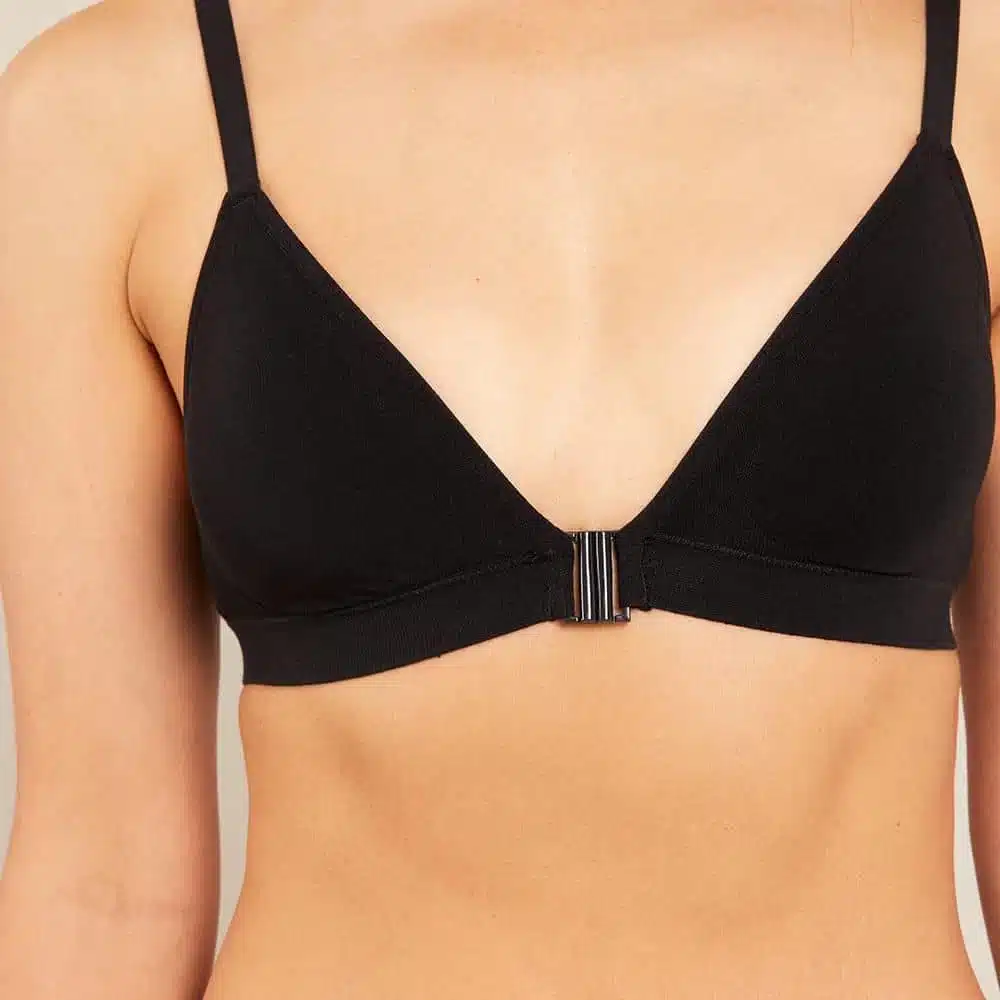
- My current set of undies is Boody G-Strings. The shape is similar to my prior Saint Basics and Allbirds, and they’re just as comfortable. But this time, they’re made from eco-friendly bamboo fibres – just like my bra. So far, so good. Let’s see how long they last.


And speaking of bamboo… At night, I wear a pair of men’s boxer shorts (I’m onto my third pair in 9+ years – always the same brand, and always made from bamboo fibre) and a Boody Sleep T-Shirt. That’s sufficient in any season, by the way, at least for me.
I travel with four pairs of socks, alternating between Macpac and Mons Royale. I always purchase socks mainly made from Merino wool, as only those keep my feet warm.
I wore bikinis to swim (or snorkel) for many years, but as I’ve got older, I’ve switched to a one-piece (and the odd fat blob is turning up where it’s not meant to).
Layers
Layers are the key ingredients for travelling light in any season. In my case, these comprise:
- t-shirts (short-sleeved and long-sleeved) and a zipper jacket – all made from Merino wool, plus
- a lightweight vest and a rain jacket, both made from technical, high-performance fabrics.
For my merino layers, I have tried many different brands: Icebreaker, Kathmandu, Macpac, Mons Royale – you name it. However, the best one so far has been Unbound Merino (especially regarding quality, sustainability and customer service).
Isn’t wool too hot in Summer? You may ask. In our first year on the road, I used technical quick-dry t-shirts by Nike and Under Armour. These T-shirts started to smell after a while, despite regular washing. Merino wool is naturally odour-resistant, and I sweat in them less than in those synthetic t-shirts. I can wear the same Merino t-shirt for 3 days in a row, and it doesn’t stink (no matter how hot it gets). Merino wool fabric comes in different weights, and a 150-200g/sqm t-shirt is perfect for any season.


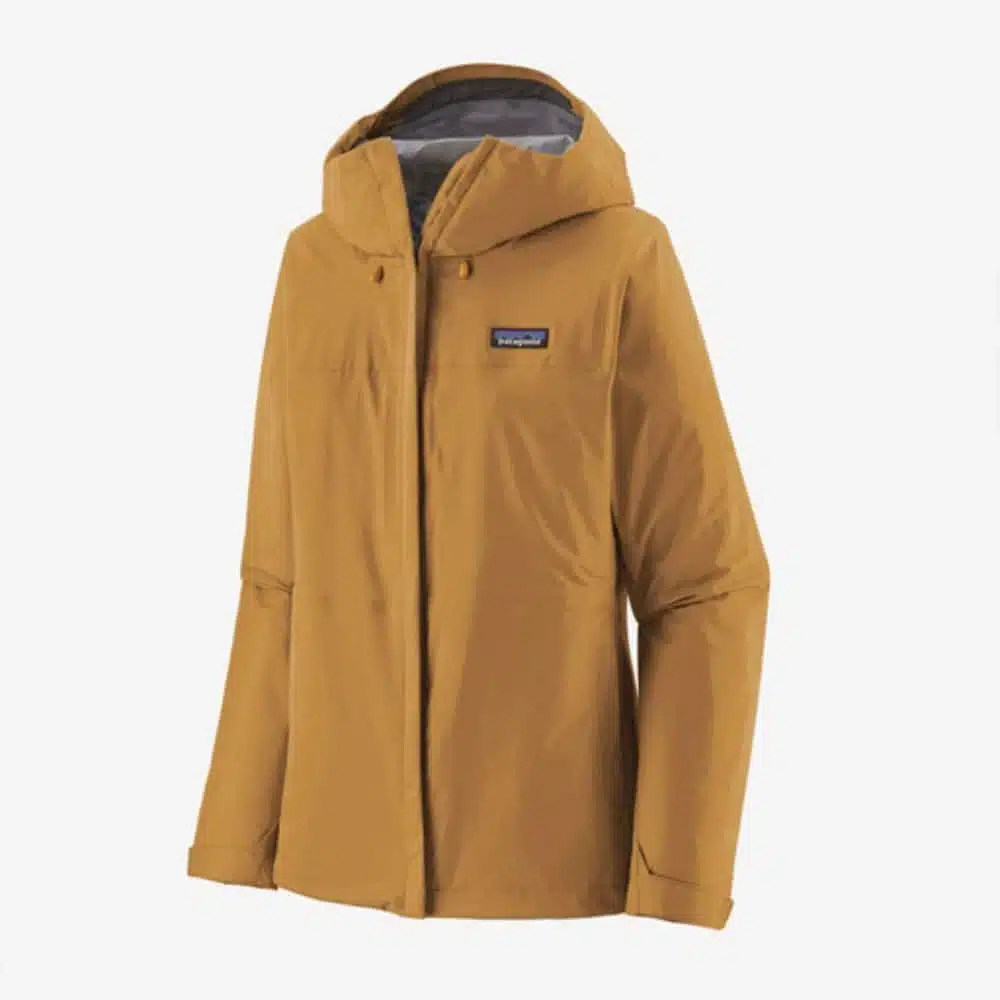
Our rain jackets were probably the second most researched items (after our travel packs and before our hiking shoes). Given this was to be my only jacket, it had to be waterproof yet breathable, ultra-lightweight, durable, long enough to cover (most of) my butt and not look like a potato sack.
Marmot has been leading the pack in product development, and we have used Marmot jackets for our first 8 years on the road:
- At only 218g, my Marmot Nano AS Jacket was my lightest jacket. It lasted three years. I maintained its water-repellent qualities by applying a waterproofing spray. But at some point, the zipper broke.
- While a bit heavier at 349g, the Marmot Eclipse Jacket was the perfect replacement: Rather than being treated with nasty chemicals to create a water-repellent layer (that needs to be reapplied regularly), the use of EvoDry technology meant the fibre itself was water-proof. Made 100% from recycled nylon, it further reduced the environmental impact of its manufacturing process. Unfortunately, after 5 years of wear, the inner and outer membranes separated, and my backpack’s shoulder straps compressed the fabric (and the inner membrane started to disintegrate).
With the newer Marmot jackets not offering the waterproofness and breathability I was after (at a similar price point to my previous jackets), I looked around for other brands and have now replaced my Marmot jacket with the Patagonia Torrentshell 3L, a three-layer shell that still only weighs 352g. Its shape is a bit more baggy than the Marmot Eclipse, but that’s a price I’m happy to pay for waterproofness and breathability.

Pants / Dresses
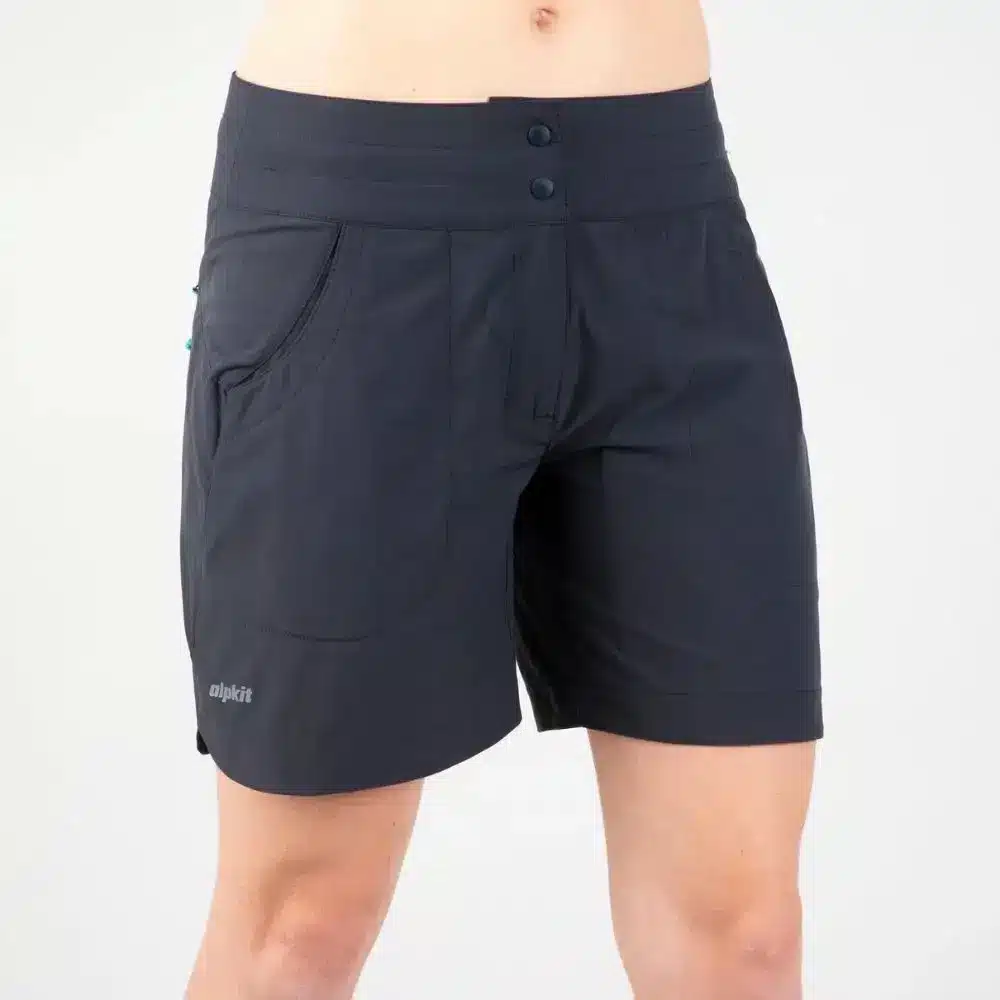
KÜHL and Outdoor Research have been my go-to for long pants because they fit properly straight off the shelf and handle repeated travel use without fuss. For warmer conditions, I also carry lightweight shorts from Alpkit that dry quickly and double as swimwear—simple, practical, and one less item to pack.
Capris also fill a very specific gap: when full-length pants are too warm, but you still want coverage for hiking, sun, or cultural settings. I have found the ideal shape, colour, and fabric for this—but not from a brand we’re comfortable recommending today. That’s the reality of a small, functional wardrobe: sometimes you compromise to solve a real-world problem. We aim for 80/20, not perfection.
For most travellers, the takeaway is simple: prioritise fit first, then fabric. Look for lightweight nylon blends (often with elastane) that move well, resist abrasion, and dry overnight. If a piece fits properly and works across hiking, travel days, and casual wear, it earns its place in a carry-on.
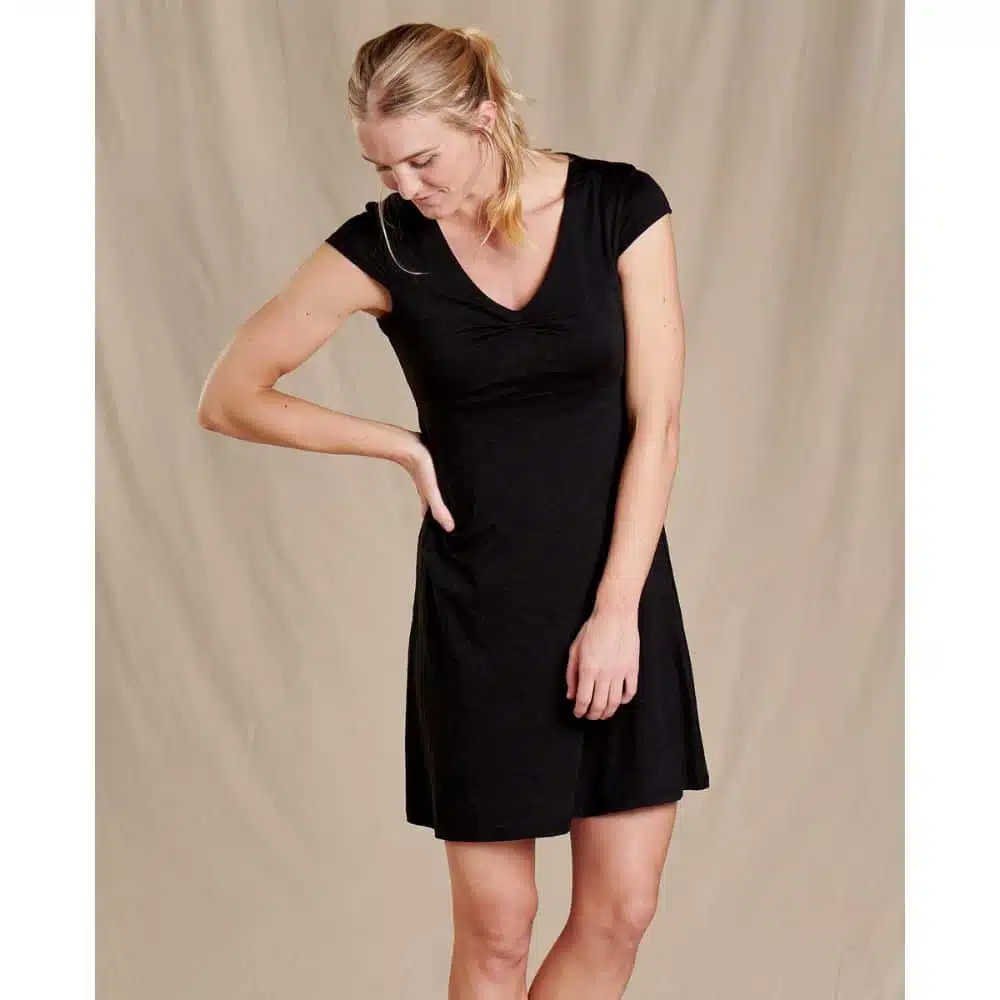
Most travel dresses look like potato sacks (at least on me) or come in colours that don’t suit me. Toad and Co’s range of lightweight dresses is enormous. They are ethically and sustainably made and always look flattering.

Head, Neck and Hand Protection
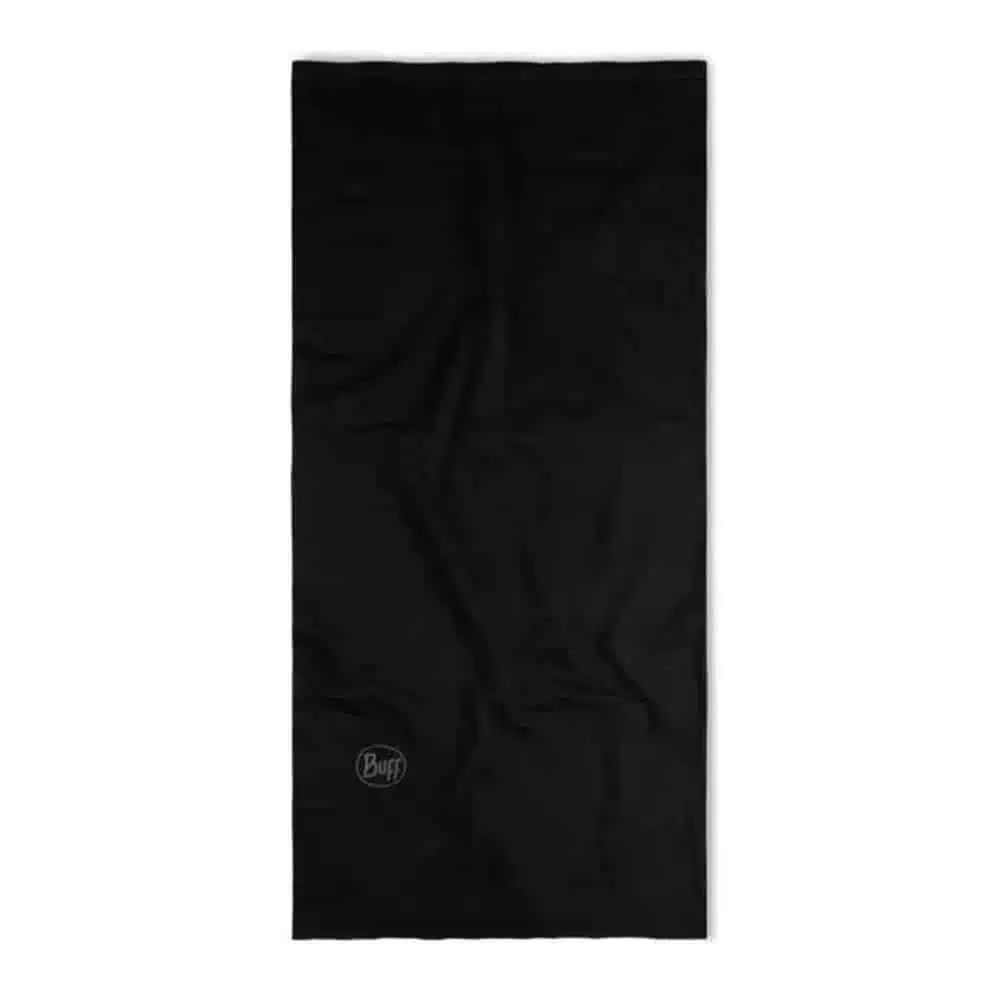
When it’s sunny, you’ll see me with my (Minimalist Journeys branded) baseball cap, made of 50/50 Bamboo and Recycled PET. I also wear the cap when it rains, as the rim prevents rain from splashing my glasses. I swap my cap for my trusty beanie when it’s freezing and add my buff and gloves. It’s as easy as that.
I also travel with a lightweight sarong. Why do I list it here? I mostly use it as a shawl around my shoulders (an easy way to add a touch of colour to my black dress on more formal occasions) and as a scarf on extra-cold days. I also use it on occasion as a sarong, but less often.


Shoes
I only own three pairs of shoes – all lightweight, and each with a clear role:
- I wear my hiking shoes for trails, travel days, and most city walking. They provide the grip and support needed for uneven terrain, yet remain comfortable enough for long days on my feet.
- My ballerinas are for more formal occasions (including date nights and weddings), where a lighter, more compact option makes sense.
- My sandals are for warm climates, water activities, and recovery after long walking days.


I’ve worn Salomon shoes for years (now onto my fourth pair), as they suit the shape of my foot and perform reliably across different conditions. They strike a practical balance between grip, comfort, and durability, especially for travellers who want one shoe to handle both city streets and light hiking.
I also tried Merrell’s well-known Moab Speed GTX – but what a disaster. The shoe looked nice and fitted well when I bought it. But the upper started ripping after only SIX WEEKS of occasional wear around the city (I hadn’t even used them on a proper hike). Even worse was my shocking experience with their customer service, which was incompetent in handling claims and refused to honour standard consumer warranties (even after being contacted by NSW Fair Trading, the Australian organisation that mediates such cases). Needless to say, I will NEVER EVER purchase ANY Merrell product again.
Assessing Ethical and Sustainable Brands
We carefully evaluate gear and business tools for their quality and longevity, but we also prioritise products made with ethical and sustainable practices. Explore our trusted resources to discover how manufacturers are reviewed for their sourcing and production methods.
Technology
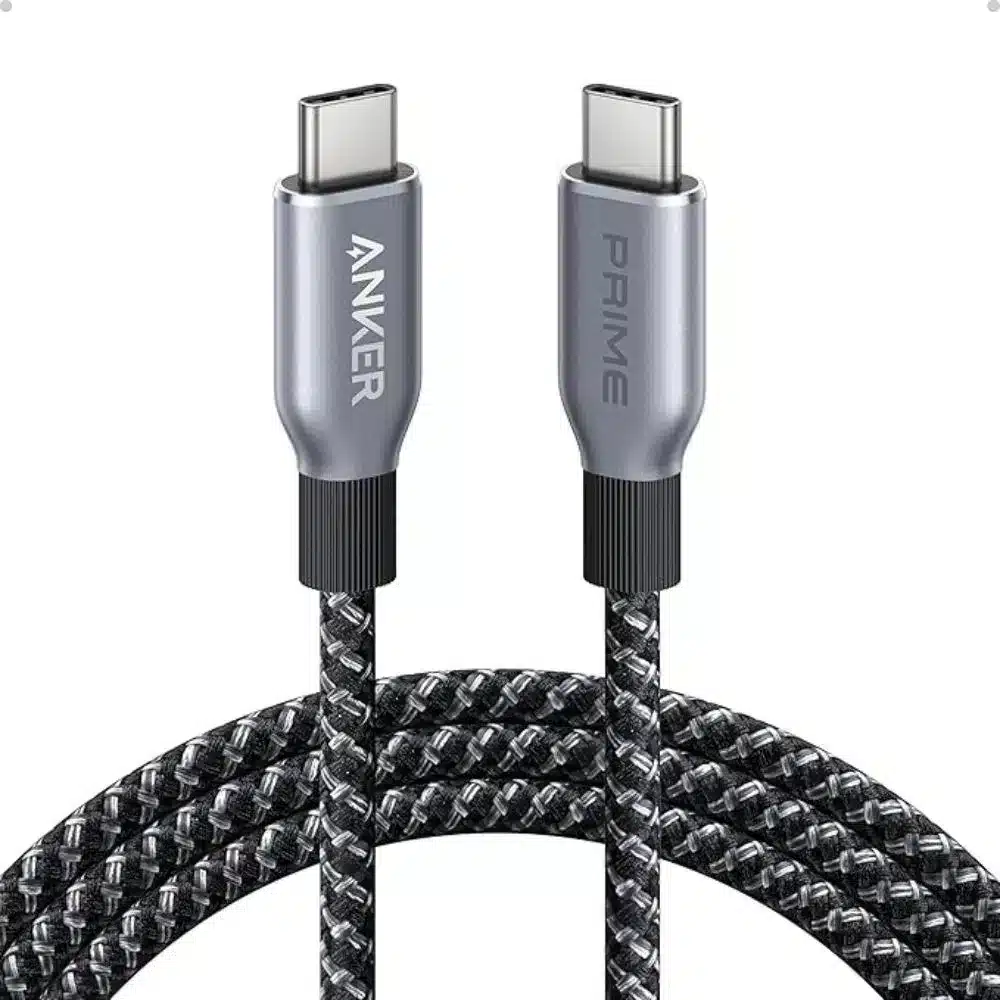
I keep my technology simple and focused on what I use every day. Instead of carrying a different charger for each device, I built around one compact travel charger and two USB-C to USB-C cables. When I replace my old charging setup, I will be looking for a USB-C-only Gallium Nitride travel charger with at least 65 watts of output and two USB-C ports.
That matters because I want one charger that can handle my core devices without adding bulk or clutter. Using USB-C across my kit means fewer cables to carry, fewer compatibility issues, and a setup that is easier to manage on the road. A higher-output charger also gives me enough flexibility to charge my laptop and smartphone with the same charger, even if the laptop charges more slowly overnight.
This is the approach I keep coming back to because it is simple and practical. I do not want a bag full of spare chargers, and I do not want to rebuild my tech setup every time one product disappears from the market. I would rather choose a charger based on the features that matter most: USB-C only, enough power for everyday travel, two ports, and the right plug coverage for the places I actually go.
For most travellers, that is the better way to think about it too. Do not start with the brand. Start with the job the charger needs to do.


Toiletries
Toiletries are pretty personal, so I won’t list every item I travel with here. However, what we do make sure is that we
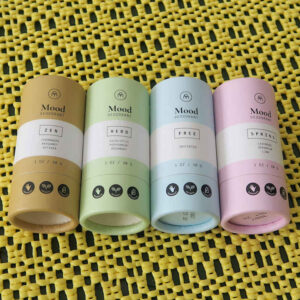
- stay within the 100ml allowance for carry-on and
- Use zero-waste products wherever possible.
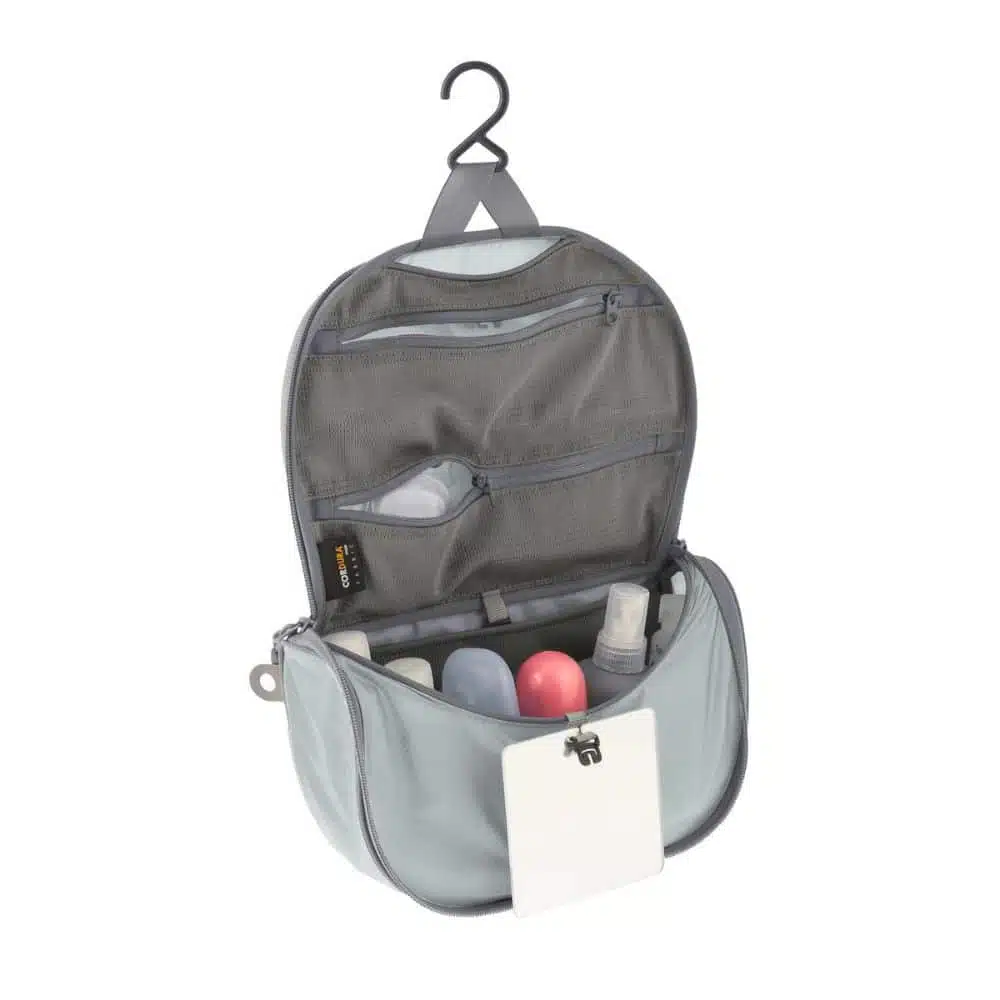
I keep my toiletries in a large Sea To Summit Travelling Light-Hanging Toiletry Bag. I bought mine in 2012, and it’s still going strong, thanks to its 30D Cordura® ripstop nylon fabric. Paul uses the same toiletry bag, but in the small size. I wouldn’t be able to fit all my stuff into the miniature version, but the small one works well for the few things a man needs.
Accessories
Towels
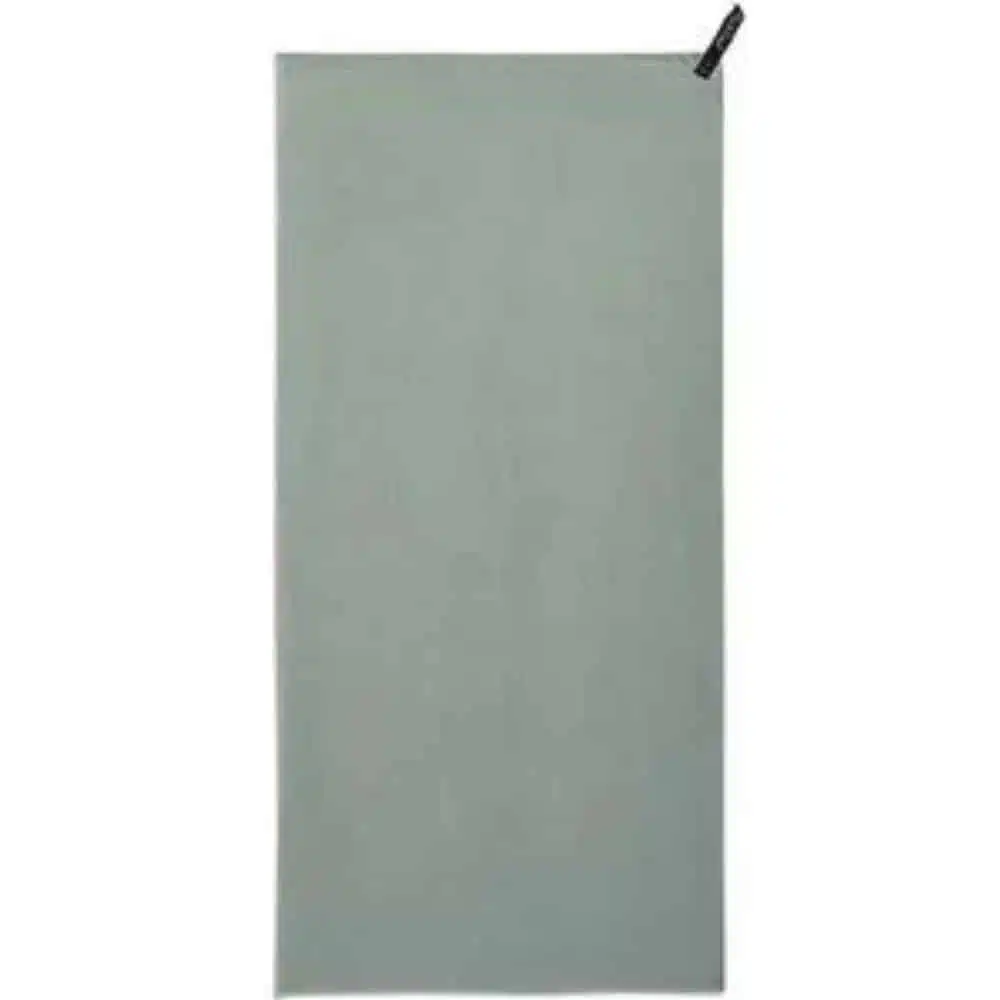
I travel with two towels—each with a specific role, and together they solve a problem most travellers underestimate: drying quickly, packing small, and still being genuinely useful day after day.
- The larger one is the LeStoff Classic Hammam Towel. I’ve used the same one for over eight years, which is the real test. It’s a flat-woven cotton towel, so it packs down small and dries far faster than a traditional thick towel. In practice, that means you can use it in the morning, and it’s often dry again by the afternoon. It’s also one of the most versatile items I carry—a towel, a beach blanket, a light wrap, or an extra layer on a cold night.
- The smaller one is the PackTowl Personal Towel, which handles the daily work. It’s a microfibre towel designed to absorb a lot of water quickly and release it just as fast. After washing my hair, I wrap it for a few minutes, and that’s usually enough for it to air-dry without heat. The rest of the time, it’s my face towel, hand towel, or even a kitchen cloth when we’re staying somewhere longer.

Utensils
Our water bottle is one of the most essential items we travel with. We don’t buy water if we can avoid it. In many places worldwide, tap water is perfectly fine to drink. Where (there is a likelihood that) it’s not, we boil water, let it cool down, and then fill our water bottles or use our water filtration kit. Unlike the (aptly named) Klean Kanteen Wide Water Bottle, water bottles are tricky to keep clean. Bonus: Thanks to its loop cap, I can quickly secure it in my travel pack or daypack.
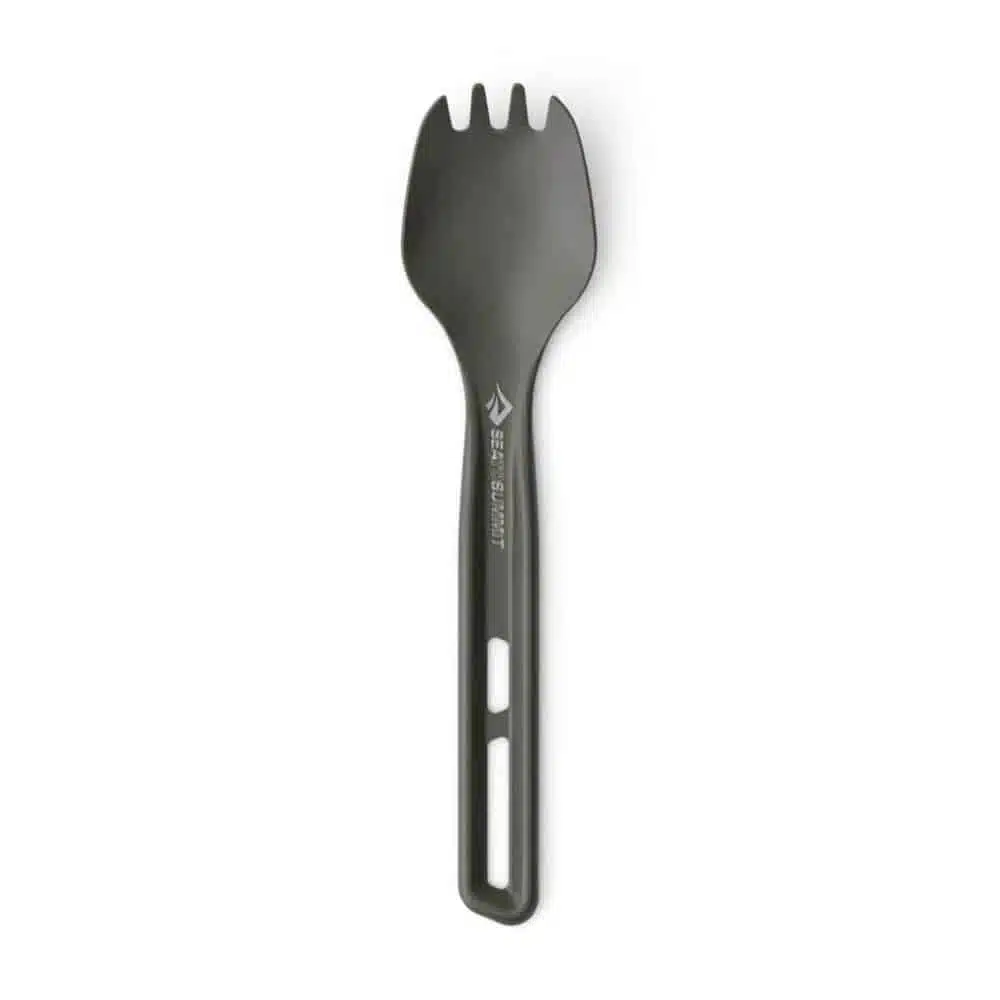
Like Paul, I also travel with a spork. It is not an item we use daily, but we are always glad to have it —whether on (multi-)day hikes or to avoid single-use cutlery when we buy meals on the road.

Other
Only the main compartment of my travel pack can be locked, and for that purpose, I use an Osprey Cable Lock. I don’t mind that the other compartments can’t be locked as they don’t contain any valuables, and I usually have my luggage with me (the benefit of carry-on). On rare occasions, I need to check my travel pack, so I use cable ties to lock the other zippers (I keep a small bag of them in my travel pack).
We also travel with a compact first aid kit (about the size of my fist) and a travel sewing kit (about the size of a standard playing card deck) – both of which are shared between us – plus a reusable face mask and a pegless clothes line each (rolled up, about the size of Paul’s thumb). Neither is essential, but all are handy:
- First aid kit: If you’re out on a day trip or (multi-)day hike and get a blister or cut your finger while preparing a meal, we regularly replenish items we have used (or past their use-by date).
- Sewing kit: We need this to fix our gear (think garment holes, loose buttons, broken seams, and zippers).
- Clothes Line: We prefer to air dry our clothes (it makes our Merino clothes last longer and is better for the environment). All we have to do is find two opposing points to attach the hooks to.
- Reusable face mask: Ours are made from merino fabric (and Minimalist Journeys-branded), and we wear them in crowded places (especially in Asia, where face masks are omnipresent, even post-COVID-19).
Last but not least, there is Egon, my travel mascot. A little soft toy monkey not much bigger than Paul’s fist, he’s been travelling with me around the world since November 1999. Which makes him the oldest item on my packing list!
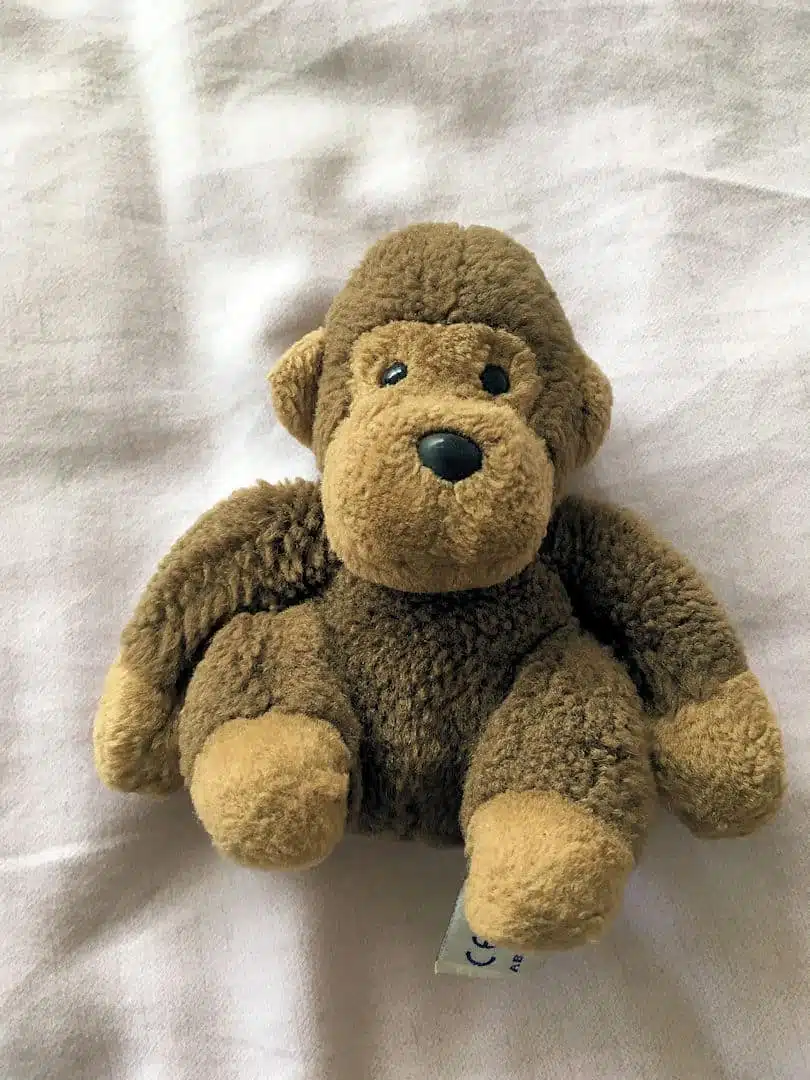
Egon - my travel companion since 1999
Packing List Summary
Phew… that was a lot to take in. To help you put your packing list together, here is a handy summary of all the items for you:
Paul travels with some running gear, but my exercise regimen requires much less.
My pack full of the above (plus my Microsoft Surface Pro) weighs approximately 9 kilograms / 20 pounds, whereas Paul’s travel pack with all his gear weighs approximately 11 kilograms / 24 pounds. So, together, we are below the 10 kilograms / 22 pounds carry-on allowance per person of many airlines.
Want to know what we pack as full-time location-independent explorers?
We research and document every item we carry as travellers, whether in our backpacks in Socotra, the snowy northern Hokkaido or as digital nomads earning a living on the road. These packing lists are all based on our own experience. If you travel (and who doesn't?) and have recommendations on carrying items, please feel free to contact us.
Before you go, if you liked our article and found it helpful, we would appreciate it if you could share it with your friends and family via the Share buttons below. Even better: Leave a short review on Trustpilot or Google, which would help us further build our online reputation as a (trustworthy and helpful) travel and lifestyle blog.